
Published: Tuesday, November 3, 2026 · 8:29 AM | Updated: Tuesday, November 3, 2026 · 8:29 AM
📊 15 views




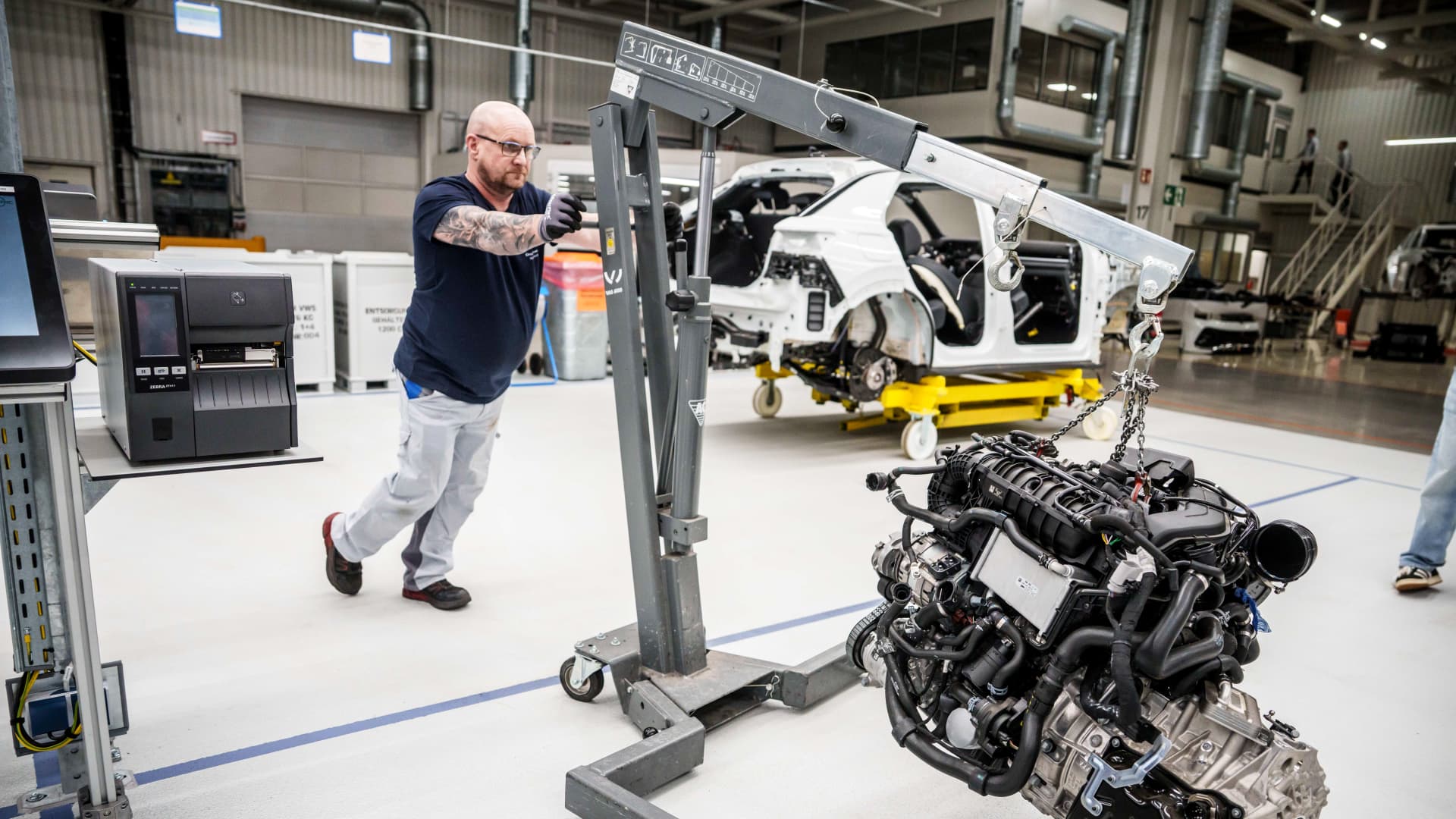
Germany’s automotive supply chain is undergoing a profound transformation, underscored by Schaeffler’s announcement of 3,460 job cuts and five site closures across Europe. This decisive restructuring reflects broader industry pressures from a slowing economy, intense global competition, and the accelerating shift towards electric vehicles, forcing companies to re-evaluate their intrinsic value and long-term portfolio positioning.
💎 Strategic Investment & Portfolio Insights
- Industry Restructuring. Schaeffler’s significant job reductions highlight the severe pressures facing Germany’s traditional auto sector, particularly those reliant on internal combustion engine components.
- EV Transition & Cost Pressures. The slower-than-expected EV adoption ramp-up combined with higher operating costs in Germany is forcing efficiency drives and capacity adjustments for suppliers.
- Diversification into New Markets. Schaeffler’s pivot towards robotics and defense offers a strategic pathway for revenue diversification, although these are not mass markets and require different operational scaling.
The recent decision by auto parts maker Schaeffler to eliminate 3,460 jobs and shutter five European sites, with 2,660 cuts and four closures in Germany, serves as a stark indicator of the deep structural challenges confronting the German automotive industry. This move is not an isolated event but rather a symptom of systemic pressures including economic slowdowns, fierce international competition, and the rapid technological evolution towards electric vehicles. The company’s plants in Dortmund and Morbach, which focused on internal combustion engine (ICE) components, are among those facing significant reductions, alongside operations in Berlin and Schwalbach. This decisive action is projected to yield an annual earnings boost of approximately 300 million euros ($336 million) from 2030, according to company statements, reflecting a strategic imperative to shed overcapacity and enhance operational efficiency.
Schaeffler faces a dual challenge: declining demand for traditional ICE components and a financially strained, slower-than-anticipated ramp-up in its electric vehicle segment, where it currently operates at a loss. Compounding these issues are ‘above-average costs per employee in Germany’ and an overly complex organizational structure, as cited by the company. These internal factors exacerbate the external headwinds impacting the broader European automotive landscape, which has seen new car registrations in the EU fall from 15.3 million units in 2019 to 10.8 million units in 2025. This underscores the scale of the ‘unprecedented transition’ described by Rico Luman, senior sector economist for automotives and transport at ING, who notes the increasing market share of Chinese brands in the accelerating EV segment, which now accounts for 22.7% of new registrations in the EU. For portfolio managers, understanding these macroeconomic and microeconomic shifts is crucial for identifying long-term capital preservation opportunities and potential alpha generation.
- Schaeffler’s Q3 revenue fell 0.2% year-on-year to 5.8 billion euros, with earnings before interest and taxes (EBIT) before special items dropping 7.2% to 245 million euros, signaling immediate financial strain from current market conditions. The company’s focus on eliminating overcapacity directly addresses these declining profitability metrics.
The shift to EVs fundamentally alters the supply chain dynamics, as electric vehicles inherently possess fewer components and are less complex to manufacture than their ICE counterparts. Europe’s struggle to compete on battery cost further complicates the landscape for traditional suppliers.
What Schaeffler’s Restructuring Means for Portfolio Positioning
This industrial recalibration, exemplified by Schaeffler job cuts and site closures, triggers a cascade of effects on portfolio positioning. Specifically, Structural Industry Shift → Supplier Revaluation → Diversified Portfolio Imperative. The diminished outlook for traditional ICE component demand necessitates a re-evaluation of holdings in suppliers tied to this segment, potentially leading to downward revisions in intrinsic value. Concurrently, the strategic pivot into areas like robotics and defense, while nascent, could signal future growth vectors that warrant closer scrutiny for new investment allocation. Investors are thus compelled to rebalance portfolios, reducing exposure to legacy automotive manufacturing while exploring opportunities in the evolving mobility and defense technology ecosystems to achieve long-term capital preservation.
‘The Schaeffler scenario vividly illustrates the imperative for portfolio managers to actively de-risk exposure to legacy industries facing structural decline. True alpha generation now lies in identifying companies that can successfully bridge the innovation gap into new, higher-growth sectors, even if it means short-term pain through extensive restructuring.’
Analyzing Key Operational & Financial Metrics
Key Operational & Financial Metrics:
- Job Reductions: 3,460 total jobs, with 2,660 in Germany. This signifies a substantial effort to reduce labor costs and streamline operations, indicating a significant commitment to efficiency.
- Site Closures: Five European sites, four of which are in Germany. These closures target specific manufacturing overcapacity, especially in ICE component production.
- Projected Annual Earnings Boost: Approximately 300 million euros ($336 million) from 2030. This forecast indicates the long-term financial benefits Schaeffler expects from its restructuring efforts.
- Q3 Revenue Decline: 0.2% year-on-year to 5.8 billion euros. While seemingly small, this dip reflects the challenging demand environment.
- Q3 EBIT (before special items) Fall: 7.2% to 245 million euros. This more pronounced decline in profitability highlights the pressure on margins and the urgency for cost optimization.
- German Workforce Reduction (by 2028): ~18% of core German workforce. This statistic, including earlier programs and partial-retirement agreements, emphasizes the scale and duration of the company’s labor force adjustments.
Schaeffler Risk-Reward Matrix: Navigating a Transformative Period
Evaluating Schaeffler’s current standing involves a complex risk-reward matrix. On the risk side, the company faces substantial execution challenges in its restructuring, given the sheer scale of job cuts and site closures, which can impact employee morale and operational continuity. The ongoing losses in its EV segment and the inherent unpredictability of new market ventures like defense and robotics also represent significant hurdles. Furthermore, the overall slowdown in the European automotive market and intense competition, particularly from Chinese EV players, will continue to pressure pricing and market share. However, the potential rewards are considerable. If Schaeffler successfully consolidates its operations, optimizes its cost structure, and effectively diversifies into higher-growth areas such as specialized robotics and defense technologies, it could emerge as a more resilient and profitable entity. The projected 300 million euros annual earnings boost from 2030, if achieved, offers a tangible upside. For investors, the long-term capital preservation hinges on the company’s ability to navigate this intricate pivot successfully. Understanding global market trends and their implications for sectoral shifts is key to informed decisions, as detailed in broader market analysis.
Schaeffler Competitive Benchmarking: Adapting to New Realities
In the fiercely competitive global automotive supplier landscape, Schaeffler’s strategic repositioning warrants a closer look at its peers and emerging competitors. Traditionally, Schaeffler has competed with giants like Bosch, ZF Friedrichshafen, and Continental. These incumbents also face similar pressures but possess varying degrees of diversification and technological readiness for the EV transition. However, the rise of Chinese automotive suppliers, often with government backing and lower cost structures, presents a new competitive front, especially in the EV battery and component space where Europe lags. Schaeffler’s move into defense and robotics, while innovative, places it against different sets of specialized players in those respective markets. For instance, in defense, it will contend with established military contractors, requiring distinct R&D capabilities and regulatory navigation. This strategic shift is not merely about surviving the automotive transition but fundamentally reshaping its competitive identity. Accessing quality business news often provides crucial insights into these competitive dynamics.
Schaeffler’s Strategic Reorientation: A Path to Future Resilience
Schaeffler’s aggressive restructuring, marked by significant Schaeffler job cuts and a strategic pivot towards defense and robotics, underscores a necessary reorientation for survival and future growth in a turbulent industrial landscape. This decisive action aims to shed legacy costs associated with internal combustion engines while building foundations in new, high-potential sectors.
- The company is actively addressing overcapacity and high operating costs in Germany, a critical step for long-term financial health.
- Diversification into defense and robotics signals a forward-looking strategy to reduce reliance on the volatile automotive sector.
- Success hinges on the effective execution of these complex transitions and the ability to scale new ventures profitably.
Can Schaeffler successfully transition from an ICE-centric supplier to a diversified industrial technology leader, securing its place in evolving global value chains?
📊 StockXpo Analyst’s View
Market Impact: Schaeffler’s restructuring reflects a broader market trend of industrial incumbents shedding legacy assets to adapt to new technological paradigms. This news, combined with similar moves by Volkswagen, will likely reinforce investor caution around traditional automotive suppliers, potentially leading to further sector consolidation and revaluation. However, the long-term focus on efficiency and diversification could improve investor confidence in restructured entities.
Sector To Watch: The defense and robotics sectors are poised for increased investment and innovation, particularly in Europe. As companies like Schaeffler allocate capital and expertise here, these areas could offer compelling growth opportunities, shifting investment away from traditional manufacturing and towards advanced industrial technologies and specialized portfolio growth strategies. Investors looking for deeper dives into specific market movements and educational insights should visit our market insights blog or global financial markets coverage.
Financial Disclaimer:
StockXpo.com is a financial news aggregator and educational portal, not a registered investment advisor or broker-dealer. All information, news, and analysis provided herein are strictly for educational purposes and do not constitute investment, financial, legal, or tax advice. Investing in the stock market involves high risks, and past performance is not indicative of future results. StockXpo will not be liable for any financial losses or investment damages. Always consult a certified financial advisor before making market decisions.
MORE IN INSIDE INVESTMENT NEWS

Ryanair Fares: CEO Warns of 20% Hike, Signals Industry Reconfiguration
Published: Monday, November 2, 2026 · 5:19 AM

Anthropic IPO Hits Turbulence: A Warning for AI Market Investors
Published: Saturday, October 31, 2026 · 9:06 AM


