Published: Monday, June 1, 2026 · 11:14 PM | Updated: Monday, June 1, 2026 · 11:14 PM
📊 352 views




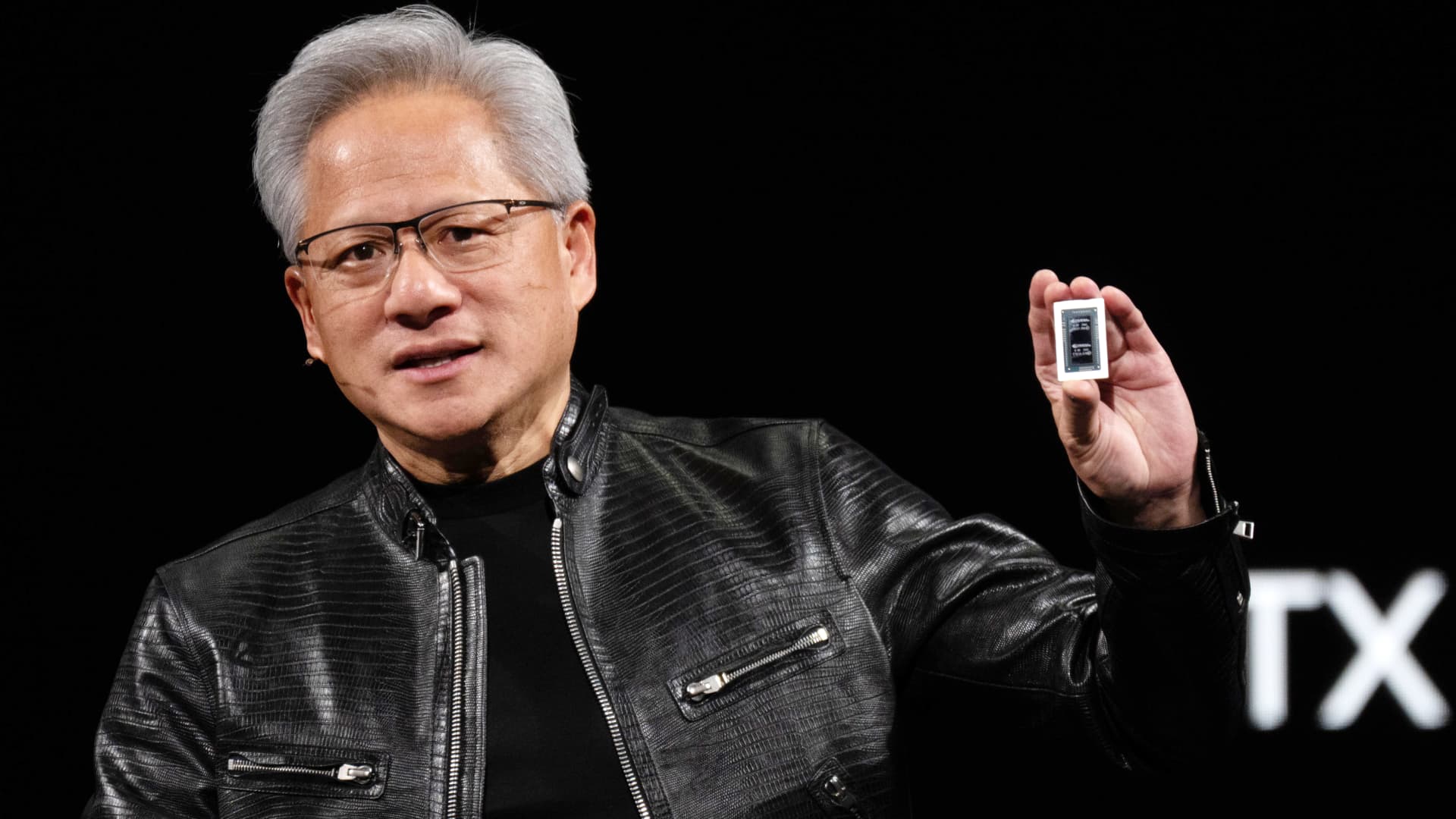
Nvidia CEO Jensen Huang’s recent Computex keynote has ignited renewed optimism in the burgeoning AI sector, painting a clear picture of computing power as a direct profit engine. This message appears to have resonated strongly with Wall Street, driving significant gains across the AI landscape despite broader market headwinds.
🚀 Tech Strategy & Market Disruptions
- Compute as Revenue Model. Jensen Huang’s articulation of ‘compute is revenue’ positions computational power not just as an expenditure, but as a direct driver of profitability in the AI era.
- Key Beneficiary Stocks Identified. The keynote directly highlighted Oracle, Nebius, and CoreWeave as critical partners, leading to substantial stock rallies following the presentation.
- Hyperscaler Inclusion Amidst Competition. Despite internal custom chip development, Cramer advocates for investors to hold Nvidia alongside hyperscalers like Amazon and Alphabet, emphasizing the immense market opportunity.
Jim Cramer of CNBC noted that Huang’s presentation was particularly heartening, especially at a time when the profitability of data centers was being questioned. The narrative around the substantial investments in AI infrastructure had begun to invite skepticism, with some observers concerned about the return on investment. However, Nvidia’s clear articulation of compute’s revenue-generating potential appears to have shifted this sentiment.
Huang’s central thesis, ‘compute is revenue,’ aimed to justify the significant capital expenditure in AI infrastructure. This message is crucial for a market increasingly scrutinizing the economics of artificial intelligence. Cramer emphasized that this perspective is a true ‘tide-turner,’ especially given that the companies directly mentioned by Huang—Oracle, Nebius, and CoreWeave—all experienced significant stock price increases. For instance, Oracle, which has faced scrutiny over its AI infrastructure spending, saw a nearly 10% jump, while CoreWeave, which has had to publicly defend its financial strategy, surged over 14%.
The implications for the broader technology market are substantial. The validation of compute as a direct revenue stream strengthens the investment case for companies across the AI value chain. This also reinforces the ongoing trend of digital transformation, where advanced computing capabilities are becoming foundational to business operations and competitive advantage. Understanding these dynamics is key to navigating the evolving emerging technologies landscape.
Furthermore, Cramer’s advocacy for owning Nvidia alongside major cloud providers like Amazon and Alphabet underscores a belief in the vastness of the AI opportunity. While these hyperscalers are developing their own AI chips, the sheer scale of demand for AI processing power suggests that multiple players can thrive. This diversified approach to AI infrastructure investment is becoming a defining characteristic of the current technology market.
Oracle’s AI Infrastructure Investment Strategy
Oracle’s significant outlay on AI infrastructure has been a focal point for investors. Huang’s keynote provided a strong endorsement for such investments, framing them as crucial for revenue generation. This perspective is vital for companies like Oracle, which are positioning themselves as providers of AI-powered cloud services. The market’s positive reaction to Oracle’s stock suggests a growing confidence in its AI strategy, aligning with the broader narrative that compute directly translates to financial returns.
CoreWeave’s Defense of AI Spending
CoreWeave, a specialized cloud provider for AI and machine learning, has notably had to justify its aggressive spending and debt load. The endorsement from Nvidia’s keynote, coupled with a significant stock surge, indicates that its high-performance computing offerings are gaining market traction. The company’s strategy appears to be validated by the market’s response, highlighting the demand for specialized AI infrastructure solutions that can deliver significant computational power.
Hyperscalers and Nvidia’s Interdependence
The relationship between Nvidia and hyperscalers such as Amazon and Alphabet is complex. These companies are both major customers of Nvidia’s GPUs and are also developing their own competing AI silicon. Jim Cramer’s stance that investors should hold all three suggests a market so large that it can support multiple leading players, even with direct competition. This dynamic highlights the ongoing innovation within the AI chip market and the race to capture market share.
‘The market is recalibrating its understanding of AI infrastructure not as a cost center, but as a primary driver of scalable revenue. This shift is critical for justifying continued investment and unlocking the full economic potential of artificial intelligence.’
The momentum generated by Nvidia’s keynote suggests a powerful acceleration in the AI boom. Companies that are strategically positioned to capitalize on the demand for advanced computing power are likely to see continued growth. Examining how these companies manage their technology stacks will be crucial for understanding their long-term success in this rapidly evolving market. Investors interested in understanding broader technology market trends should pay close attention to these developments.
This narrative emphasizes the shift from viewing AI infrastructure as a capital expenditure to recognizing it as a direct revenue generator. The market’s positive reception underscores the potential for significant returns on investment in this area. For those looking for deeper educational insights, exploring educational tech insights can provide valuable context.
Nvidia’s Market Position and Future Prospects
Nvidia has solidified its position as a central player in the AI revolution, with its hardware forming the backbone of many AI initiatives. The company’s ability to consistently innovate and articulate the value proposition of its technology is a key factor in its market dominance. The Computex keynote served as a powerful reminder of Nvidia’s influence and its role in enabling the broader AI ecosystem. This reinforces the importance of understanding companies at the forefront of emerging technologies.
The Computing Power Profit Engine
The core message of Jensen Huang’s keynote—that computing power is a profit engine—has profound implications for businesses and investors alike. It signals a mature phase in the AI development cycle, where the focus is shifting from R&D to monetization. This shift is likely to drive further investment in AI infrastructure and services, creating a positive feedback loop for the entire AI industry. The sustained focus on performance and efficiency will drive innovation in hardware and software solutions.
NVDA’s Ecosystem Expansion Potential
Nvidia’s expansion into the personal computer market, as announced during the keynote, signifies a strategic move to broaden its reach beyond data centers. This diversification could unlock new revenue streams and further solidify Nvidia’s dominance across various computing segments. By integrating its AI capabilities into personal computing devices, Nvidia aims to democratize AI access and foster wider adoption, enhancing its overall ecosystem strength.
NVDA’s Next Growth Phase: What We Think
Nvidia’s clear articulation of ‘compute is revenue’ has recalibrated market expectations for AI infrastructure investments. The company is not just a hardware provider but a catalyst for substantial profit generation across its partner ecosystem.
- The keynote validated the significant capital being deployed in AI infrastructure as a direct path to revenue growth.
- Partners like Oracle, Nebius, and CoreWeave are poised to benefit immensely from Nvidia’s strategic direction and market validation.
- The market’s positive response indicates strong investor confidence in the continued expansion of the AI sector, driven by compute power.
What are the next key technological advancements that will further define the compute-as-revenue paradigm?
📊 StockXpo Analyst’s View
Market Impact: The affirmative message from Nvidia’s leadership is likely to sustain positive investor sentiment towards the AI sector, potentially drawing more capital into the space and increasing overall market liquidity for AI-focused companies. This could lead to higher valuations for companies demonstrating clear AI integration and revenue-generating strategies.
Sector To Watch: The semiconductor and cloud computing sectors will be prime beneficiaries, with a particular focus on companies that provide critical infrastructure or services for AI development and deployment. Data center operators and specialized AI hardware providers are expected to see significant opportunities.
Financial Disclaimer:
StockXpo.com is a financial news aggregator and educational portal, not a registered investment advisor or broker-dealer. All information, news, and analysis provided herein are strictly for educational purposes and do not constitute investment, financial, legal, or tax advice. Investing in the stock market involves high risks, and past performance is not indicative of future results. StockXpo will not be liable for any financial losses or investment damages. Always consult a certified financial advisor before making market decisions.
MORE IN INSIDE TECHNOLOGY

AI Buildout Hits Credit Headwinds: Neoclouds Under Pressure
Published: Saturday, October 24, 2026 · 12:23 AM

SK Hynix Shares Rebound: A Strategic Shift in Semiconductor Funding
Published: Friday, October 23, 2026 · 1:46 AM