Iran War Cost: U.S. Households Face $450 Energy Hit | | StockXpo

Try Stockxpo Premium

Iran War Cost: U.S. Households Face $450 Energy Hit

Published: Friday, May 29, 2026 · 9:33 PM  |  Updated: Friday, May 29, 2026 · 9:33 PM

📊 5 views

SHARE


Iran War Cost: U.S. Households Face $450 Energy Hit

The protracted conflict in Iran has directly translated into a tangible economic burden for American households, with new analysis revealing consumers have collectively spent nearly $60 billion more on energy since February 28. This significant increase, averaging $447.19 per household, underscores the geopolitical volatility’s direct impact on domestic fiscal stability and inflationary pressures.

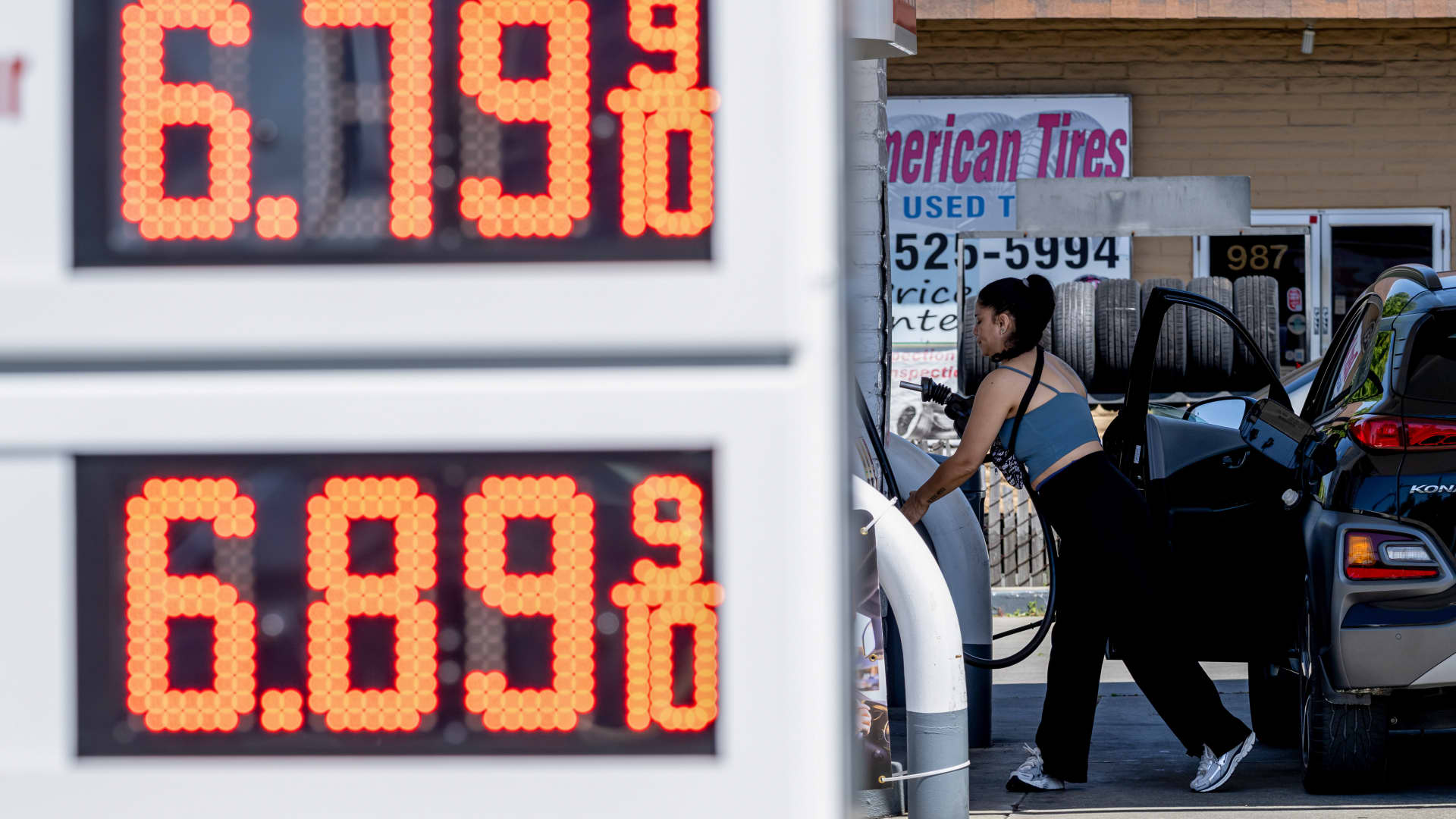
As gas prices and airline fares continue their upward trajectory, the ripple effects are manifesting in reduced savings, increased reliance on debt, and a palpable shift in consumer spending behavior across the nation.

📊 Macro-Economic Strategic Insights

  • Escalating Energy Bills. The average U.S. household has incurred an additional $447.19 in fuel-related expenses, totaling nearly $60 billion nationally due to the conflict.
  • Consumer Spending Strain. Rising energy costs are forcing consumers to deplete savings and take on more debt, threatening broader economic growth as discretionary spending tightens.
  • Inflationary Momentum. Gasoline, diesel, and jet fuel price surges—up around 47% and 20% respectively—are driving inflation and eroding the purchasing power of lower-income households.

The Unfolding Burden of Higher Energy Bills

The economic policy implications of the Iran conflict are becoming starkly clear as the financial weight shifts to American consumers. According to Moody’s Analytics, the cumulative Iran war cost to U.S. households has already topped $447.19, translating to a staggering $60 billion national expenditure on elevated gas and energy prices over three months. This figure already overshadows the $384 boost from recent tax returns, effectively nullifying any short-term fiscal relief for families.

Mark Zandi, chief economist at Moody’s, warns that if these price levels persist, the annual hit to an average household could approach $2,000. This sustained financial pressure is compelling many to re-evaluate their spending habits, drawing from savings and increasing reliance on credit to manage daily expenses. The visible impact is already being observed, with companies like Costco reporting record-breaking gas volumes as consumers actively seek lower-priced fuel options, while McDonald’s CEO notes a decline in spending among lower-income demographics.

  • Gasoline Spike: Roughly half of the increased energy spending is attributable to gasoline, with prices up over 47% since early March, averaging $4.39 per gallon.
  • Diesel’s Domino Effect: Pricier diesel, vital for transportation and logistics, has added over $20 billion in consumer costs, jumping by a similar 47% to $5.52 a gallon.
  • Airline Fare Inflation: Jet fuel cost hikes have led to nearly $10 billion in additional expenses, contributing to a more than 20% increase in airline fares year-over-year.

The Ripple Effect: Inflation to Consumption

The current geopolitical landscape creates a clear chain of economic consequences:

Geopolitical Tensions → Supply Chain Disruptions → Higher Crude Oil Prices → Increased Gasoline & Diesel Costs → Elevated Transportation Expenses → Broad Inflationary Pressures → Reduced Consumer Purchasing Power → Decreased Discretionary Spending → Slower Economic Growth.

This sequence highlights how external shocks can quickly propagate through the economy, impacting everything from individual budgets to national GDP trajectories. The ability of households to absorb these shocks is diminishing, as reflected in dwindling savings and escalating debt levels.

Strategic Insight: The ‘income squeeze’ refers to a situation where household income growth stagnates or declines relative to the cost of living, particularly essential goods and services like energy and food. This forces consumers to make difficult trade-offs, often drawing from savings or increasing debt to maintain their lifestyle, which can signal broader economic fragility and potential deceleration in consumption-driven growth.

Key Economic Indicators: Consumer Strain

Recent data points paint a clear picture of growing consumer vulnerability:

  • Personal Savings Rate: Fell to 2.6% in April, one of the lowest since the global financial crisis. This reflects consumers drawing down reserves built during the pandemic.
  • Income Growth: Remained flat in April, missing economist forecasts of a 0.4% increase. Stagnant income combined with rising costs tightens household budgets significantly.
  • Credit Card Debt: Totaled $1.25 trillion in Q1, up nearly 6% year-over-year, approaching the all-time record set in late 2025. This indicates increasing reliance on borrowed funds to sustain spending.

These metrics underscore that while consumer spending has shown some resilience, it’s increasingly supported by savings depletion and credit accumulation rather than robust income growth, raising concerns about long-term sustainability for stock markets.

U.S. Inflationary Pressures and Macro-Stability

The current inflationary environment, heavily influenced by the Iran war cost, poses a significant threat to U.S. macro-stability. Energy costs are a foundational component of the Producer Price Index (PPI) and the Consumer Price Index (CPI), directly affecting the cost of goods and services across the entire supply chain. When crude oil, diesel, and jet fuel prices surge, businesses face higher operational costs, which are often passed on to consumers in the form of higher retail prices. This reduces the purchasing power of the dollar and disproportionately impacts lower-income households, who allocate a larger percentage of their budget to necessities like food and energy.

Policymakers, including the Federal Reserve, face a challenging dilemma. While higher interest rates are a traditional tool to combat inflation, they also risk stifling an economy already showing signs of softness due to eroded consumer confidence and spending. Managing these pressures requires a delicate balance to avoid triggering a significant economic downturn while aiming to restore price stability.

Global Energy Market Dynamics

The conflict’s immediate impact on global energy markets extends beyond the direct supply of oil, influencing risk premiums and speculative trading. The Strait of Hormuz, a critical chokepoint for global oil shipments, introduces a geopolitical risk factor that pushes prices higher even without direct supply disruptions. This sensitivity means that any escalation or prolonged uncertainty in the region can lead to sustained price volatility, affecting economies worldwide. Major energy-importing nations are particularly vulnerable, facing increased import bills that can widen trade deficits and weaken national currencies.

Moreover, the interconnectedness of global markets means that regional conflicts can trigger a domino effect. Higher energy prices in one major economy can reduce demand for goods and services globally, creating headwinds for international trade and investment. Diversification of energy sources and strategic petroleum reserves become crucial tools for nations to mitigate such external shocks and safeguard their economic interests.

The Consumer Resilience Test Amid Iran War Cost

The continued Iran war cost is subjecting American households to an acute test of financial resilience. With savings dwindling and credit lines expanding, the average consumer’s capacity to absorb sustained inflationary pressures is rapidly diminishing. This environment suggests a period of heightened caution and potentially constrained spending, which could significantly temper economic activity moving forward.

  • Households are increasingly relying on debt and dwindling savings to maintain consumption levels.
  • Inflationary impacts are erasing benefits from fiscal policies like tax returns, disproportionately affecting lower-income groups.
  • The sustainability of current consumer spending patterns is questionable without robust income growth.

How will consumer behavior adapt if energy costs remain elevated, and what broader economic shifts might follow?

📊 StockXpo Analyst’s View

Market Impact: The persistent drain on consumer finances from higher energy costs is a significant headwind for broader market sentiment. Sectors reliant on discretionary spending could see further pressure, while the increased use of credit poses risks to financial stability. Investors should monitor consumer debt levels closely, as escalating defaults could ripple through credit markets.

Sector To Watch: The energy sector (oil & gas exploration, refining) may see continued strong performance due to elevated prices, although global demand destruction from economic slowdowns could eventually cap gains. Conversely, consumer discretionary and retail sectors, especially those targeting lower to middle-income consumers, could face significant challenges as disposable income shrinks. For more educational insights, our analysts continuously monitor these trends.


Financial Disclaimer:
StockXpo.com is a financial news aggregator and educational portal, not a registered investment advisor or broker-dealer. All information, news, and analysis provided herein are strictly for educational purposes and do not constitute investment, financial, legal, or tax advice. Investing in the stock market involves high risks, and past performance is not indicative of future results. StockXpo will not be liable for any financial losses or investment damages. Always consult a certified financial advisor before making market decisions.

Iran War Cost: U.S. Households Face $450 Energy Hit

Published: Friday, May 29, 2026 · 9:30 PM  |  Updated: Friday, May 29, 2026 · 9:30 PM

📊 0 views

SHARE


Iran War Cost: U.S. Households Face $450 Energy Hit

The protracted conflict in Iran has directly translated into a tangible economic burden for American households, with new analysis revealing consumers have collectively spent nearly $60 billion more on energy since February 28. This significant increase, averaging $447.19 per household, underscores the geopolitical volatility’s direct impact on domestic fiscal stability and inflationary pressures.

As gas prices and airline fares continue their upward trajectory, the ripple effects are manifesting in reduced savings, increased reliance on debt, and a palpable shift in consumer spending behavior across the nation.

📊 Macro-Economic Strategic Insights

  • Escalating Energy Bills. The average U.S. household has incurred an additional $447.19 in fuel-related expenses, totaling nearly $60 billion nationally due to the conflict.
  • Consumer Spending Strain. Rising energy costs are forcing consumers to deplete savings and take on more debt, threatening broader economic growth as discretionary spending tightens.
  • Inflationary Momentum. Gasoline, diesel, and jet fuel price surges—up around 47% and 20% respectively—are driving inflation and eroding the purchasing power of lower-income households.

The Unfolding Burden of Higher Energy Bills

The economic policy implications of the Iran conflict are becoming starkly clear as the financial weight shifts to American consumers. According to Moody’s Analytics, the cumulative Iran war cost to U.S. households has already topped $447.19, translating to a staggering $60 billion national expenditure on elevated gas and energy prices over three months. This figure already overshadows the $384 boost from recent tax returns, effectively nullifying any short-term fiscal relief for families.

Mark Zandi, chief economist at Moody’s, warns that if these price levels persist, the annual hit to an average household could approach $2,000. This sustained financial pressure is compelling many to re-evaluate their spending habits, drawing from savings and increasing reliance on credit to manage daily expenses. The visible impact is already being observed, with companies like Costco reporting record-breaking gas volumes as consumers actively seek lower-priced fuel options, while McDonald’s CEO notes a decline in spending among lower-income demographics.

  • Gasoline Spike: Roughly half of the increased energy spending is attributable to gasoline, with prices up over 47% since early March, averaging $4.39 per gallon.
  • Diesel’s Domino Effect: Pricier diesel, vital for transportation and logistics, has added over $20 billion in consumer costs, jumping by a similar 47% to $5.52 a gallon.
  • Airline Fare Inflation: Jet fuel cost hikes have led to nearly $10 billion in additional expenses, contributing to a more than 20% increase in airline fares year-over-year.

The Ripple Effect: Inflation to Consumption

The current geopolitical landscape creates a clear chain of economic consequences:

Geopolitical Tensions → Supply Chain Disruptions → Higher Crude Oil Prices → Increased Gasoline & Diesel Costs → Elevated Transportation Expenses → Broad Inflationary Pressures → Reduced Consumer Purchasing Power → Decreased Discretionary Spending → Slower Economic Growth.

This sequence highlights how external shocks can quickly propagate through the economy, impacting everything from individual budgets to national GDP trajectories. The ability of households to absorb these shocks is diminishing, as reflected in dwindling savings and escalating debt levels.

Strategic Insight: The ‘income squeeze’ refers to a situation where household income growth stagnates or declines relative to the cost of living, particularly essential goods and services like energy and food. This forces consumers to make difficult trade-offs, often drawing from savings or increasing debt to maintain their lifestyle, which can signal broader economic fragility and potential deceleration in consumption-driven growth.

Key Economic Indicators: Consumer Strain

Recent data points paint a clear picture of growing consumer vulnerability:

  • Personal Savings Rate: Fell to 2.6% in April, one of the lowest since the global financial crisis. This reflects consumers drawing down reserves built during the pandemic.
  • Income Growth: Remained flat in April, missing economist forecasts of a 0.4% increase. Stagnant income combined with rising costs tightens household budgets significantly.
  • Credit Card Debt: Totaled $1.25 trillion in Q1, up nearly 6% year-over-year, approaching the all-time record set in late 2025. This indicates increasing reliance on borrowed funds to sustain spending.

These metrics underscore that while consumer spending has shown some resilience, it’s increasingly supported by savings depletion and credit accumulation rather than robust income growth, raising concerns about long-term sustainability for stock markets.

U.S. Inflationary Pressures and Macro-Stability

The current inflationary environment, heavily influenced by the Iran war cost, poses a significant threat to U.S. macro-stability. Energy costs are a foundational component of the Producer Price Index (PPI) and the Consumer Price Index (CPI), directly affecting the cost of goods and services across the entire supply chain. When crude oil, diesel, and jet fuel prices surge, businesses face higher operational costs, which are often passed on to consumers in the form of higher retail prices. This reduces the purchasing power of the dollar and disproportionately impacts lower-income households, who allocate a larger percentage of their budget to necessities like food and energy.

Policymakers, including the Federal Reserve, face a challenging dilemma. While higher interest rates are a traditional tool to combat inflation, they also risk stifling an economy already showing signs of softness due to eroded consumer confidence and spending. Managing these pressures requires a delicate balance to avoid triggering a significant economic downturn while aiming to restore price stability.

Global Energy Market Dynamics

The conflict’s immediate impact on global energy markets extends beyond the direct supply of oil, influencing risk premiums and speculative trading. The Strait of Hormuz, a critical chokepoint for global oil shipments, introduces a geopolitical risk factor that pushes prices higher even without direct supply disruptions. This sensitivity means that any escalation or prolonged uncertainty in the region can lead to sustained price volatility, affecting economies worldwide. Major energy-importing nations are particularly vulnerable, facing increased import bills that can widen trade deficits and weaken national currencies.

Moreover, the interconnectedness of global markets means that regional conflicts can trigger a domino effect. Higher energy prices in one major economy can reduce demand for goods and services globally, creating headwinds for international trade and investment. Diversification of energy sources and strategic petroleum reserves become crucial tools for nations to mitigate such external shocks and safeguard their economic interests.

The Consumer Resilience Test Amid Iran War Cost

The continued Iran war cost is subjecting American households to an acute test of financial resilience. With savings dwindling and credit lines expanding, the average consumer’s capacity to absorb sustained inflationary pressures is rapidly diminishing. This environment suggests a period of heightened caution and potentially constrained spending, which could significantly temper economic activity moving forward.

  • Households are increasingly relying on debt and dwindling savings to maintain consumption levels.
  • Inflationary impacts are erasing benefits from fiscal policies like tax returns, disproportionately affecting lower-income groups.
  • The sustainability of current consumer spending patterns is questionable without robust income growth.

How will consumer behavior adapt if energy costs remain elevated, and what broader economic shifts might follow?

📊 StockXpo Analyst’s View

Market Impact: The persistent drain on consumer finances from higher energy costs is a significant headwind for broader market sentiment. Sectors reliant on discretionary spending could see further pressure, while the increased use of credit poses risks to financial stability. Investors should monitor consumer debt levels closely, as escalating defaults could ripple through credit markets.

Sector To Watch: The energy sector (oil & gas exploration, refining) may see continued strong performance due to elevated prices, although global demand destruction from economic slowdowns could eventually cap gains. Conversely, consumer discretionary and retail sectors, especially those targeting lower to middle-income consumers, could face significant challenges as disposable income shrinks. For more educational insights, our analysts continuously monitor these trends.


Financial Disclaimer:
StockXpo.com is a financial news aggregator and educational portal, not a registered investment advisor or broker-dealer. All information, news, and analysis provided herein are strictly for educational purposes and do not constitute investment, financial, legal, or tax advice. Investing in the stock market involves high risks, and past performance is not indicative of future results. StockXpo will not be liable for any financial losses or investment damages. Always consult a certified financial advisor before making market decisions.

scroll to top