Published: Tuesday, May 26, 2026 · 10:40 PM | Updated: Tuesday, May 26, 2026 · 10:40 PM
📊 224 views




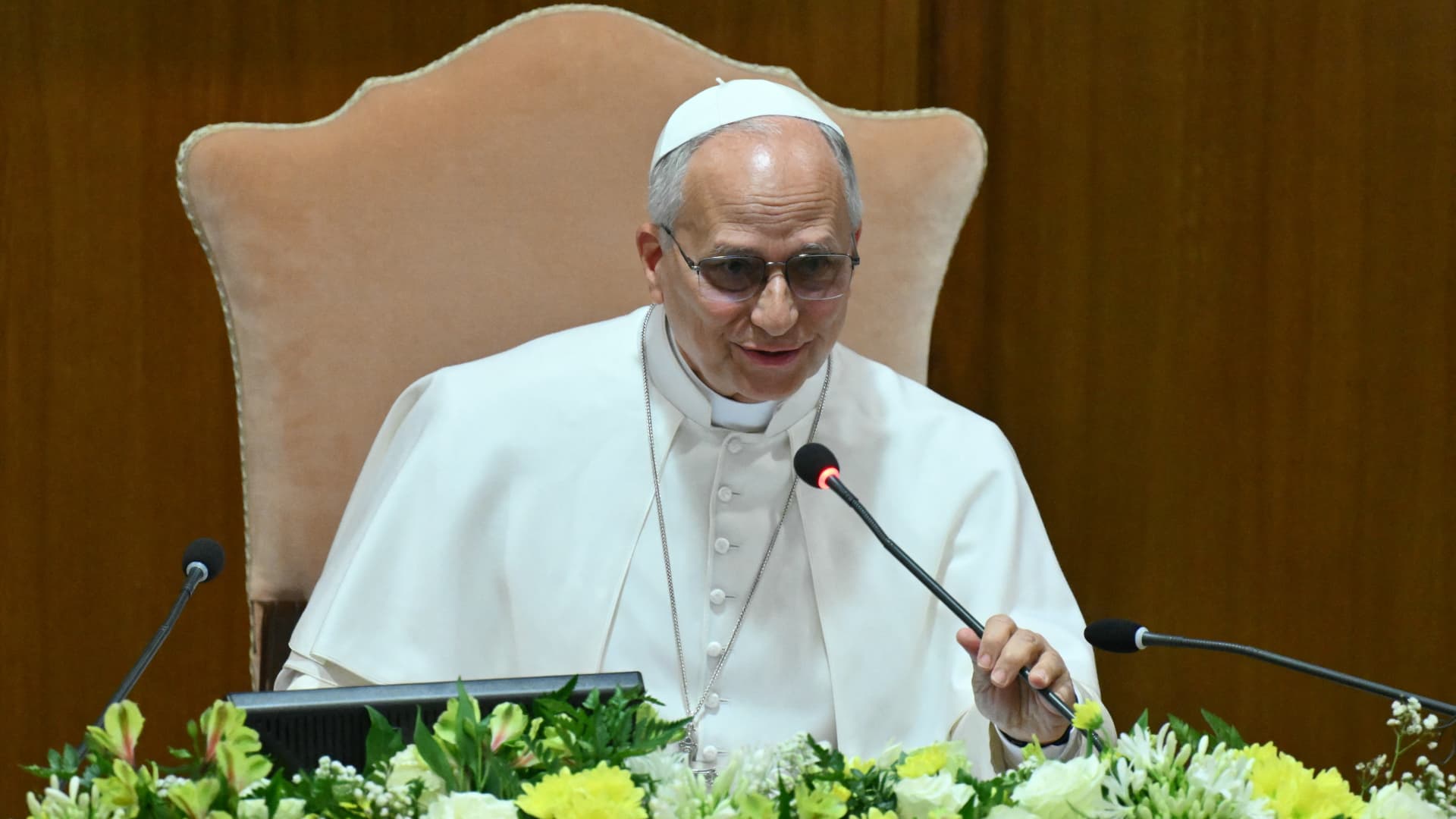
The Trump administration is grappling with a significant internal divide over Pope Leo XIV’s recent AI warning, a comprehensive encyclical calling for robust oversight of artificial intelligence. This ideological split highlights the intricate political and ethical challenges facing governments globally as they navigate the rapid evolution of AI technologies and their societal implications.
🚀 Tech Strategy & Market Disruptions
- Regulatory Rift Emerges. Key Trump officials, including Interior Secretary Doug Burgum and Vice President JD Vance, express contrasting views on the Pope’s call for AI guardrails, reflecting broader disagreements on tech regulation.
- Innovation vs. Oversight Debate. The administration’s focus on AI dominance and deregulation for U.S. competitiveness against China clashes with ethical concerns regarding job displacement, inequality, and autonomous weapons.
- Political Ramifications Ahead. The growing public feud between the White House and the Vatican, particularly on AI, could impact crucial Catholic voter blocs in upcoming elections, adding a new dimension to political discourse.
The Vatican’s first American pontiff, Pope Leo XIV, recently issued ‘Magnifica Humanitas,’ a 42,300-word encyclical that unequivocally warns against the unchecked proliferation of artificial intelligence. The document outlines significant risks, including the potential for widespread worker displacement, exacerbated wealth inequality, and the deployment of lethal autonomous weapons beyond human control. This powerful ethical stance immediately created ripples within the U.S. political landscape, exposing a fundamental ideological split within the Trump administration itself.
Interior Secretary Doug Burgum publicly dismissed the Pope’s critique, questioning whether ‘tech editorializing’ falls within the papal purview. This aligns with the administration’s broader push for AI deregulation, aimed at preserving America’s competitive edge in emerging technologies against rivals like China. However, Vice President JD Vance, a prominent Catholic figure with ties to Silicon Valley, offered a starkly different assessment, lauding the encyclical as ‘profound’ and an essential form of ‘moral leadership’ for the nascent AI era.
This division underscores a delicate political balancing act for President Donald Trump, who has positioned AI dominance as a cornerstone of his second-term economic agenda. His decision to delay an executive order intended to establish a voluntary AI safety review process, reportedly after pressure from the tech industry, further illustrates the administration’s inclination towards fostering innovation with minimal regulatory friction. This approach is increasingly at odds with a growing chorus of voices, including Catholic groups and AI-safety advocates, who argue that policymakers risk being outpaced by technology, potentially worsening societal issues related to work, family, and economic stability.
Leo’s proactive engagement with the tech sector, notably releasing the encyclical alongside Christopher Olah, a co-founder of AI firm Anthropic – a company already known for its cautious stance on military AI access – signals a new chapter in the dialogue between moral authorities and industry titans. This direct engagement, unprecedented in its nature, has been viewed positively by many, suggesting a desire for deeper ethical integration into AI development.
The rapid advancement of AI models, particularly in generative capabilities and autonomous decision-making, directly impacts labor markets. This surge in AI adoption can lead to an increase in automation, causing significant worker displacement in sectors susceptible to algorithmic optimization. Consequently, this creates socio-economic instability and exacerbates existing wealth inequalities, potentially leading to social unrest and increased demands for governmental intervention and re-skilling programs. The disruption flow from unregulated AI development to societal challenge is clear: new AI capabilities → accelerated automation → job market disruption → amplified wealth disparity → mounting pressure for ethical AI guardrails and robust policy frameworks.
‘The current debate isn’t merely about technological progress; it’s a profound re-evaluation of our societal values in the face of machine autonomy. As CTOs, we must bridge the chasm between innovation velocity and ethical responsibility, ensuring our architectures are not just efficient, but also inherently aligned with human dignity and long-term societal well-being.’
AI Policy Crossroads: Navigating Innovation and Regulation
The core of the AI debate within the Trump administration, and indeed globally, lies at the intersection of fostering technological innovation and implementing necessary regulatory guardrails. Proponents of deregulation argue that excessive oversight stifles progress, risking a loss of competitive advantage to nations like China, which are rapidly investing in AI research and deployment. This ‘tech right’ perspective prioritizes speed-to-market and the economic benefits of AI-driven growth. However, critics, including religious leaders and many within the tech community itself, emphasize the irreversible consequences of unregulated AI, particularly concerning safety, bias, and the potential for misuse in critical areas like defense. The challenge for policymakers is to craft frameworks that encourage groundbreaking development while proactively mitigating risks, a task that requires an intricate understanding of both technological capabilities and their broader societal implications. Understanding these educational tech insights is crucial for balanced policy-making.
Ethical AI Frameworks: Beyond Silicon Valley’s Influence
Pope Leo XIV’s encyclical, ‘Magnifica Humanitas,’ represents a significant push for ethical considerations to transcend purely technical or economic viewpoints, advocating for a holistic approach that incorporates moral philosophy and humanistic principles. This initiative attempts to shift the narrative from solely industry-driven innovation to a broader, human-centric discourse on AI’s purpose and impact. The collaboration with figures like Anthropic’s Christopher Olah, a company known for its focus on AI safety, highlights a growing movement within the tech sector itself that champions responsible development. This alignment suggests that ethical AI frameworks may increasingly be forged through cross-disciplinary collaborations, moving beyond the traditional influence of large tech corporations to include diverse stakeholders, from religious institutions to academic ethicists and civil society organizations. As the latest tech developments unfold, the emphasis on robust ethical frameworks will define the next generation of AI governance.
The AI Warning’s Ripple Effect on US Tech Policy
The profound split within the Trump administration over Pope Leo XIV’s AI warning underscores a significant inflection point in how major global powers approach artificial intelligence governance. This clash of priorities – unchecked innovation versus ethical oversight – is set to redefine not only domestic policy but also international collaborations on emerging technologies.
- The ongoing Vatican-White House feud injects a moral dimension into the tech policy debate, potentially influencing voter sentiment, especially among Catholic demographics.
- The delay in federal AI safety regulations signals a continued preference for industry-led development, raising concerns among AI safety advocates and global regulators.
- The engagement of high-profile tech leaders like Anthropic’s co-founder with the Vatican indicates a growing recognition within the industry of the need for robust ethical frameworks.
Will the political and moral pressures ultimately steer U.S. AI policy towards a more regulated, human-centric model, or will the pursuit of competitive advantage continue to dominate the discourse?
### 📊 StockXpo Analyst’s View
Market Impact: This political and ethical friction surrounding AI regulation introduces significant policy uncertainty, which typically weighs on investor sentiment for major tech players heavily reliant on minimal governmental oversight. While the short-term impact might be limited to political rhetoric, any concrete shift towards stricter guardrails could influence R&D costs and deployment timelines, potentially leading to market volatility for AI-centric stocks. The public discourse, particularly via a global figure like the Pope, brings mainstream attention to long-term risks, which could eventually manifest as pressure for corporate social responsibility in AI development.
Sector To Watch: Investors should closely monitor the enterprise AI and defense technology sectors. Companies developing advanced autonomous systems or those heavily integrated into government contracts may face increased scrutiny. Conversely, firms specializing in ethical AI tools, AI governance platforms, or those offering solutions for workforce reskilling could see heightened demand as the focus shifts towards responsible innovation. Keep an eye on firms pioneering transparent and accountable AI, as detailed in global technology news, for long-term growth.
Financial Disclaimer:
StockXpo.com is a financial news aggregator and educational portal, not a registered investment advisor or broker-dealer. All information, news, and analysis provided herein are strictly for educational purposes and do not constitute investment, financial, legal, or tax advice. Investing in the stock market involves high risks, and past performance is not indicative of future results. StockXpo will not be liable for any financial losses or investment damages. Always consult a certified financial advisor before making market decisions.
MORE IN INSIDE TECHNOLOGY

AI Job Application Breakthrough: Skills Over Resumes Emerge
Published: Wednesday, September 30, 2026 · 3:04 AM

Smart Ring IPO: Oura Delays Public Offering Amidst Market Volatility
Published: Tuesday, September 29, 2026 · 6:52 AM