Published: Wednesday, May 20, 2026 · 3:24 PM | Updated: Wednesday, May 20, 2026 · 3:24 PM
📊 292 views




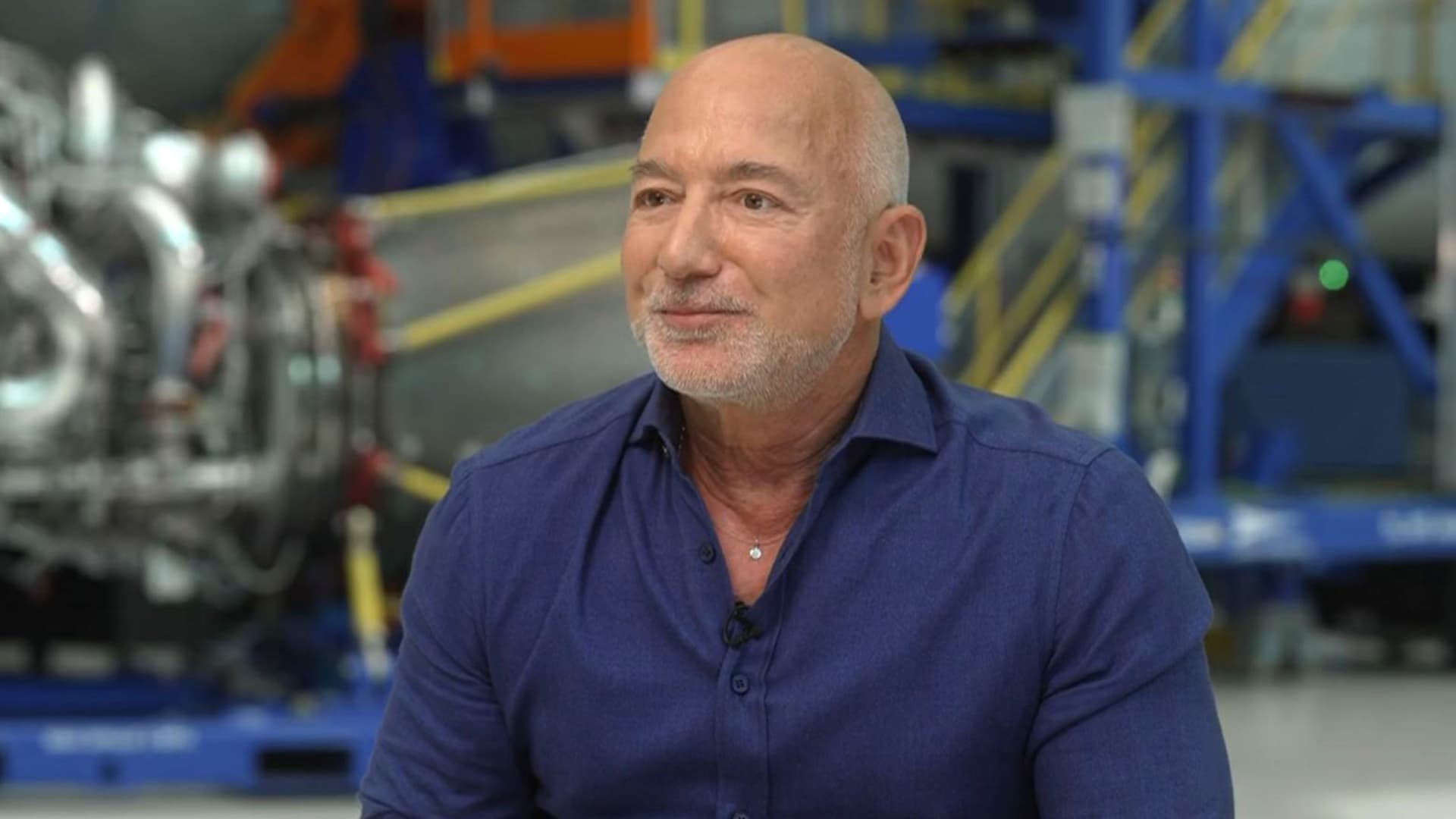
Jeff Bezos, founder of Amazon and Blue Origin, has offered a measured perspective on the burgeoning prospect of orbital Space Data Centers, acknowledging their eventual realism but cautioning against overly optimistic timelines. His comments arrive as the space industry sees a surge in investment and innovation, particularly with SpaceX’s anticipated IPO. This development signals both immense potential and significant hurdles for next-generation computing infrastructure.
🚀 Tech Strategy & Market Disruptions
- Bezos’s Realism. While affirming the inevitability of orbital data centers, the Blue Origin founder described a 2-3 year timeline as ‘a little ambitious,’ highlighting the need for cost reductions in energy and launch.
- Cost Barriers to Entry. High energy demands for AI-driven compute and the current expense of launching payloads into orbit remain critical obstacles for widespread adoption and profitability.
- Competitive Race to Orbit. Major players like Blue Origin (Project Sunrise/TeraWave) and SpaceX (xAI merger) are aggressively pursuing orbital infrastructure, signaling a significant future market.
Bezos, speaking recently, emphasized that while the concept of moving data centers into space is ‘very realistic,’ the public timelines often discussed are optimistic. He specifically pointed to the intensive energy requirements of artificial intelligence and the high cost of specialized chips as key factors that must decrease to make these ventures economically viable. The current expense of space launches also represents a considerable hurdle, a sentiment echoed across the industry, as reported by outlets like Bloomberg on the latest technology market trends.
Indeed, the drive to establish orbital infrastructure is escalating. Elon Musk’s integration of xAI with SpaceX underscored the vision for ‘orbital data centers’ as a core component of his AI ambitions. Not to be outdone, Blue Origin has already submitted plans to the Federal Communications Commission for ‘Project Sunrise,’ an initiative to deploy 51,600 data center satellites into low Earth orbit, supported by their planned TeraWave constellation set to begin deployment in late 2027.
This fierce competition underscores a fundamental shift in infrastructure thinking. Orbital data centers promise unfettered access to solar energy, circumventing land acquisition issues and potentially offering superior cooling efficiencies in the vacuum of space. The promise of harnessing space for compute capacity creates a compelling disruption flow: escalating AI demand necessitates massive compute resources → terrestrial limitations (land, power, cooling) become bottlenecks → space offers a perceived ‘infinite’ solution for energy and physical space → leading to innovation-driven growth and a race to establish orbital infrastructure.
‘The long-term vision for space-based infrastructure is not merely an extension of terrestrial capabilities but a paradigm shift in how we conceive and deploy compute power. The engineering challenges are immense, but the strategic advantages, particularly for AI, are undeniable.’
Despite the significant buzz, the path to widely adopted Space Data Centers is fraught with challenges. The industry must tackle several critical factors to ensure feasibility and sustained growth:
- Energy Cost Reduction: While solar energy is abundant, capturing, storing, and efficiently distributing it on a massive scale for orbiting data centers remains an expensive proposition.
- Launch Cost Efficiency: The cost per kilogram to launch payloads needs to fall dramatically to make deploying thousands of satellites economically attractive.
- Component Miniaturization & Ruggedization: Chips and hardware must be significantly more resilient to radiation and extreme temperatures, while also being compact enough for efficient launch.
- Regulatory Frameworks: International treaties and national regulations need to evolve to govern the deployment, operation, and eventual de-orbiting of such vast constellations.
Space Data Centers: Market Adoption Challenges
The nascent market for orbital data centers faces a multitude of adoption challenges beyond just the technological hurdles. Convincing enterprise customers to trust their mission-critical data to an extraterrestrial platform requires overcoming significant psychological and logistical barriers. Data latency, while potentially improved for certain applications, could be a concern for others. Furthermore, the development of robust, automated maintenance and upgrade procedures for thousands of satellites in orbit presents a complex operational challenge. Regulatory frameworks for data sovereignty and security in space are largely undeveloped, creating legal and compliance uncertainties for potential users. Initial investment costs for establishing these orbital networks will be astronomical, demanding strong investor confidence and clear paths to profitability, especially in the context of global technology market trends.
Blue Origin’s Ecosystem Expansion Potential
Blue Origin’s strategy extends beyond merely deploying data center satellites; it envisions a broader ecosystem for space industrialization. The company’s TeraWave constellation is just one piece of a larger puzzle that includes developing lunar infrastructure. Bezos has highlighted the potential to utilize lunar materials, such as those for building solar cells, which can be launched more efficiently from the Moon’s lower gravity. Collaborations with NASA and the U.S. government to establish a permanent lunar base underscore a long-term vision for sustained human presence and industrial activity in space. This strategic approach aims to scale U.S. defense capabilities and maintain space superiority, positioning Blue Origin not just as a launch provider, but as a foundational architect for an off-Earth economy, leveraging insights from cutting-edge tech developments to inform their strategic roadmap.
The Future of Space Data Centers: A Critical Inflection Point
The race to establish orbital compute infrastructure, while costly and complex, signifies a profound strategic shift in how global data and AI capabilities will be managed. Bezos’s insights temper immediate expectations but validate the long-term imperative to explore space as a frontier for digital transformation.
- Current cost structures for launches and high-performance chips are the primary bottleneck for widespread deployment.
- Major players like Blue Origin and SpaceX are committed to extensive orbital networks, signaling robust future investment.
- The long-term benefits of limitless solar energy and physical space for AI processing make the endeavor compelling despite the hurdles.
How quickly will technological breakthroughs and market forces align to make orbital data centers a mainstream reality for global enterprises?
📊 StockXpo Analyst’s View
Market Impact: Bezos’s comments, while cautious, reinforce the credibility and long-term potential of the space infrastructure market. This measured optimism could temper short-term speculative fervor but solidify investor confidence in the sector’s foundational growth. For capital markets, the imminent SpaceX IPO and Blue Origin’s ambitions will drive significant liquidity and could redefine valuations for space-related ventures.
Sector To Watch: Beyond space launch companies, investors should closely monitor firms involved in advanced materials for radiation hardening, compact power solutions, in-orbit servicing, and specialized AI chip design optimized for harsh environments. These enabling technologies are crucial for actualizing the orbital data center vision, offering high-growth opportunities within the broader technology sector, as explored in educational tech insights.
Financial Disclaimer:
StockXpo.com is a financial news aggregator and educational portal, not a registered investment advisor or broker-dealer. All information, news, and analysis provided herein are strictly for educational purposes and do not constitute investment, financial, legal, or tax advice. Investing in the stock market involves high risks, and past performance is not indicative of future results. StockXpo will not be liable for any financial losses or investment damages. Always consult a certified financial advisor before making market decisions.
MORE IN INSIDE TECHNOLOGY

Starlink India: Regulatory Hurdles and Innovation-Driven Growth Risks
Published: Friday, October 9, 2026 · 12:48 AM
Starlink Launch: India’s Digital Transformation Faces Regulatory Risk
Published: Thursday, October 8, 2026 · 1:51 AM