Published: Monday, September 14, 2026 · 6:19 AM | Updated: Monday, September 14, 2026 · 6:19 AM
📊 184 views




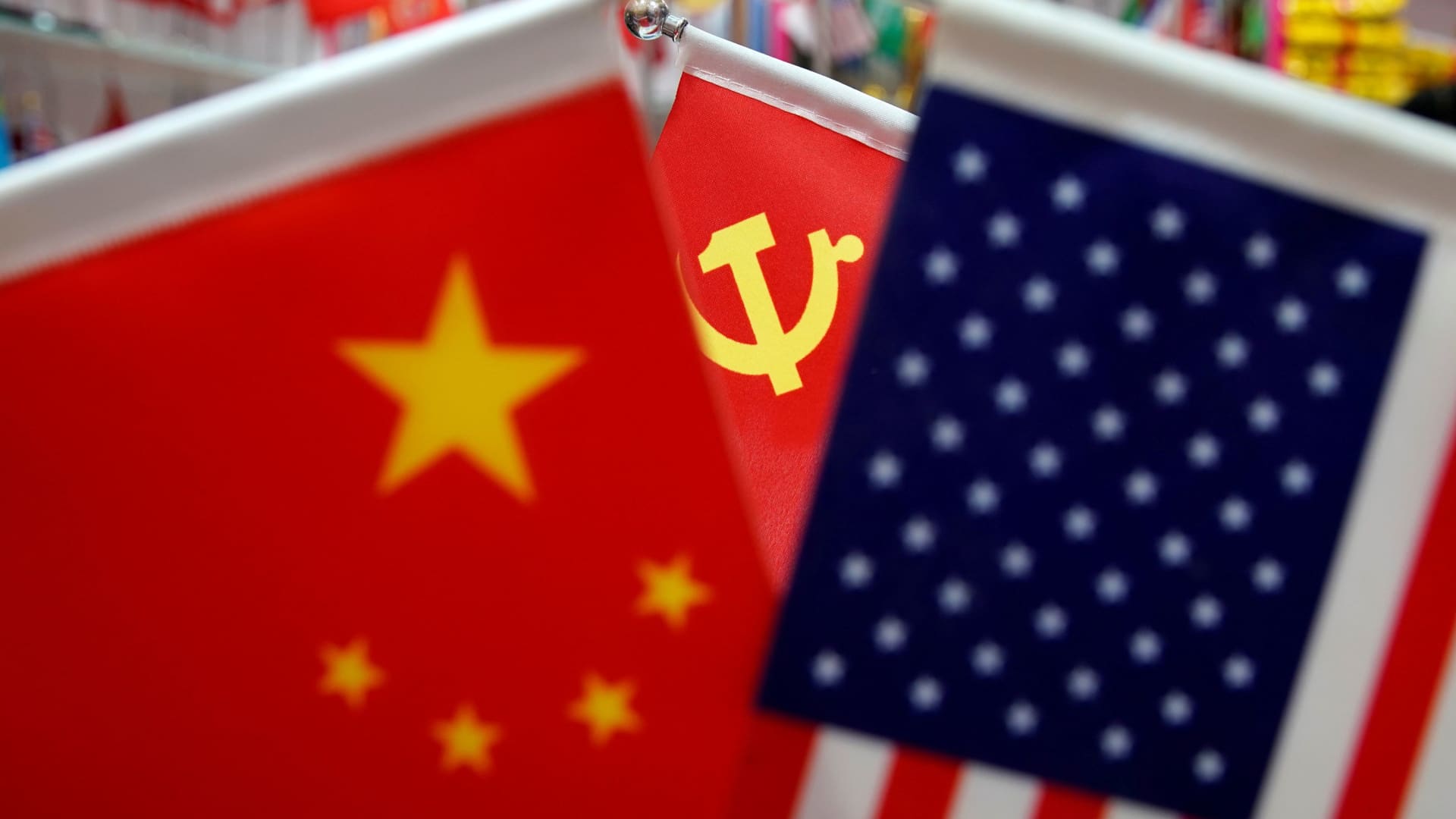
Beijing has sharply rebuked calls from leading U.S. AI executives for a slowdown in artificial intelligence development, labeling such concerns as ‘fear mongering.’ This escalating rhetoric underscores a deepening geopolitical fault line, transforming AI innovation into a critical battleground for global technological supremacy. The swift response from China signals its unwavering commitment to accelerating its AI capabilities amidst growing international apprehension.
💰 Financial Strategy & Market Insights
- Geopolitical Friction Intensifies. China’s dismissal of AI slowdown calls highlights increasing competition, potentially driving divergent regulatory frameworks and investment landscapes.
- Market Volatility in AI-Related Assets. Immediate market reactions, such as SoftBank’s 10% drop, suggest investor sensitivity to policy signals and ethical debates surrounding rapid AI advancements.
- National Security as a Key Driver. Both U.S. and Chinese officials frame AI leadership as a national security imperative, indicating sustained government backing and strategic funding in the sector.
The global landscape for AI development is increasingly shaped by a contentious debate between leading technological powers, with China unequivocally rejecting the notion of a slowdown. U.S. AI pioneers, including OpenAI’s Sam Altman and Anthropic’s Dario Amodei, have vocalized concerns about the inherent dangers of unchecked progress, advocating for a more deliberate pace. However, Beijing, through its Foreign Ministry spokesperson Guo Jiakun, dismissed these calls as ‘fear mongering’ that risks disrupting global AI governance, according to Reuters. This divergence in philosophy not only highlights differing strategic priorities but also directly impacts market sentiment and asset valuations within the rapidly evolving tech sector.
China’s Minister of State Security, Chen Yixin, further solidified this stance by advocating for the accelerated construction of an AI security risk prevention and control system, positioning AI as “the main battleground for global technological competition.” This governmental push for rapid yet controlled advancement contrasts sharply with the cautionary tone adopted by some Western leaders, who fear losing a strategic edge if development halts. Former U.S. President Donald Trump, for instance, has echoed sentiments of maintaining American leadership in what he terms the “AI arms race,” recognizing that “whoever wins AI, wins.” Such high-level pronouncements indicate that AI is no longer merely a technological frontier but a cornerstone of national power and economic dominance, influencing international relations and trade policies.
The immediate market reaction to this ideological split was notable, with AI-related stocks experiencing a slump. SoftBank, a major investor in OpenAI, saw its shares plummet by 10% in Japan, underscoring how deeply investor confidence is tied to the perceived stability and future trajectory of AI regulation and innovation. Amodei’s argument for a paced approach, specifically to maintain the U.S. lead over “authoritarian regimes, chiefly the Chinese Communist Party,” reveals the underlying national security implications driving the debate. Meanwhile, China’s President Xi Jinping at the BRICS summit emphasized fostering AI collaboration among developing nations, signalling a strategic effort to build its own AI ecosystem and influence globally. This dynamic environment suggests that companies navigating the AI space must contend not only with technological hurdles but also with complex geopolitical currents.
- The current geopolitical climate ensures that investment into AI will remain robust, albeit potentially bifurcated along national lines, affecting capital flows.
- Companies with dual-use technologies face increased scrutiny and potential export restrictions, altering market access and supply chain dynamics.
- The race for AI leadership is driving significant R&D spending, creating both opportunities for innovation and heightened competitive pressures for tech firms.
- Upside:
- Accelerated R&D and innovation in key AI sectors, driven by national strategic imperatives.
- Increased government funding and subsidies for AI initiatives in both the U.S. and China.
- Development of new global markets for AI solutions, particularly in developing nations championed by China.
- Downside Risks:
- Heightened geopolitical tensions leading to further fragmentation of the global tech ecosystem and potential trade wars.
- Increased regulatory uncertainty and divergent standards across jurisdictions, complicating international operations for AI firms.
- Significant market volatility and potential asset devaluation for companies caught in the crossfire of national security debates.
The rapid acceleration of AI development, particularly under government mandates, can create immense pressure on underlying hardware and software infrastructure. This drives increased demand for high-performance computing, advanced semiconductor fabrication, and specialized data centers, pushing up valuations in these critical supporting sectors while also amplifying supply chain risks.
- SoftBank Group Corp. shares declined 10% in Japan following calls for an AI slowdown, reflecting investor concerns over the industry’s future trajectory.
- While specific market-wide AI indices were not detailed, the decline in a major AI investor like SoftBank indicates broader market apprehension.
- The rapid policy shifts and international disagreements introduce unquantifiable risks that can lead to sudden market adjustments, impacting asset prices.
AI Sector Liquidity Analysis: Navigating Geopolitical Headwinds
The liquidity profile of the broader AI sector is becoming increasingly sensitive to geopolitical narratives and policy shifts. While venture capital continues to pour into promising AI startups, public market valuations, particularly for companies with significant exposure to either U.S. or Chinese markets, face potential volatility. The fear of regulatory divergence or export controls could lead to a ‘flight to quality’ within specific sub-segments of AI, favoring firms with diversified geographic exposure or those operating in less politically sensitive areas. Conversely, companies perceived as national champions in either the U.S. or China might experience enhanced liquidity and capital access due to strategic national support, even if global market access is constrained. Understanding these dynamics is crucial for investors seeking to maintain optimal portfolio market analysis within the AI space.
AI Asset Valuation Trends: A Dual-Track Future?
The valuation of AI assets, from intellectual property to company equity, appears to be diverging into a dual-track system driven by national strategic interests. U.S.-based AI firms, particularly those in foundational model development, often command premium valuations reflecting their technological lead and perceived alignment with Western values. However, as China pushes for accelerated homegrown capabilities, Chinese AI firms are also seeing increased domestic investment and potentially inflated valuations driven by national security mandates rather than purely market-driven economics. This creates a complex environment for investors attempting to benchmark AI assets, as traditional metrics may not fully capture the geopolitical premium or discount applied to companies based on their country of origin. Analysts studying the global financial sector must account for these non-market factors in their models.
The Ripple Effect of AI Development on Global Markets
The escalating rhetoric surrounding AI development between China and the U.S. transcends mere technological competition, becoming a pivotal factor for global capital markets. Investors are now forced to navigate an environment where national security and technological dominance heavily influence asset valuations and market liquidity. This dynamic implies a future where AI investments are increasingly bifurcated, presenting both opportunities for strategic growth and significant risks related to geopolitical friction.
- Geopolitical considerations will increasingly dictate capital allocation in the AI sector.
- Market participants should prepare for continued volatility driven by policy announcements and international relations.
- Opportunities may emerge in areas aligned with national strategic priorities, requiring careful due diligence.
How will this deepening ideological chasm reshape long-term investment strategies for global tech portfolios?
📊 StockXpo Analyst’s View
Market Impact: The ongoing ideological clash over AI development is set to inject significant volatility into technology markets. Investor sentiment will swing based on geopolitical headlines, with capital likely consolidating around firms deemed strategically vital by their respective governments. This could lead to a less efficient global market for AI intellectual property and services, impacting liquidity and requiring investors to adopt a more nuanced, region-specific approach to portfolio construction.
Sector To Watch: The semiconductor and cloud infrastructure sectors are critical enablers of AI and will likely see sustained, perhaps even accelerated, investment as nations race for dominance. Companies specializing in AI ethics, security, and governance may also gain prominence, albeit with differing regulatory frameworks. Conversely, multinational AI firms caught between competing national interests could face headwinds in terms of market access and operational continuity, prompting a review of their financial sector insights. We advise careful monitoring of policy developments as they will profoundly influence future asset valuations and risk profiles, a sentiment also echoed in recent market liquidity trends. For deeper in-depth financial analysis.
Financial Disclaimer:
StockXpo.com is a financial news aggregator and educational portal, not a registered investment advisor or broker-dealer. All information, news, and analysis provided herein are strictly for educational purposes and do not constitute investment, financial, legal, or tax advice. Investing in the stock market involves high risks, and past performance is not indicative of future results. StockXpo will not be liable for any financial losses or investment damages. Always consult a certified financial advisor before making market decisions.
MORE IN INSIDE FINANCE
AI Stock Boom Fuels $67 Billion Equities Growth for Wall Street Giants
Published: Wednesday, October 21, 2026 · 11:03 AM

New Risks Emerge: Global Finance Chiefs Highlight Debt, AI, and Geopolitical Volatility
Published: Tuesday, October 20, 2026 · 2:12 AM