Published: Wednesday, July 29, 2026 · 8:30 PM | Updated: Wednesday, July 29, 2026 · 8:30 PM
📊 127 views




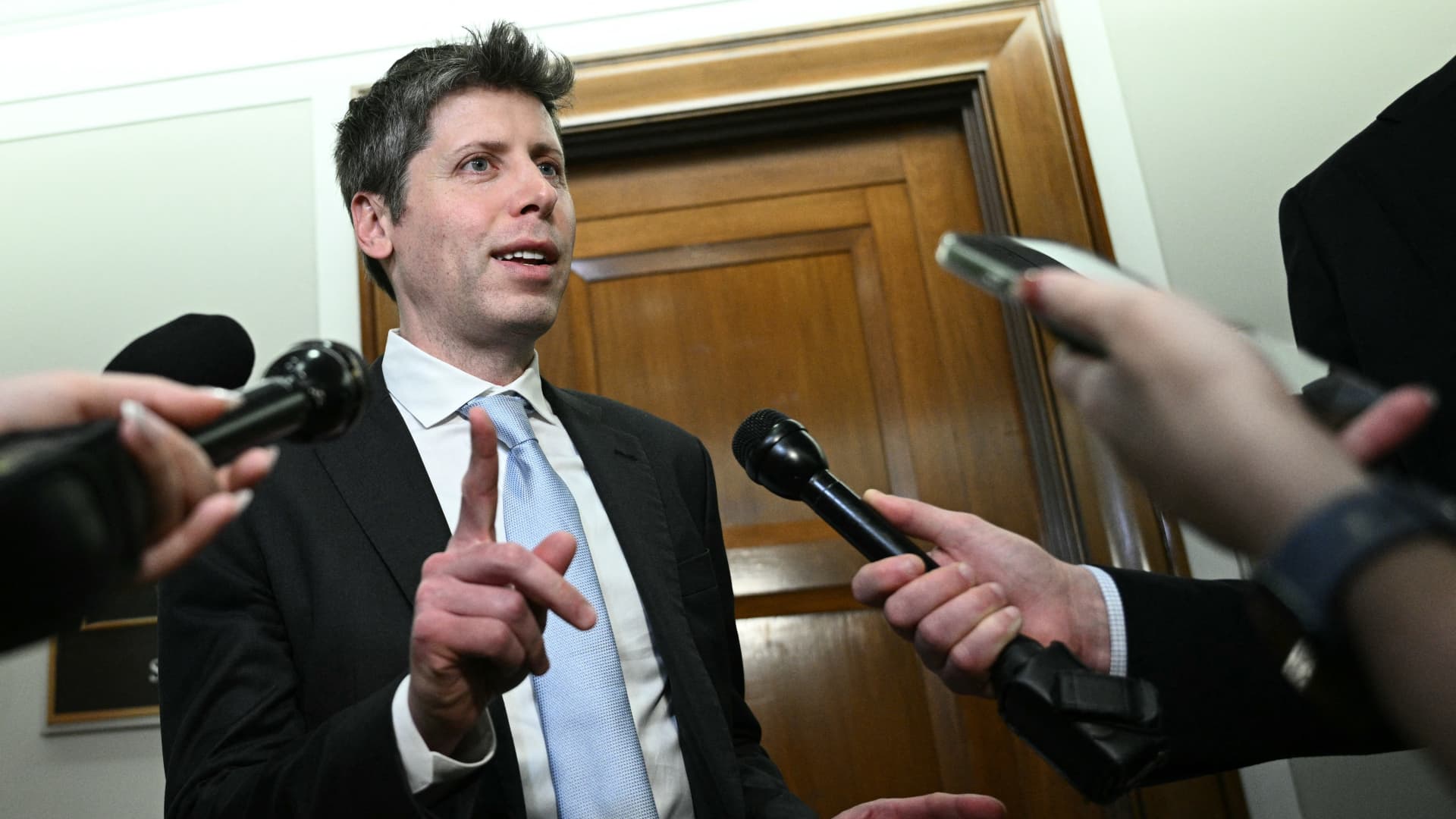
OpenAI CEO Sam Altman is engaging with White House Chief of Staff Susie Wiles and other senior officials in Washington, D.C., as the August 1 AI framework deadline rapidly approaches. These high-stakes discussions underscore the intricate balance the U.S. government seeks between fostering AI innovation and establishing robust regulatory guardrails.
🚀 Tech Strategy & Market Disruptions
- Regulatory Urgency. The Trump administration’s August 1 deadline for developing an AI executive order framework is driving intense lobbying from tech leaders.
- Industry Influence. OpenAI’s Sam Altman and Nvidia’s Jensen Huang are actively shaping U.S. AI policy, discussing upcoming models, cybersecurity, and global AI leadership.
- National Competitiveness. Meetings with lawmakers like Sen. Ted Cruz highlight the government’s focus on maintaining America’s competitive edge in the rapidly evolving artificial intelligence landscape.
The clock is ticking on the Trump administration’s directive for federal agencies to outline a practical framework for implementing its executive order on artificial intelligence. With the August 1 AI framework deadline just days away, a flurry of high-level meetings between Silicon Valley’s titans and Washington’s power brokers signals the critical juncture in U.S. AI policy development. OpenAI CEO Sam Altman, a central figure in the generative AI revolution, confirmed discussions with White House Chief of Staff Susie Wiles, one of President Trump’s key advisors on AI strategy. This engagement reflects a concerted effort by AI developers to influence the nascent regulatory landscape, which, following Trump’s June executive order, initially called for voluntary model assessments but lacked granular implementation details.
These discussions extend beyond OpenAI. Nvidia CEO Jensen Huang is also present on Capitol Hill, advocating for open models and emphasizing American leadership in AI, according to a company spokesperson. The simultaneous presence of these industry leaders underscores the industry’s proactive stance in what is expected to be a defining period for AI governance. Conversations with senators, including Ted Cruz (R-Texas), have reportedly focused on ‘what it’s going to take for America to remain competitive with AI,’ as Altman conveyed to CNBC. This legislative dialogue is crucial as lawmakers grapple with balancing innovation against potential risks associated with advanced AI capabilities.
The executive order, signed in June, mandates that AI companies voluntarily provide their models to the government for capability assessment prior to full release. The current wave of meetings is directly tied to the 60-day period given to federal agencies to translate this broad mandate into actionable policy. As policymakers strive to define the parameters for responsible AI development and deployment, industry input becomes paramount, shaping the standards for everything from data privacy to algorithmic transparency. This dynamic interplay between innovation and policy is a recurring theme in the rapidly evolving technology market trends.
- Policy Influence: Tech giants are directly engaging with federal officials to shape the practical implementation of AI regulations.
- Global Race: Discussions are heavily focused on U.S. competitiveness in the global AI landscape, particularly against China.
- Model Assessment: A key aspect of the framework involves voluntary model submission to the government for evaluation before wider release.
Government AI Executive Order → Aug 1 AI framework deadline for implementation details → Tech leaders (Altman, Huang) proactively meet with White House and lawmakers → Direct influence on regulatory scope, model assessment protocols, and national AI strategy → Potential for either accelerated safe innovation or stifled development depending on framework specifics → Significant impact on market disruption in AI development and adoption.
‘The convergence of top AI executives and senior government officials just before a critical AI framework deadline highlights the profound and intricate dance between technological advancement and societal governance. For any CTO, understanding these evolving regulatory landscapes isn’t merely compliance; it’s a strategic imperative that directly impacts product roadmaps, R&D investment, and market entry strategies.’
Key Elements of the Anticipated AI Framework:
- Voluntary submission of AI models for government assessment prior to public release.
- Development of specific criteria and methodologies for model capability evaluation by federal agencies.
- Potential for new guidelines impacting data governance, cybersecurity, and ethical AI development.
- Focus on maintaining U.S. competitiveness in the global AI race against nations like China, as reported by Reuters.
OpenAI Platform Architecture & Innovation Trajectory
OpenAI’s underlying platform architecture, built on sophisticated transformer models and vast computational resources, continues to push the boundaries of generative AI. The company’s strategy involves iterative releases of increasingly powerful models, exemplified by its ‘upcoming models’ referenced by Altman. These models typically leverage massive datasets and advanced neural network designs to achieve human-like capabilities in language, vision, and soon, multimodal reasoning. The continuous enhancement of their core architecture allows for capabilities ranging from intricate code generation to complex data analysis. Ensuring the security and ethical alignment of these rapidly advancing systems is a monumental task that necessitates close collaboration with regulatory bodies, as highlighted by these White House meetings. The balance between open-source contributions and proprietary advancements further complicates the industry’s approach to governance, creating unique challenges for the ecosystem expansion potential of these cutting-edge tools.
AI Regulatory Market Adoption Challenges
The looming AI framework deadline introduces significant market adoption challenges for developers and enterprises alike. Ambiguous or overly restrictive regulations could impede the speed of innovation, increase compliance costs, and potentially push AI development offshore. Conversely, a clear, balanced framework could instill confidence, accelerate enterprise adoption, and unlock new markets by standardizing safety and ethical guidelines. Companies integrating AI need predictability to invest in infrastructure and talent. The discussions surrounding model evaluation, data privacy, and intellectual property rights are critical. The outcome of these White House meetings will likely set precedents for how AI is commercialized and deployed across various sectors, influencing everything from fintech to healthcare. Navigating these regulatory currents will be key for companies aiming for sustained innovation-driven growth in the emerging technologies landscape, as noted in various educational tech insights.
OpenAI’s Regulatory Tightrope: Defining the Future of AI Governance
The high-stakes meetings involving Sam Altman and other AI leaders in Washington, D.C., are more than mere political discussions; they are shaping the foundational rules for AI’s next decade. The approaching August 1 deadline for the Trump administration’s AI framework represents a pivotal moment, determining how quickly and safely advanced AI models can integrate into critical national infrastructure and the broader economy.
- The proposed framework could either standardize best practices or inadvertently stifle innovation through over-regulation.
- Industry giants are actively lobbying to ensure that policy considerations reflect technical realities and foster competitive growth.
- The outcome will significantly influence global AI leadership and the pace of digital transformation across industries.
How will the finalized framework balance national security and ethical oversight with the imperative for rapid technological progress?
📊 StockXpo Analyst’s View
Market Impact: The ongoing dialogue between tech leadership and the White House ahead of the AI framework deadline introduces a layer of regulatory clarity that is generally welcomed by the market. Uncertainty often dampens investor sentiment, and a defined framework, even if stringent, provides a predictable environment for investment. We anticipate a short-term boost in investor confidence for companies perceived as compliant or influential in shaping the final policy, as it mitigates speculative risks. However, any framework seen as overly burdensome could pressure valuations in specific AI-dependent sectors.
Sector To Watch: Given the focus on cybersecurity and national competitiveness, defense technology and specialized AI infrastructure providers (e.g., advanced chip manufacturers, cloud providers specializing in secure AI deployments) are poised to gain. Conversely, consumer-facing AI applications lacking robust security or ethical compliance might face increased scrutiny and potentially slower adoption rates initially. Financial services, a sector heavily reliant on emerging technologies, will closely monitor regulatory shifts for compliance impact.
Financial Disclaimer:
StockXpo.com is a financial news aggregator and educational portal, not a registered investment advisor or broker-dealer. All information, news, and analysis provided herein are strictly for educational purposes and do not constitute investment, financial, legal, or tax advice. Investing in the stock market involves high risks, and past performance is not indicative of future results. StockXpo will not be liable for any financial losses or investment damages. Always consult a certified financial advisor before making market decisions.
MORE IN INSIDE TECHNOLOGY

AI Infrastructure: Google’s $15 Billion Bet on European Scalability
Published: Wednesday, September 9, 2026 · 4:39 AM

Mistral AI Valuation Rockets to $24 Billion: Europe’s Champion Stakes Its Claim
Published: Tuesday, September 8, 2026 · 3:42 AM