Published: Tuesday, July 28, 2026 · 8:30 PM | Updated: Tuesday, July 28, 2026 · 8:30 PM
📊 183 views




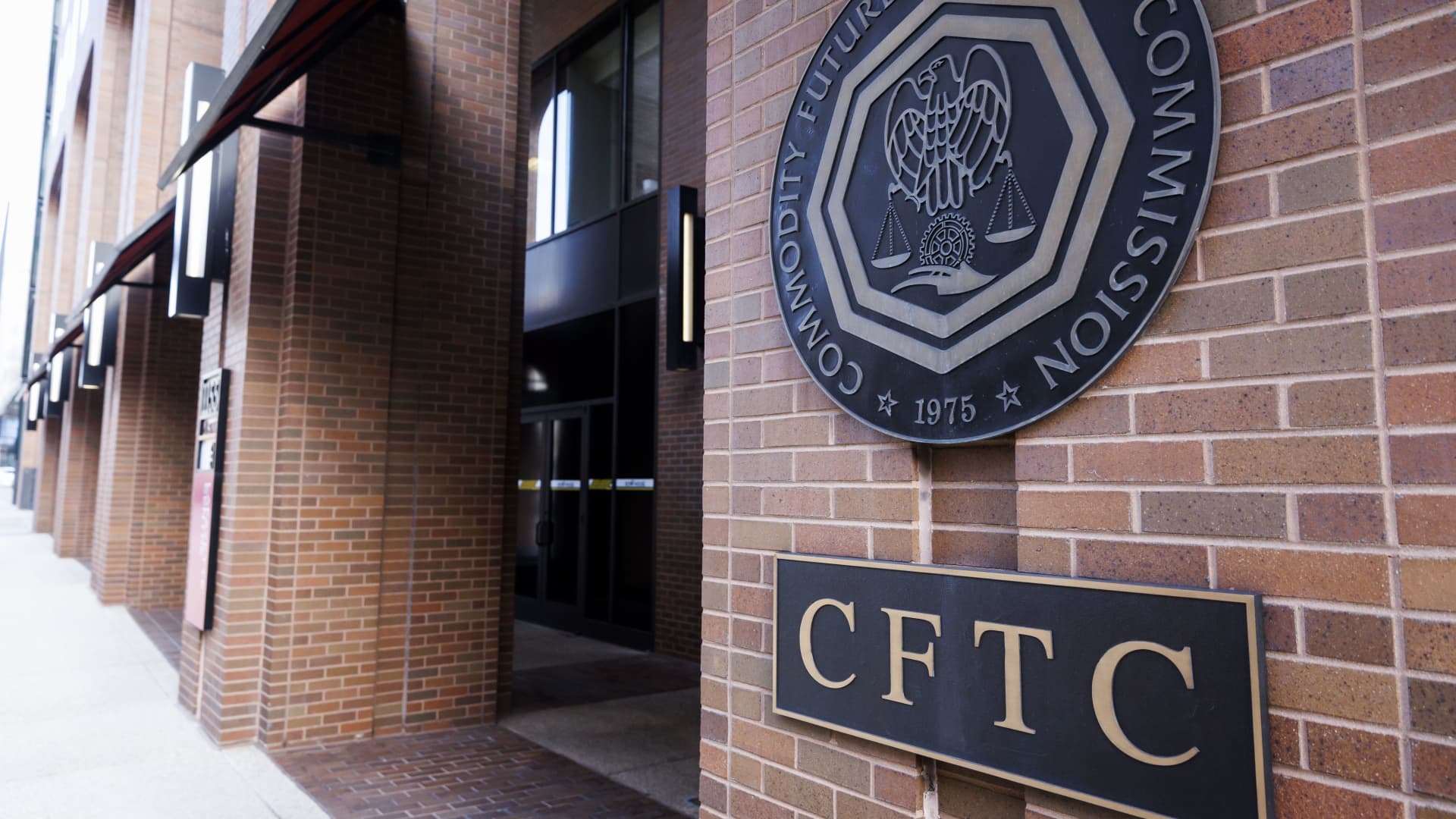
The U.S. regulatory landscape for Prediction Markets is facing significant upheaval as a coalition of 44 state attorneys general formally challenged the Commodity Futures Trading Commission’s (CFTC) jurisdiction over sports-related event contracts. This escalating federal-state dispute highlights deep divisions on asset classification and oversight, threatening to redefine the operational framework for these rapidly growing platforms and adding a layer of uncertainty to wider market analysis.
💰 Financial Strategy & Market Insights
- Jurisdictional Showdown: 44 states argue the CFTC oversteps its authority by regulating sports-related event contracts, classifying them as state-controlled sports betting.
- CFTC’s Stance: The federal regulator maintains these contracts are legitimate derivatives (‘swaps’) under its purview, citing federal preemption in ongoing litigations across multiple states.
- Market Implications: Diverging court rulings and an impending Supreme Court decision create significant uncertainty for Prediction Market operators, influencing market liquidity and investment trends.
Why States and the CFTC Are at Loggerheads
The core of the conflict lies in the classification of event contracts offered on Prediction Markets. The CFTC, along with the platforms themselves, asserts that these contracts function as ‘swaps’—a form of derivative regulated by the commission under the Commodity Exchange Act (CEA). This perspective allows for a unified federal oversight, potentially streamlining operations for platforms across the country. Conversely, state attorneys general contend that sports-related event contracts are fundamentally indistinguishable from sports betting, an activity traditionally regulated at the state level. This jurisdictional overlap has intensified as platform volumes exploded, particularly driven by major events like the 2026 FIFA World Cup.
The recent closure of the public comment period for the CFTC’s proposed rule on prediction market regulation has escalated the dispute. Ohio Attorney General Andy Wilson, leading the coalition of states, stated that ‘The Proposed Rule goes beyond the CFTC’s statutory powers, is in tension with the Constitution, and would otherwise be arbitrary and capricious in its current form,’ urging the CFTC to clarify that sports bets are subject to state law. This sentiment underscores a broad state consensus, although Florida, Georgia, New Hampshire, Missouri, and Texas notably did not sign the letter, indicating some regional differences in approach to the financial sector‘s evolving regulatory challenges.
Adding complexity, the definition of ‘gaming’ itself is a point of contention. The CFTC’s proposed rule defines ‘gaming’ as the activity itself, rather than the wagering on it. Derivatives marketplace CME Group, a key player in the financial ecosystem that also partners with FanDuel for prediction markets, formally disagreed. ‘By defining ‘gaming’ as the sport itself rather than the financial wagering on the sport, the CFTC’s definition suggests the [Commodity Exchange Act] is preempting state sports regulations, which is a striking overreach,’ wrote CME general counsel Jonathan Marcus. In contrast, Rothera, a prediction market platform launched in June, supports the CFTC’s definition, arguing it prevents sweeping in all event contracts under a ‘wagering’ definition.
- The CFTC is currently engaged in litigation with nine states, defending its belief in exclusive jurisdiction over prediction markets, a strategy known as federal preemption.
- Court decisions have been mixed: a Michigan judge recently blocked Kalshi from offering sports bets, while a federal judge in Minnesota temporarily halted a statewide ban on prediction markets.
- This divergence amplifies the legal uncertainty, suggesting the Supreme Court may ultimately decide the regulatory fate of these nascent markets.
Navigating the Financial Risk vs. Reward in Prediction Markets
The ongoing regulatory battle introduces significant layers of both risk and potential reward for investors and operators within the Prediction Markets space.
- Upside Potential:
- Clear Federal Framework: A definitive CFTC victory or a Supreme Court ruling clarifying federal oversight could provide regulatory certainty, fostering innovation and institutional investment in prediction markets as legitimate derivatives.
- Expanded Market Access: If deemed federally regulated, platforms could operate more uniformly across states, potentially increasing market liquidity and participant numbers, attracting broader engagement from financial investors.
- New Asset Class Validation: Official recognition as a regulated derivative could legitimize prediction markets as a novel asset class, diversifying investment opportunities.
- Downside Risks:
- Fragmented Regulation: A state victory or a mixed Supreme Court ruling could lead to a patchwork of state-by-state regulations, severely limiting nationwide market operations and increasing compliance costs for platforms.
- Operational Halt: State-level bans or injunctions (like Michigan’s against Kalshi, as reported by Reuters) could force platforms to cease operations in key markets, impacting revenue streams and investor confidence.
- Legal Costs & Uncertainty: Prolonged litigation drains resources and creates a volatile environment, deterring both operators and potential investors due to unquantifiable legal and operational risks.
Expert Insight: A ‘swap’ in finance is a derivative contract through which two parties exchange financial instruments, interest rates, or cash flows for a predetermined period. The CFTC’s classification of prediction market contracts as swaps allows them to fall under existing federal derivatives regulation, a key point of contention with states viewing them as gambling.
Key Players and Regulatory Stances
The table below summarizes the positions of the main entities involved in this regulatory dispute, illustrating the diverse interpretations of Prediction Markets.
- CFTC: Argues event contracts are ‘swaps’ (derivatives), falling under federal jurisdiction; defends federal preemption in court.
- 44 State Attorneys General: Contend sports-related contracts are sports betting, subject to state law; challenge CFTC’s statutory powers.
- CME Group: Disagrees with CFTC’s ‘gaming’ definition, seeing it as federal overreach, despite operating a regulated exchange for FanDuel’s prediction markets.
- Rothera: Supports CFTC’s ‘gaming’ definition, believing it prevents over-broad classification of all event contracts as wagering.
- Kalshi: A prediction market platform facing state-level injunctions (e.g., Michigan) regarding its sports-related offerings.
Prediction Market Liquidity Analysis Amid Regulatory Turmoil
The current regulatory uncertainty directly impacts liquidity within Prediction Markets. With diverging court rulings and the threat of state-specific bans, institutional investors and even large retail participants may hesitate to commit significant capital. This hesitation can lead to thinner order books and increased slippage, especially for larger trades. The explosive growth seen with events like the World Cup suggests underlying demand, but the lack of a clear, unified regulatory framework prevents the consistent, deep liquidity characteristic of established financial markets. Platforms operating under federal oversight, if affirmed, could attract greater participation, bolstering liquidity and narrowing spreads. However, a fragmented regulatory landscape would likely segment liquidity, making it harder for participants to enter and exit positions efficiently, thereby increasing execution risk. This environment forces participants to consider legal risk as a primary component of their asset valuation models.
Prediction Market Market Sentiment Tracker: Divergent Views
Market sentiment surrounding Prediction Markets is currently bifurcated. On one hand, proponents and platforms view regulatory clarity as a pathway to mainstream acceptance, envisioning a future where these markets serve as legitimate tools for hedging and price discovery on various future events. The strong volume growth observed last year, as detailed by Bloomberg reports, suggests underlying optimism for their utility. On the other hand, the ongoing legal challenges and the staunch opposition from a majority of state attorneys general foster a cautious, if not bearish, sentiment regarding the immediate operational stability and long-term viability without Supreme Court intervention. The differing views from industry giants like CME Group and newer entrants like Rothera further highlight the internal industry debate on how best to define and regulate these innovative financial instruments. This mixed sentiment is a critical factor for investors examining the long-term prospects, demanding careful due diligence beyond standard financial metrics, and leveraging educational financial insights.
The Regulatory Horizon for Prediction Markets: What Lies Ahead
The escalating regulatory conflict over Prediction Markets signals a critical juncture for this nascent industry. With 44 states challenging federal jurisdiction, the path forward will undoubtedly be shaped by legal precedents and, ultimately, the Supreme Court’s interpretation of these innovative financial instruments.
- The outcome will define whether these platforms operate under a unified federal framework or a complex patchwork of state laws.
- Investment in prediction market platforms will heavily depend on the clarity and stability provided by future regulatory decisions.
- The classification of event contracts as derivatives or gambling will significantly impact how market participants perceive and engage with this asset class.
Will this regulatory crucible forge a robust, federally overseen asset class, or will it relegate prediction markets to a fractured, state-by-state domain?
📊 StockXpo Analyst’s View
Market Impact: The persistent regulatory uncertainty surrounding Prediction Markets will likely suppress institutional engagement and liquidity growth in the near term. Investors will demand clear legislative or judicial guidance before committing substantial capital, leading to a period of heightened risk premium for companies operating in this space. The diverging court outcomes amplify market volatility, making precise asset valuation challenging.
Sector To Watch: The immediate implications primarily affect financial technology (FinTech) firms specializing in prediction platforms and derivatives trading. However, a definitive ruling could have ripple effects on the broader gambling and sports entertainment industries, potentially opening new avenues for financialization if the derivative classification holds, or tightening state-level controls if deemed gambling.
Financial Disclaimer:
StockXpo.com is a financial news aggregator and educational portal, not a registered investment advisor or broker-dealer. All information, news, and analysis provided herein are strictly for educational purposes and do not constitute investment, financial, legal, or tax advice. Investing in the stock market involves high risks, and past performance is not indicative of future results. StockXpo will not be liable for any financial losses or investment damages. Always consult a certified financial advisor before making market decisions.
MORE IN INSIDE FINANCE
AI Stock Boom Fuels $67 Billion Equities Growth for Wall Street Giants
Published: Wednesday, October 21, 2026 · 11:03 AM

New Risks Emerge: Global Finance Chiefs Highlight Debt, AI, and Geopolitical Volatility
Published: Tuesday, October 20, 2026 · 2:12 AM