Published: Thursday, July 23, 2026 · 5:10 PM | Updated: Thursday, July 23, 2026 · 5:10 PM
📊 231 views




Shares of Dover Corporation plummeted after the industrial conglomerate reported a weaker-than-expected second quarter, prompting StockXpo to re-evaluate its position. This performance miss, characterized by an execution error in a previously strong segment, underscores the challenges faced by diversified industrials in the current market climate.
💎 Strategic Investment & Portfolio Insights
- Underperformance Catalyst. Dover’s Q2 revenue miss and an execution misstep in its CO2 refrigeration business triggered a downgrade and a strategic decision to divest.
- Portfolio Rebalancing Imperative. With the portfolio nearing capacity, the capital allocated to Dover Corporation is being re-deployed into higher-conviction industrial plays with clearer growth narratives.
- Alpha Generation Focus. The move emphasizes a disciplined approach to selling into strength and exiting positions where opportunity costs for alpha generation outweigh potential long-term value.
Why Dover’s Q2 Miss Triggers a Reassessment
Dover Corporation’s recent second-quarter earnings report painted a mixed picture, ultimately disappointing investors and leading to a significant stock decline. While adjusted earnings per share (EPS) slightly beat expectations at $2.74, revenue came in at $2.19 billion, falling short of the consensus estimate of $2.21 billion, as reported by LSEG. This top-line miss, despite a 6.8% annual revenue increase, highlights underlying challenges.
The core issue stemmed from an execution problem within Dover’s CO2 refrigeration business, a segment previously considered a non-AI growth driver. The company faced difficulties in ramping up production while simultaneously consolidating its manufacturing footprint during the April-to-June period. CEO Richard Tobin acknowledged these issues, indicating they are fixable in upcoming quarters and are not demand-related. Total orders during the quarter grew 16%, with free cash flow up 24% year-over-year to $188 million, demonstrating some underlying operational strength despite the top-line stumble. The stock responded by falling over 9% to roughly $195, touching its lowest levels of the year, following an all-time closing high of $233.31 in February.
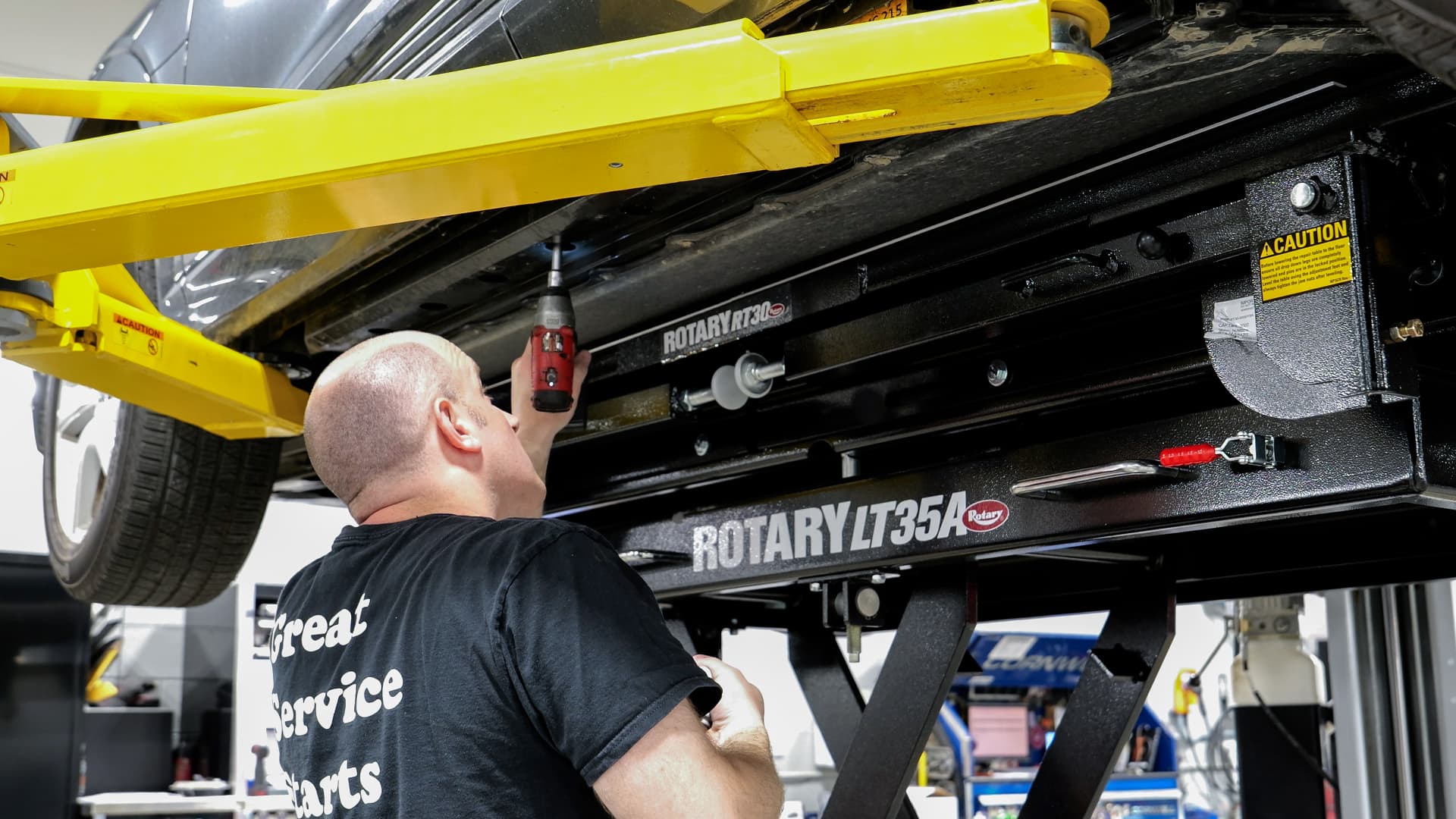
Despite the immediate setback, Dover increased its full-year guidance for both organic growth and adjusted EPS. The company now expects revenue growth in the range of 6% to 8% (up from 5% to 7%) and adjusted EPS between $10.55 and $10.75 (midpoint $10.65, up from $10.55). This upward revision, however, was largely anticipated given a conservative approach in the prior quarter. The company’s exposure to data centers, space, and energy transition — what it terms ‘secular growth markets’ — is expanding, representing about 25% of expected 2026 revenue, up from 20% in Q1. While this is a positive trend, it’s not yet sufficient to define the narrative for the broader industrial conglomerate, which also manufactures diverse products from can-making equipment to vehicle repair lifts.
- Revenue Shortfall: Q2 revenue of $2.19 billion missed consensus of $2.21 billion, signaling sluggish organic growth.
- Execution Glitch: Production issues in the CO2 refrigeration unit, a key growth area, impacted organic performance.
- AI Exposure: Growing contribution from data center and energy transition markets, though still a minority of total revenue.
Portfolio Positioning Effect: Reallocating Capital for Alpha
The underperformance of Dover Corporation, particularly the execution misstep, necessitated a critical re-evaluation of its strategic fit within our diversified portfolio. This scenario illustrates a clear cause-and-effect chain: Disappointing Quarterly Results → Downgrade in Investment Conviction → Portfolio Rebalancing to Optimize Capital Allocation. Our current portfolio, nearing its maximum capacity of 34 positions, demands that every holding actively contributes to alpha generation and long-term capital preservation. The decision to scale back and eventually exit Dover frees up capital for opportunities offering better risk-adjusted returns and clearer growth catalysts. This disciplined approach aligns with our strategy to maintain exposure to resilient industrial stocks, but specifically those demonstrating strong operational execution and fitting into more compelling secular themes, as we discuss in our long-term portfolio growth strategies.
“In portfolio management, knowing when to cut ties with an underperforming asset, even one with long-term potential, is paramount. The opportunity cost of holding a position with execution uncertainties often outweighs the potential upside, especially when superior alternatives exist.”
Key Financial Metrics for Dover Corporation (Q2 2024)
| Metric | Value | Significance |
|---|---|---|
| Q2 Revenue | $2.19 billion | Fell short of consensus ($2.21B), signaling a top-line miss despite 6.8% annual growth. |
| Adjusted EPS | $2.74 | Slightly topped expectations, indicating some cost control amidst revenue pressures. |
| Total Orders Growth | 16% (YOY) | Strong order growth suggests underlying demand is not the primary issue, pointing to execution. |
| Free Cash Flow | $188 million (up 24% YOY) | Healthy cash generation, providing financial flexibility despite operational challenges. |
Dover Corporation Risk-Reward Matrix: Navigating Uncertainty
Assessing Dover Corporation’s investment profile reveals a complex risk-reward balance. On the risk side, the primary concern is operational execution, as evidenced by the Q2 refrigeration business stumble. This highlights the inherent difficulties in managing a sprawling industrial conglomerate with diverse business units, some of which are capital-intensive and susceptible to production bottlenecks. Furthermore, while Dover is increasing its exposure to high-growth areas like data centers and energy transition, these still represent a minority of its revenue, meaning legacy businesses could continue to dilute overall growth. Broader economic slowdowns or shifts in manufacturing activity could also disproportionately affect its diverse industrial segments.
Conversely, the reward potential centers on the fixable nature of the Q2 execution issues. If management can swiftly resolve the production ramp-up and consolidation problems, a rebound is plausible. The strong order growth and healthy free cash flow indicate underlying demand and financial stability. Moreover, the increasing contribution from secular growth markets, particularly in liquid cooling for AI servers, positions Dover to eventually benefit from long-term technology trends. However, this transition is gradual, and investors need to weigh the waiting period against immediate opportunities elsewhere, especially as observed by market commentators.
Dover Corporation Competitive Benchmarking: A Conglomerate’s Agility
When evaluating Dover Corporation, it’s essential to benchmark its performance and strategic agility against peers in the industrial sector. Unlike more streamlined pure-play companies, Dover operates as a traditional industrial conglomerate, similar in structure to parts of what GE Vernova represents post-spin-off, or larger players like Honeywell Technologies. The advantage of a conglomerate often lies in diversification, cushioning against downturns in specific segments. However, the downside can be slower adaptation to rapid technological shifts and difficulty in achieving premium valuations for individual high-growth businesses. For instance, while Honeywell has successfully pivoted into aerospace, building technologies, and advanced materials with a strong software component, Dover’s journey into AI infrastructure and energy transition feels more nascent relative to its overall portfolio. Companies like newly independent FedEx Freight, or indeed Honeywell, demonstrated more encouraging earnings reports, signaling a potential for better operational agility and growth alignment with current market demands. This comparison highlights the importance of operational excellence and strategic focus in delivering shareholder value within the industrial landscape, a key area we monitor for comprehensive market analysis.
Dover Corporation: Rebalancing the Industrial Portfolio
The second-quarter results for Dover Corporation underscore a critical moment for industrial conglomerates grappling with evolving market demands and operational complexities. While the company’s long-term pivot towards secular growth markets like AI infrastructure and energy transition is on the right track, the immediate execution missteps and broader market narrative challenges warrant a strategic portfolio adjustment. This move is not a reflection on Dover’s long-term viability but rather a tactical decision to reallocate capital where immediate alpha opportunities are more pronounced.
- Operational Challenges: Execution issues in a key segment overshadowed underlying demand, impacting investor confidence.
- Strategic Repositioning: Despite growth in AI-related exposure, the conglomerate structure faces challenges in rapid market adaptation.
- Capital Reallocation: Funds are being shifted to industrial stocks with clearer growth paths and stronger immediate operational performance.
How effectively can large, diversified industrial players truly accelerate their transition into high-growth, technology-driven sectors to unlock premium valuations?
📊 StockXpo Analyst’s View
Market Impact: The news on Dover Corporation contributes to a cautious sentiment within the broader industrial sector, especially for diversified conglomerates that may lack the agility of more focused players. It could prompt investors to scrutinize operational efficiencies and growth narratives more closely across the industry, potentially favoring companies with cleaner earnings and proven execution.
Sector To Watch: Investors should keenly observe industrial technology and specialized manufacturing firms that are demonstrating clear, attributable growth from AI infrastructure, advanced materials, and energy transition solutions, as these segments appear to be decoupling from traditional industrial cycles and offering promising avenues for further educational insights on market trends and strategies.
Financial Disclaimer:
StockXpo.com is a financial news aggregator and educational portal, not a registered investment advisor or broker-dealer. All information, news, and analysis provided herein are strictly for educational purposes and do not constitute investment, financial, legal, or tax advice. Investing in the stock market involves high risks, and past performance is not indicative of future results. StockXpo will not be liable for any financial losses or investment damages. Always consult a certified financial advisor before making market decisions.
MORE IN INSIDE INVESTMENT NEWS

Volvo Cars Plunge: Alpha Warning as China Sales Slump Hits Earnings
Published: Friday, October 23, 2026 · 6:18 AM
Procter & Gamble Earnings: Alpha Generation from Consumer Staples Resilience
Published: Thursday, October 22, 2026 · 7:39 AM