Published: Thursday, July 23, 2026 · 2:36 PM | Updated: Thursday, July 23, 2026 · 2:36 PM
📊 224 views




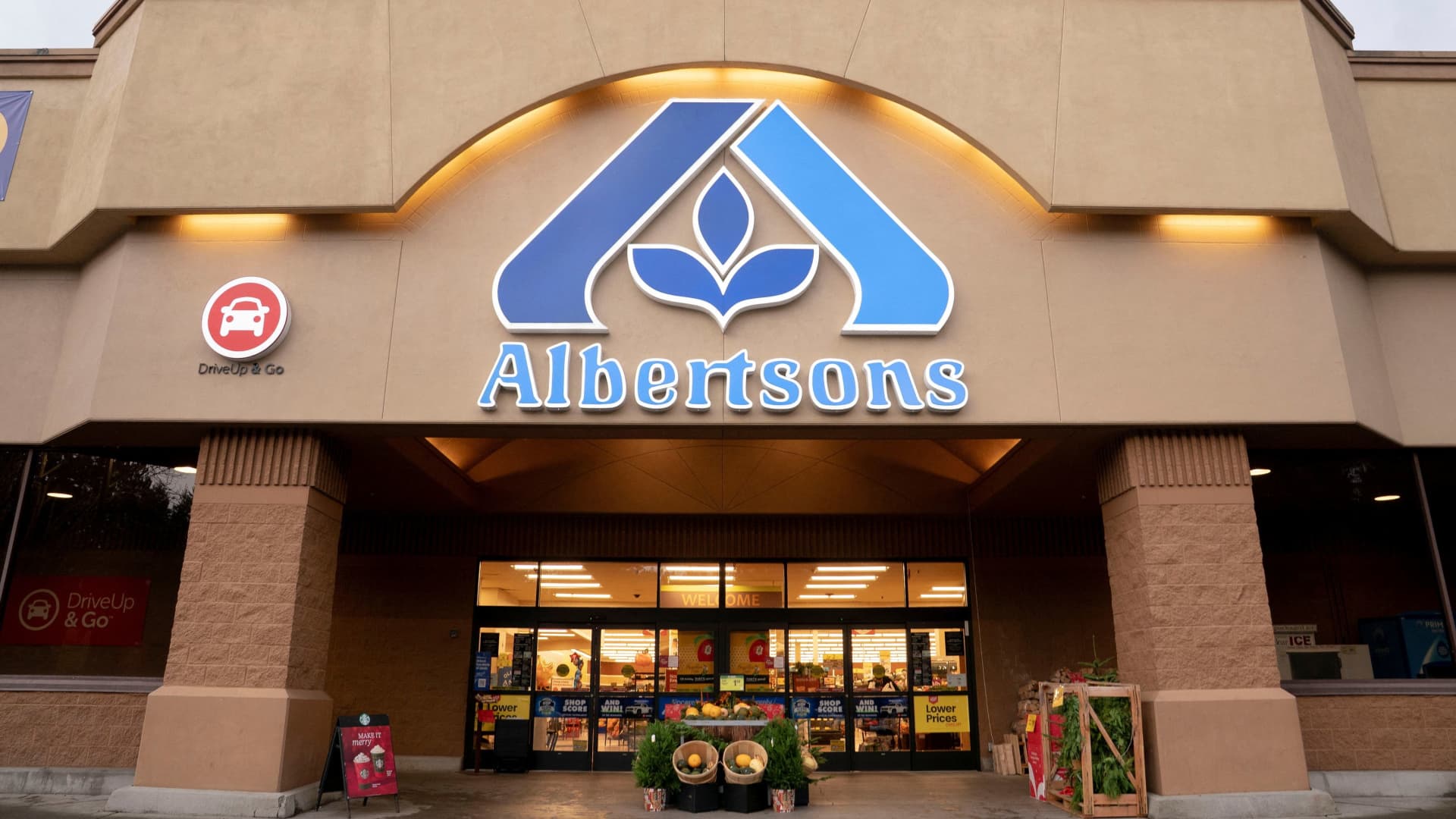
Albertsons Companies Inc. (ACI) shares experienced a significant decline on Thursday, plunging nearly 15% after the grocer slashed its fiscal 2026 financial outlook. The company attributed this revised forecast to persistent softness in industry-wide grocery unit trends and a notably more cautious consumer base, signaling broader pressures within the retail food sector. The sharp drop in Albertsons stock reflects investor concern over dwindling consumer purchasing power.
This development comes as U.S. consumers continue to scale back grocery trips amidst elevated food inflation and constrained budgets, impacted by factors like high gas prices. Such shifts in consumer behavior are forcing grocery chains to reassess growth strategies and manage expectations for the coming year.
💎 Strategic Investment & Portfolio Insights
- Earnings Revision Impact. Albertsons’ significant cut to its fiscal 2026 net income and EBITDA guidance directly signals a challenging operating environment for grocers, influenced by reduced consumer spending power.
- Consumer Behavior Shift. Softening demand, highlighted by declining identical sales, underscores a pervasive trend of consumer caution and potential trade-downs, affecting volume and margins across the grocery industry.
- Strategic Investment Response. Despite immediate financial pressure, the company’s commitment to investing in customer experience suggests a long-term view on improving traffic and loyalty, a critical move to regain market share and growth trajectory.
Understanding Albertsons’ Revised Outlook
Albertsons’ first fiscal quarter saw identical sales fall by 0.8%, a stark contrast to previous expectations. The company reported net income of $84.7 million, or 17 cents per share, significantly down from $236.4 million, or 41 cents per share, in the prior-year period. This substantial drop prompted a decisive recalibration of future expectations, with CEO Susan Morris emphasizing a strategic shift toward enhancing the customer experience to improve long-term growth.
The revised full-year guidance paints a clearer picture of the challenges ahead:
- Net income is now expected to be between $1.75 and $1.85 per share, a notable reduction from the prior range of $2.22 to $2.32 per share.
- Adjusted EBITDA guidance was lowered to a range of $3.55 billion to $3.625 billion, down from the previous projection of $3.85 billion to $3.925 billion.
- Identical sales, a crucial metric akin to comparable sales, are now forecast to be in a range of down 0.5% to 1.5%, revised from the earlier expectation of flat to up 1%.
Morris noted that while consumer pressure is weighing on near-term earnings, the company’s proactive investments are aimed at improving traffic, units, loyalty, and the overall trajectory of the business over time. This forward-looking approach seeks to mitigate the immediate impact of current economic headwinds.
Portfolio Positioning Effect on Consumer Staples
Weaker grocery spending among U.S. consumers, as reported by outlets like Reuters business news, directly translates to reduced revenue and earnings guidance for major grocers like Albertsons. This policy change in consumer behavior, driven by inflation and tighter budgets, instigates an asset revaluation across the consumer staples sector, particularly for companies with high exposure to fluctuating volume and pricing. Consequently, portfolio rebalancing becomes crucial, potentially shifting allocation away from volume-dependent, low-margin segments towards more resilient consumer staples with strong brand loyalty or those positioned to benefit from consumer trade-down trends, allowing investors to manage portfolio risk effectively for long-term capital preservation.
The current environment for Albertsons underscores the increasing bifurcation of consumer spending. While essential grocery remains non-discretionary, consumers are clearly trading down or buying less, which impacts margins. For a diversified portfolio, this emphasizes the need for exposure to both value-oriented staples and consumer discretionary names with strong brand loyalty, rather than relying solely on volume-driven grocers.
Albertsons’ Financial Guidance Revisions
The updated guidance from Albertsons provides critical insights into the company’s anticipated performance amid shifting market dynamics. These metrics are vital for investors assessing the company’s intrinsic value and risk-reward profile.
| Metric | Previous 2026 Outlook | Revised 2026 Outlook | Significance for Investors |
|---|---|---|---|
| Net Income Per Share | $2.22 – $2.32 | $1.75 – $1.85 | Directly impacts earnings-per-share valuation models, suggesting a material decrease in profitability. |
| Adjusted EBITDA | $3.85B – $3.925B | $3.55B – $3.625B | Reflects operational cash flow generation and overall business health, indicating pressure on core profitability. |
| Identical Sales Growth | Flat to +1.0% | -0.5% to -1.5% | A key measure of organic growth; negative revision points to declining traffic and/or lower basket sizes. |
Albertsons Competitive Benchmarking
In the highly competitive U.S. grocery landscape, Albertsons faces significant challenges from both larger national chains like Walmart and Kroger, as well as discounters and specialized retailers. The recent guidance cut highlights that even established grocers are susceptible to macroeconomic pressures affecting consumer wallets. Competitors with stronger private-label offerings, more robust supply chains, or more agile pricing strategies might be better positioned to weather these headwinds. For instance, companies like Walmart and Costco, which offer a broader range of goods and often benefit from bulk purchasing, can sometimes better absorb cost pressures and maintain consumer loyalty through value propositions. Albertsons’ need to “invest in the customer experience” suggests an attempt to differentiate beyond price, a strategy that requires significant capital expenditure and time to yield results, particularly when consumers are actively seeking lower costs. This ongoing battle for market share makes alpha generation in the grocery sector increasingly difficult without clear competitive advantages.
Albertsons Risk-Reward Matrix
The risk-reward profile for Albertsons stock has shifted considerably following its revised outlook. On the risk side, the primary concerns include sustained consumer caution, further inflationary pressures impacting input costs and consumer spending, and intense competition leading to margin compression. Execution risk related to its planned investments in customer experience also looms; if these initiatives fail to translate into improved traffic and loyalty, the financial strain could worsen. Regulatory uncertainties, particularly concerning any future merger and acquisition activities, also present an additional layer of risk. Conversely, the potential reward comes from the possibility that the market has overreacted to the downside revision. If Albertsons’ strategic investments successfully revitalize sales and improve customer engagement, and if the macroeconomic environment stabilizes sooner than expected, the stock could see a rebound. Furthermore, the company’s strong geographic presence and essential nature of its business provide a baseline of stability. Investors must weigh the potential for a long-term turnaround against immediate operational challenges and the broader economic climate, making it a nuanced proposition for growth-oriented investment strategies.
Albertsons’ Outlook: Navigating the Shifting Retail Landscape
Albertsons’ revised fiscal 2026 outlook underscores the significant pressures facing the U.S. grocery sector, driven by a more cautious consumer and broader economic headwinds. The company’s proactive stance to invest in customer experience offers a long-term strategic pivot, but immediate challenges to profitability and sales volumes remain. Investors will be closely watching for signs that these investments are translating into improved operational metrics and a stabilized growth trajectory.
- The substantial reduction in guidance reflects a tough operating environment for essential retailers.
- Strategic investments in customer experience are critical for future competitiveness but carry execution risk.
- The immediate impact on Albertsons stock demands careful evaluation of its intrinsic value and long-term prospects.
Can Albertsons successfully navigate these headwinds and emerge stronger, or will consumer caution continue to erode its market position?
### 📊 StockXpo Analyst’s View
Market Impact: The dip in Albertsons stock reinforces broader market anxieties regarding consumer discretionary and staple spending. This could trigger a re-evaluation of valuation multiples for the entire grocery and consumer staples sector, potentially leading to increased volatility or downward pressure on peers. Investors may become more selective, favoring companies with stronger balance sheets or unique competitive advantages in a challenging economic climate, impacting overall market analysis and liquidity for less differentiated retailers.
Sector To Watch: The immediate fallout from Albertsons’ earnings guidance points directly to the broader retail grocery sector. Companies heavily reliant on volume growth and susceptible to price-sensitive consumers could face similar headwinds. Conversely, discount retailers or those with strong private-label penetration might see a relative gain as consumers trade down. This news also highlights the resilience of online grocery and pharmacy segments, suggesting continued investment in digital capabilities will be crucial for competitive positioning and portfolio strategy. Insights for navigating these shifts are often found on platforms offering comprehensive educational market insights, providing a deeper understanding of sector dynamics, as highlighted in reports from Bloomberg markets.
Financial Disclaimer:
StockXpo.com is a financial news aggregator and educational portal, not a registered investment advisor or broker-dealer. All information, news, and analysis provided herein are strictly for educational purposes and do not constitute investment, financial, legal, or tax advice. Investing in the stock market involves high risks, and past performance is not indicative of future results. StockXpo will not be liable for any financial losses or investment damages. Always consult a certified financial advisor before making market decisions.
MORE IN INSIDE INVESTMENT NEWS

AI Funding Fears Rattle Wall Street: Adjusting for Alpha and Preservation
Published: Saturday, October 24, 2026 · 12:28 PM

Volvo Cars Plunge: Alpha Warning as China Sales Slump Hits Earnings
Published: Friday, October 23, 2026 · 6:18 AM