Published: Wednesday, July 22, 2026 · 4:18 PM | Updated: Wednesday, July 22, 2026 · 4:18 PM
📊 201 views





Tesla is poised to report its second-quarter financial results after the market closes, with investors keenly watching how the automotive giant navigates increased competition and an ambitious strategic pivot. The upcoming Tesla earnings call will provide crucial insights into its core electric vehicle business and its aggressive push into artificial intelligence and robotics.
🚀 Tech Strategy & Market Disruptions
- AI & Robotics Pivot. Tesla is aggressively reallocating resources from EV production to focus on driverless Robotaxis, Cybercab, and Optimus humanoid robots, signaling a long-term AI-first strategy.
- Intensifying Market Competition. Despite rising deliveries, Tesla faces formidable challenges from Chinese EV makers like BYD and Nio, and established players in the autonomous vehicle (Waymo) and humanoid robot (Boston Dynamics) sectors.
- Cross-Company AI Infrastructure. The joint Terafab chip factory initiative with SpaceX and Intel indicates a broader strategy to build a robust, integrated AI infrastructure across Elon Musk’s ventures, aiming for vertical integration in advanced computing.
On Wednesday, Tesla is scheduled to unveil its second-quarter results, three weeks following its report of a 25% year-over-year surge in vehicle deliveries. Analysts polled by LSEG anticipate earnings per share of 51 cents and revenue reaching $25.71 billion. Despite strong delivery numbers surpassing expectations, Tesla’s stock has experienced a significant downturn, dropping approximately 10% this month and 16% year-to-date. This decline coincides with a notable fall in SpaceX’s value post-market debut, underscoring broader investor re-evaluations across Musk’s portfolio.
The automotive segment, while showing signs of a rebound in deliveries with over 480,000 units, is battling fierce international competition. Chinese manufacturers such as BYD, Nio, and Xiaomi are rapidly gaining market share by offering advanced, yet affordable, electric vehicles beyond the U.S. market. Furthermore, geopolitical events, including the U.S. war in Iran, have indirectly boosted Tesla sales in regions like Europe due to soaring gas prices, leading to increased EV adoption. To counter competitive pressures and expand its reach, Tesla introduced lower-cost versions of its Model 3 and Model Y, while extending its Full Self-Driving (Supervised) system to some European markets.
However, a pivotal strategic shift championed by Elon Musk has seen Tesla reorient its focus away from traditional vehicle sales towards an AI and robotics-centric future. This ambitious transformation includes ramping up production of the driverless Cybercab, remodeling factory lines for Optimus humanoid robot manufacturing, and a vision for an AI-powered robot capable of diverse tasks, from babysitting to complex surgery. Musk has boldly predicted Optimus will be Tesla’s — and potentially the world’s — largest product. This vision, however, comes with skepticism, as Forrester analyst Paul Miller noted that Tesla’s leadership has made “plenty of big claims about autonomous mobility and physical AI over the years” with some “bolder bets” missed, citing unfulfilled robotaxi deployment targets from 2019 and 2023.
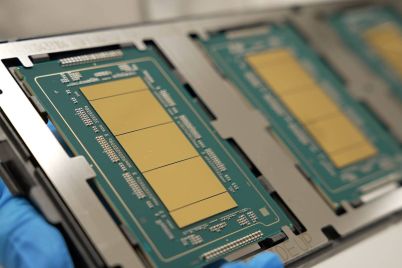
In the rapidly evolving autonomous vehicle landscape, Tesla lags behind established leaders like Alphabet’s Waymo in the U.S. and Baidu’s Apollo Go in China. The nascent humanoid robot market presents similar competitive challenges, with Tesla developing its product amidst rivals such as Unitree, Boston Dynamics, Agility Robotics, Apptronik, and Humanoid. This competitive environment demands a robust technological foundation, a focus on emerging technologies, and swift execution to materialize Musk’s vision. During the upcoming call, investors will seek clarity on the progress of robotics and driverless technology, alongside details regarding the Terafab project—a massive chip factory planned jointly by Tesla, SpaceX, and Intel in Texas—which signifies a critical infrastructure play in advanced computing for all three entities.
- Tesla’s strategic pivot to AI and robotics is a high-stakes move, diverting significant capital and R&D.
- Competition in both EV and emerging AV/robotics sectors is intensifying, challenging market share and innovation.
- The Terafab initiative highlights a crucial collaborative effort to build foundational AI compute infrastructure.
Musk’s pronounced pivot towards AI and robotics — specifically Robotaxis and Optimus humanoid robots — represents a profound re-prioritization of Tesla’s R&D and manufacturing capital. This shift implies a reallocation of engineering talent from optimizing current EV models to accelerating AI algorithms and robotics hardware development. The immediate effect is a potential slowing of traditional EV innovation cycles in favor of high-risk, high-reward ventures. If successful, this could lead to transformative market disruption in logistics, manufacturing, and personal services through autonomous systems, but it concurrently introduces significant execution risk and requires substantial upfront investment in advanced compute infrastructure, as evidenced by the Terafab initiative. Investors are grappling with this fundamental change, which directly impacts short-term financial performance expectations versus long-term disruptive potential across diverse sectors.
From a CTO perspective, Tesla’s aggressive pivot demands a re-evaluation of its entire platform architecture. Shifting from primarily vehicle-centric software to a pervasive AI operating system for both autonomous vehicles and humanoid robots requires a unified, scalable compute fabric, real-time sensor fusion capabilities, and robust neural network deployment strategies. This is a monumental undertaking, demanding deep expertise in edge AI, distributed systems, and fundamental robotics rather than just automotive engineering. The success hinges on architecting for generalization, ensuring these AI models can adapt across diverse physical form factors and dynamic real-world scenarios.
Wall Street’s expectations for Tesla’s Q2 performance, according to LSEG estimates:
- Earnings per share: 51 cents expected
- Revenue: $25.71 billion expected
Tesla Platform Architecture: The AI-First Shift
Tesla’s ambition to dominate both autonomous driving and humanoid robotics necessitates a sophisticated and cohesive platform architecture. This isn’t just about software updates over the air; it involves a foundational redesign of how hardware, firmware, and AI models interact. The company’s strategy leans heavily on its proprietary Dojo supercomputer and its custom AI chips to process vast amounts of real-world data, enabling continuous learning and refinement of its neural networks. This vertically integrated approach, from silicon to perception, is critical for achieving true generalized AI in physical machines. Building this infrastructure, including the Terafab collaboration with SpaceX and Intel, highlights a commitment to owning the entire stack—a competitive advantage if they can overcome the inherent complexities of such deep integration, which is often discussed in broader technology market trends.
Tesla Market Adoption Challenges: Beyond EVs
While Tesla has undeniably reshaped the automotive industry, its foray into Robotaxis and humanoid robots introduces a new set of market adoption challenges. The consumer and regulatory landscape for fully autonomous vehicles is still evolving, marked by public skepticism, liability concerns, and fragmented legal frameworks globally. Furthermore, the concept of widespread humanoid robot deployment, whether in industrial settings or domestic environments, requires significant advancements in safety, reliability, and human-robot interaction. Unlike cars, where the value proposition is well-understood, the true utility and societal integration of robots like Optimus are largely unproven, requiring Tesla to not only innovate technologically but also to actively shape and educate new markets, potentially leveraging educational tech insights to drive understanding and acceptance.
Tesla’s Dual Trajectory: Driving Innovation Amidst Market Pressures
Tesla’s second-quarter results arrive at a critical juncture, revealing a company grappling with traditional automotive competition while aggressively pursuing transformative AI and robotics ventures. The financial performance reflects market pressures and investor caution regarding these ambitious, long-term bets.
- Increased vehicle deliveries indicate continued strength in the core EV market despite fierce competition.
- The significant stock decline highlights investor concerns over the capital intensity and execution risks of the AI and robotics pivot.
- Musk’s vision for Robotaxis and Optimus signals a potential shift towards entirely new revenue streams but requires overcoming substantial technological and regulatory hurdles.
Can Tesla successfully navigate the complexities of these parallel strategies and deliver on its “biggest product ever” promise, or will the weight of unfulfilled ambitions impact future valuations?
📊 StockXpo Analyst’s View
Market Impact: Tesla’s earnings report, particularly the focus on AI and robotics, introduces a higher degree of volatility. While strong EV deliveries provide a floor, the long-term, speculative nature of the AI pivot means that investor sentiment will swing on granular updates regarding Cybercab and Optimus progress, rather than just vehicle sales. This could lead to a divergence in valuation metrics, with some investors treating Tesla more like an AI startup than an automotive company, influencing broader market liquidity for growth stocks.
Sector To Watch: The confluence of automotive, AI, and robotics makes the “smart mobility” and “industrial automation” sectors particularly compelling. Companies developing foundational AI models, advanced sensor technology, or precision robotics components, irrespective of whether they are direct competitors to Tesla, could see increased investment. Additionally, the semiconductor industry, specifically firms focused on AI accelerators and edge computing, will be critical beneficiaries given Tesla’s Terafab initiative and general industry demand for AI processing power. Global technology developments, often covered by Bloomberg Technology, will be key to understanding this evolving landscape.
Financial Disclaimer:
StockXpo.com is a financial news aggregator and educational portal, not a registered investment advisor or broker-dealer. All information, news, and analysis provided herein are strictly for educational purposes and do not constitute investment, financial, legal, or tax advice. Investing in the stock market involves high risks, and past performance is not indicative of future results. StockXpo will not be liable for any financial losses or investment damages. Always consult a certified financial advisor before making market decisions.
MORE IN INSIDE TECHNOLOGY

AI Innovation Fuels Southeast Asia’s Digital Growth
Published: Thursday, October 22, 2026 · 12:36 AM
NextDC Shares Plunge: Power Delays Threaten Australia’s Data Center Growth
Published: Wednesday, October 21, 2026 · 1:50 AM