Published: Monday, July 20, 2026 · 12:43 AM | Updated: Monday, July 20, 2026 · 12:43 AM
📊 264 views




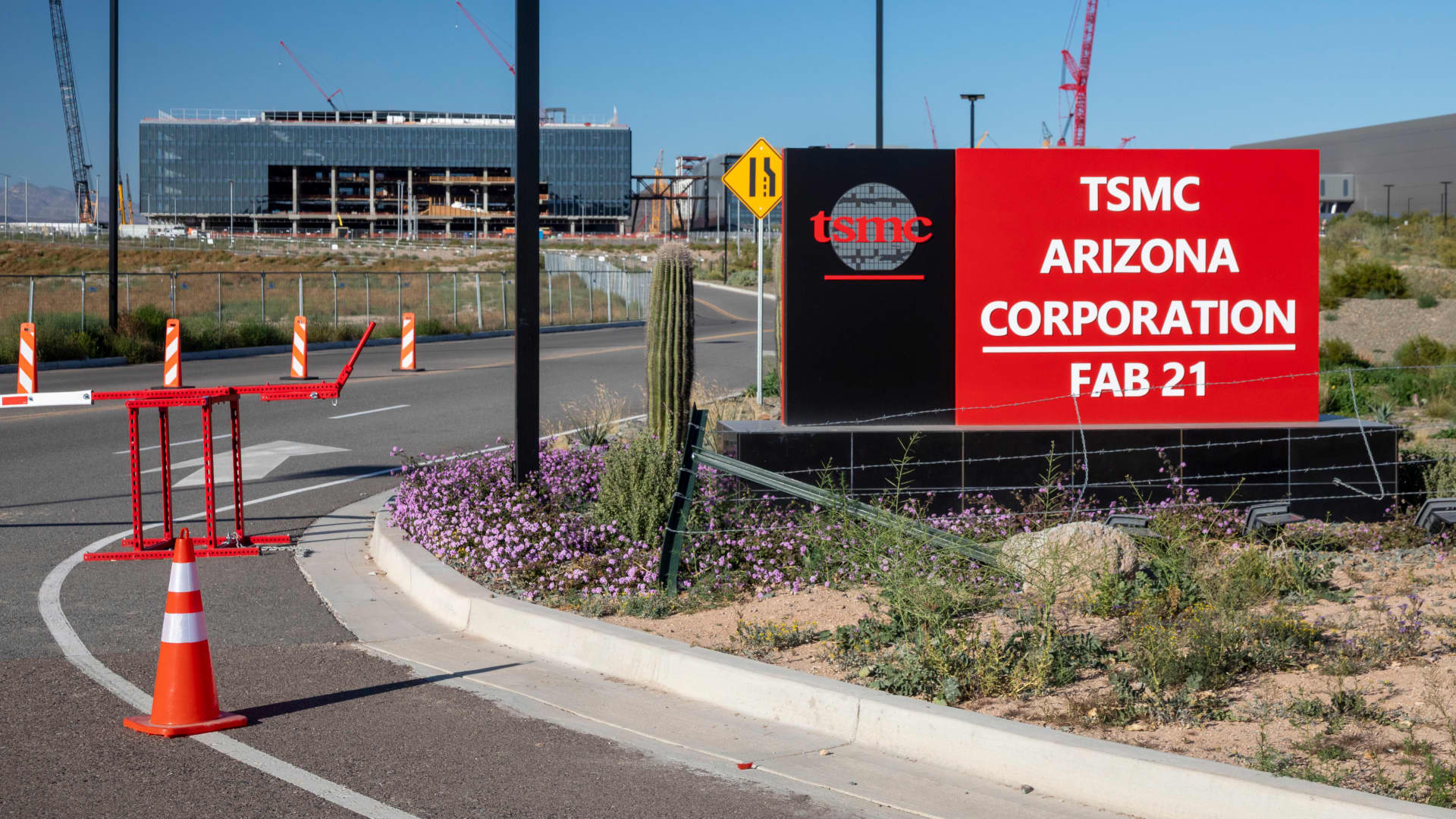
Taiwan Semiconductor Manufacturing Co. (TSMC) is significantly ramping up its investment in the U.S., pouring an additional $100 billion into its Arizona operations. This bold expansion, bringing the total commitment to $265 billion, aims to solidify its leading position in the burgeoning artificial intelligence (AI) chip market amidst what its CFO terms a ‘multi-year demand megatrend.’ The strategic acceleration underscores the intense global competition and surging demand for advanced semiconductor manufacturing.
🚀 Tech Strategy & Market Disruptions
- Massive AI Investment. TSMC commits an additional $100 billion, increasing its total Arizona investment to $265 billion, directly targeting the escalating demand for AI chips.
- Advanced Node Acceleration. The company is rapidly converting 5-nanometer capacity to more efficient 3-nanometer nodes, with 4-nanometer already operational and 2-nanometer set to drive new revenue streams.
- U.S. Semiconductor Ecosystem Development. Despite higher U.S. construction costs, TSMC’s expansion fosters local supply chains for both front-end wafer fabs and back-end advanced packaging.
TSMC’s latest capital injection marks a pivotal moment in the global semiconductor landscape, reaffirming the company’s aggressive strategy to dominate the AI computing era. Chief Financial Officer Wendell Huang emphasized the ‘strong-structure, multi-year demand’ driving this monumental investment, stating the company’s intent to ‘not leave any food on the table for anybody else,’ as reported by CNBC. For additional perspectives on semiconductor market dynamics, see analyses on global technology news. This aggressive stance includes an upward revision of its full-year capital expenditure to between $60 billion and $64 billion, reflecting unprecedented confidence in the AI market’s trajectory. The TSMC Arizona factory is central to this global strategy.
The expansion is not merely about increasing output; it’s a deep dive into advanced node technology. TSMC is optimizing its leading-edge capacities by fast-tracking the conversion of its 5-nanometer technology to the more advanced and efficient 3-nanometer node. This move is critical for meeting the processing power demands of next-generation AI applications. Huang also confirmed that phase one, utilizing 4-nanometer technology, is already active in Arizona, with 2-nanometer expected to become a significant revenue driver in the third quarter.
While the cost of fab construction in the U.S. is substantially higher—four to five times that of Taiwan—TSMC views this as a long-term investment in fostering a robust U.S. semiconductor ecosystem. This includes both front-end wafer fabrication and crucial back-end advanced packaging facilities, which are essential for complete chip production. This comprehensive buildout aligns with broader geopolitical strategies aimed at diversifying global chip manufacturing and strengthening domestic supply chains, a sentiment echoed by recent reports from leading financial news outlets.
- The strategic move by TSMC addresses critical supply chain vulnerabilities highlighted by recent global events, pushing for localized production of essential technologies. This strengthens national security and fosters innovation, a key theme in current technology market trends. For deeper analysis into these market shifts, explore the insights on technology market trends.
The accelerating investment in the TSMC Arizona factory sets off a significant disruption flow. Surging global demand for AI-specific chips acts as the primary catalyst, compelling TSMC to expand its advanced manufacturing capabilities. This increased capacity, particularly in 3-nanometer and 2-nanometer nodes, directly leads to higher availability of cutting-edge AI processors. Consequently, this fuels the development and deployment of more sophisticated AI models and applications across industries, from autonomous vehicles to advanced data centers. The availability of these powerful, energy-efficient chips then accelerates digital transformation initiatives worldwide, creating new market opportunities and intensifying competition among tech giants reliant on these components, ultimately reshaping the entire technology value chain. For further insights into how emerging technologies are reshaping industries, explore the insights on emerging technologies on StockXpo.
‘The sheer scale of TSMC’s Arizona investment isn’t just about manufacturing capacity; it’s a strategic move to de-risk the global technology supply chain. By bringing advanced wafer and packaging capabilities closer to its largest customers, TSMC isn’t merely building fabs; it’s engineering resilience and fostering a truly collaborative ecosystem essential for the future of AI. This commitment elevates the technological baseline for the entire industry, pushing the boundaries of what’s possible in compute at the edge and in the cloud.’
Key Financial and Operational Highlights:
- Total Arizona Investment: $265 billion (up from an initial commitment with an additional $100 billion)
- Current Operating Node: 4-nanometer technology (Phase one)
- Next-Gen Revenue Driver: 2-nanometer technology (initial revenue generation in Q2, significant in Q3)
- Manufacturing Cost Disparity: U.S. fab construction costs are 4-5 times higher than in Taiwan
- China Revenue Contribution: Approximately 8% of total revenue, with continued compliance with export controls
- Year-to-Date Stock Performance: Approximately 48% increase
TSMC Platform Architecture: Powering Next-Gen AI
The core of TSMC’s dominance lies in its intricate platform architecture, which encompasses not just advanced silicon fabrication but also a robust design ecosystem. The company’s strategic shift from 5-nanometer to 3-nanometer and the imminent 2-nanometer node production represent leaps in transistor density and power efficiency, critical for AI workloads. This architectural evolution is supported by sophisticated design tools, intellectual property (IP) blocks, and collaborative frameworks that allow clients like Apple, Nvidia, and Qualcomm to translate complex designs into physical chips. This integrated approach ensures that the physical architecture of the chips can fully leverage the immense computational demands of large language models and other AI applications, ensuring the performance gains promised by smaller nanometer processes are realized at scale.
TSMC Ecosystem Expansion Potential: Beyond Silicon
TSMC’s commitment to the U.S. extends beyond merely building fabs; it aims to cultivate a broader semiconductor ecosystem. The planned investment covers both front-end wafer manufacturing and back-end advanced packaging, a crucial segment for optimizing chip performance and connectivity. Furthermore, TSMC’s recent joint venture with Sony for image sensors, focused on physical AI, signifies its expansion into specialty technologies that complement its core logic chip business. This move diversifies its revenue streams and positions TSMC to capture growth in emerging areas like robotics, augmented reality, and intelligent edge devices. This ecosystem approach, bolstered by government support and customer demand, solidifies its global leadership and creates a synergistic network for innovation. For more educational tech insights, readers can visit educational tech insights.
TSMC’s Arizona Bet: A Cornerstone for AI’s Future
TSMC’s intensified investment in its Arizona facilities reflects a calculated long-term strategy to capitalize on the relentless demand for AI compute. This expansion is not just about capacity but about reinforcing geopolitical supply chain stability and advancing technological leadership in critical nanometer processes. The move solidifies TSMC’s position as an indispensable partner for major tech innovators globally.
- The $265 billion commitment underscores the strategic importance of localized, advanced semiconductor manufacturing.
- Rapid node transitions (5nm to 3nm, 2nm) are vital for powering next-generation AI breakthroughs.
- Despite higher U.S. operational costs, the long-term benefits of ecosystem development and customer proximity outweigh initial financial dilutions.
How will this massive investment reshape global technology supply chains and competitive dynamics in the AI hardware race?
### 📊 StockXpo Analyst’s View
Market Impact: TSMC’s accelerated investment signals robust long-term demand for AI-driven compute, likely boosting sentiment across the semiconductor equipment and materials sectors. While initial U.S. production costs might impact margins, the strategic value of diversified manufacturing and enhanced customer proximity will likely be viewed positively by institutional investors, potentially leading to upward revisions in valuation models for the chip giant.
Sector To Watch: The AI hardware sector, including AI chip designers, advanced packaging providers, and semiconductor equipment manufacturers, stands to gain significantly. Companies involved in AI software and data center infrastructure will also benefit from the increased availability of high-performance chips, accelerating their deployment capabilities.
Financial Disclaimer:
StockXpo.com is a financial news aggregator and educational portal, not a registered investment advisor or broker-dealer. All information, news, and analysis provided herein are strictly for educational purposes and do not constitute investment, financial, legal, or tax advice. Investing in the stock market involves high risks, and past performance is not indicative of future results. StockXpo will not be liable for any financial losses or investment damages. Always consult a certified financial advisor before making market decisions.
MORE IN INSIDE TECHNOLOGY

AI Buildout Hits Credit Headwinds: Neoclouds Under Pressure
Published: Saturday, October 24, 2026 · 12:23 AM

SK Hynix Shares Rebound: A Strategic Shift in Semiconductor Funding
Published: Friday, October 23, 2026 · 1:46 AM