Published: Wednesday, July 1, 2026 · 1:40 PM | Updated: Wednesday, July 1, 2026 · 1:40 PM
📊 230 views




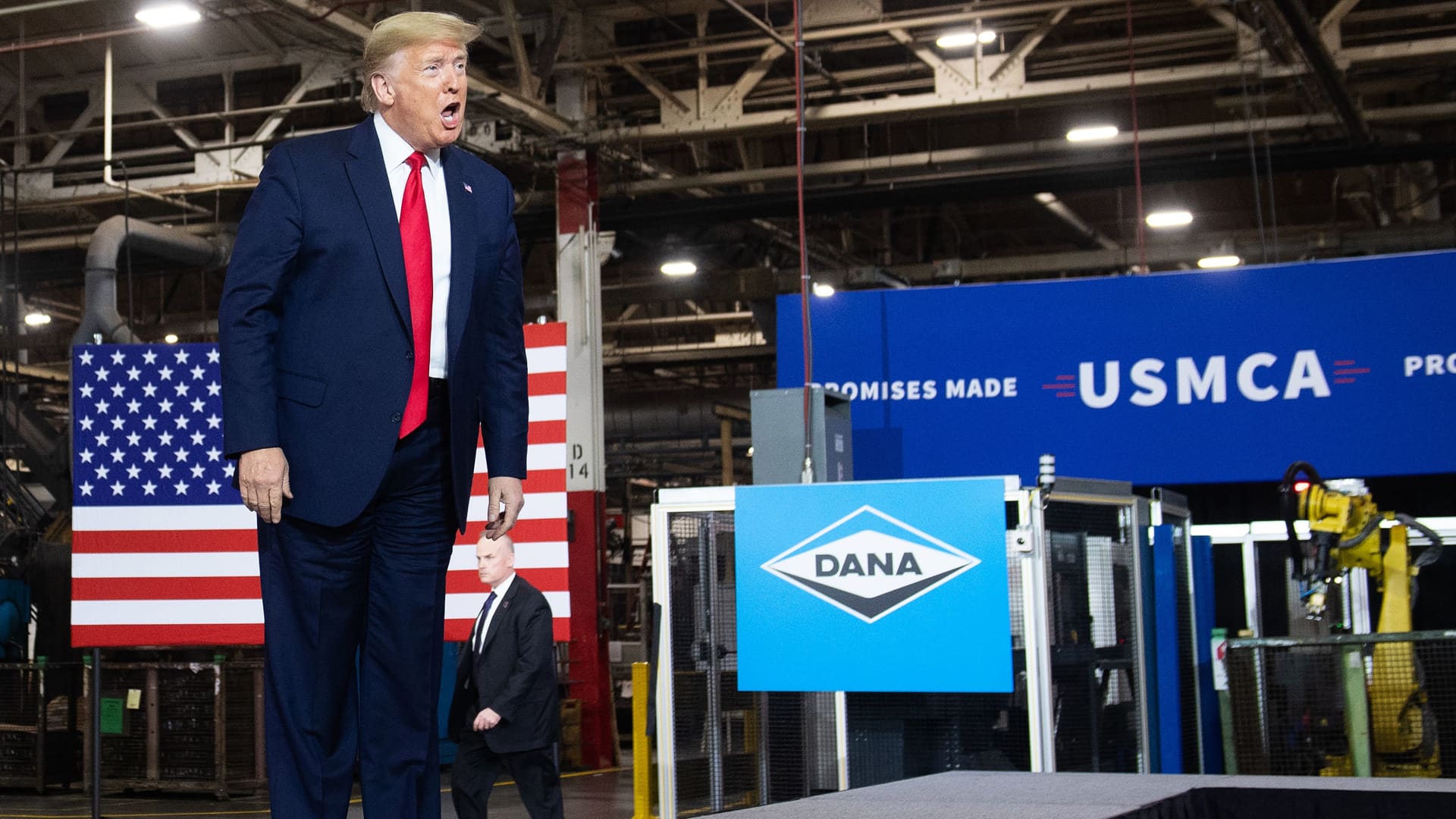
The U.S. automotive sector is grappling with renewed uncertainty as an expected extension to the USMCA trade deal failed to materialize by its Wednesday deadline, initiating a prolonged annual review process that could stretch until 2036. This development poses significant strategic challenges for automakers, potentially hindering billions in planned investments and reshaping North American supply chains.
🗝️ Corporate Strategy Insights
- Prolonged Uncertainty Looms. Failure to extend the USMCA trade deal triggers a yearslong annual review, creating a volatile environment for long-term investment planning in the automotive sector.
- Increased Domestic Content Demands. The U.S. administration is pushing for significantly higher domestic content rules, potentially raising manufacturing costs and requiring extensive supply chain restructuring.
- Risk of Tariffs and Trade Disruptions. Aggressive negotiation tactics, including the potential reintroduction of tariffs, could disrupt established North American trade flows and force automakers to re-evaluate production locations.
The United States-Mexico-Canada Agreement (USMCA), which succeeded NAFTA in 2020, governs approximately $2 trillion in goods and services annually across the three nations. With the U.S. administration expressing dissatisfaction and pushing for more domestic benefits, the automotive industry—accounting for 18% of America’s trading with its neighbors last year, according to industry data—finds itself at a critical juncture. Automakers and suppliers had advocated for a swift 16-year extension, fearing that reopening the deal for review would introduce crippling uncertainty, deter new investments, and threaten existing jobs. This sentiment was echoed by Diego Marroquín Bitar of the Center for Strategic and International Studies, who noted that a prolonged review would be ‘very painful for everyone.’
U.S. Trade Representative Jamieson Greer confirmed in May that the U.S. aims to strengthen North American rules of origin to boost domestic manufacturing, explicitly seeking to enhance U.S. content in goods. This push aligns with broader administration goals to shift supply chains away from China, a sentiment articulated by AlixPartners, which suggests the ideal USMCA 2.0 would focus on competitiveness with China rather than internal North American disputes. However, the negotiation scope has broadened to include non-trade issues like immigration and crime, complicating talks beyond purely economic considerations, as Bitar highlighted.
Automakers have already navigated a turbulent decade marked by pandemic-induced production stoppages, supply chain disruptions, and tariff fluctuations. The prospect of renegotiating USMCA’s rules of origin adds another layer of complexity. Current regulations require 75% ‘regional value content’ for passenger vehicles and light trucks from North America to qualify for preferential treatment. The Trump administration reportedly seeks to raise this to 82%, with a substantial 50% specifically from the U.S. This proposed distinction between U.S. and Canadian content would necessitate entirely new accounting and production processes.
Industry experts warn of significant financial and operational challenges. Aakash Arora of Boston Consulting Group points out that while higher U.S. content is a clear goal, setting standards too high could backfire. Companies might opt to produce less expensive parts outside the U.S. and pay tariffs, circumventing the intended domestic boost. Mark Wakefield of AlixPartners estimates a 20% premium for moving production from Mexico to Canada and up to a 50% cost increase for shifting parts from China to the U.S., making such changes ‘a bumpy road, and a fairly expensive road.’ Automakers have already invested billions to meet current USMCA standards, and further changes would require years and additional massive capital outlays to onshore production and adapt supply chains, which comprise thousands of parts from dozens of countries.
Key concerns for the auto industry include:
- The financial burden of reconfiguring complex global supply chains to meet stricter U.S. content mandates.
- The potential for increased tariffs to escalate vehicle production costs, impacting consumer prices and market demand.
- Operational challenges in establishing new processes to differentiate between U.S. and Canadian parts content.
Even now, only a handful of vehicles, like the Volkswagen ID.4 all-wheel-drive Pro at 76% U.S./Canadian content, meet the current 75% threshold, with none reaching 80%, according to NHTSA data. Integrating software origin into the rules of origin could be one pathway to boost the U.S. content percentage, as suggested by Arora, given the growing software component in modern vehicles.
The unresolved status of the USMCA trade deal creates a significant ripple effect across the North American automotive ecosystem. This uncertainty directly leads to hesitancy in capital allocation, as automakers delay substantial investments in new plants or expansions until the regulatory environment clarifies. The potential for higher regional value content requirements, particularly a U.S.-specific mandate, will force companies to re-evaluate their entire sourcing strategies, impacting suppliers in Mexico and Canada first. This could fragment a previously integrated supply chain, increasing operational complexities and logistical costs. Competitors vying for market share within North America will face similar pressures, potentially leading to a bifurcation between those who can afford the restructuring and those who might opt to pay tariffs. The ultimate effect could be higher manufacturing costs for vehicles sold in the U.S., potentially eroding profitability or passing increased expenses onto consumers. This could also give an advantage to manufacturers with already robust U.S. production footprints or those agile enough to adapt quickly.
“If we let this go on for a very long time, it’s very painful for everyone. That’s the last thing that the region needs,” stated Diego Marroquín Bitar, a fellow at the Center for Strategic and International Studies, underscoring the severe economic consequences of prolonged trade policy uncertainty.
The implications of USMCA renegotiation are quantifiable through several key indicators:
- Investment Impact: USMCA has driven an estimated $182 billion in North American investment, with 86% directed to the U.S., according to automotive lobbying groups. Future investment is now at risk.
- Content Compliance: As of 2026, only about a dozen vehicle models meet the current 75% North American regional value content threshold, with none at 80%. Significant shifts would be required for higher targets.
- Cost Escalation: AlixPartners estimates a 20% premium for relocating production from Mexico to Canada and up to a 50% cost increase for moving some parts from China to the U.S. to meet new content rules.
These metrics highlight the substantial economic shifts and capital requirements confronting the industry under a revised trade framework.
Automaker Investment Strategies Amid Policy Flux
In response to the evolving USMCA landscape, major automakers will likely adopt cautious investment postures, prioritizing flexibility and risk mitigation over aggressive expansion. Strategies could include modular manufacturing designs that allow for easier adaptation to changing regional content rules or increased near-shoring efforts within current facilities. Companies might also explore deeper technological integrations to identify and track component origins more efficiently. The focus will be on maintaining supply chain resilience while hedging against potential tariff scenarios, balancing the desire for domestic production with the economic realities of global sourcing. This period demands a delicate balance between fulfilling national content mandates and sustaining competitive pricing and innovation.
Competitive Landscape: Navigating North American Trade Shifts
The competitive dynamics within the North American automotive market are poised for significant recalibration. Companies with established, highly localized U.S. manufacturing bases might find themselves in a relatively stronger position, while those heavily reliant on cross-border supply chains in Mexico or Canada face immediate restructuring pressure. This could particularly impact firms that have optimized for the current 75% regional value content. Furthermore, the push to reduce reliance on Chinese components introduces an external competitive challenge, requiring North American manufacturers to rapidly develop alternative, cost-effective sources. The firms that can most effectively absorb increased production costs or innovate to meet new content requirements without significant price increases will likely gain a competitive edge in this shifting environment.
The USMCA Trade Deal: A Pivotal Moment for North American Autos
The failure to extend the USMCA trade deal’s review period marks a pivotal moment, ushering in an era of heightened scrutiny and potential reform for the North American automotive sector. This period of uncertainty is set to test the resilience of supply chains and the strategic agility of automakers, demanding substantial re-evaluation of investment priorities and operational structures. The administration’s push for greater U.S. content, while aiming to boost domestic manufacturing, introduces complex cost dynamics and implementation hurdles. For further educational insights, consult our blog.
- Automakers face significant capital allocation decisions under regulatory ambiguity.
- Supply chain resilience and re-localization efforts will become paramount.
- The industry must balance domestic content demands with global competitiveness.
How will automakers strategically adapt their extensive North American operations to thrive amidst these unpredictable trade negotiations?
📊 StockXpo Analyst’s View
Market Impact: This extended uncertainty around the USMCA trade deal is likely to introduce volatility for auto sector equities, particularly those with significant North American manufacturing footprints. Investor sentiment may become more cautious regarding long-term capital expenditure plans by major original equipment manufacturers (OEMs) and their suppliers. We anticipate downward pressure on investment analysis for companies with high exposure to cross-border components within North America, as well as those heavily reliant on global supply chains.
Sector To Watch: The automotive parts manufacturing sector, particularly in Mexico and Canada, will be under intense scrutiny. Companies specializing in advanced manufacturing technologies that can support rapid re-tooling or localized production in the U.S. may see increased demand. Conversely, firms with less flexible global supply chain integration could face headwinds. This also spotlights the broader implications for global economic shifts, as global trade relationships undergo re-evaluation.
Financial Disclaimer:
StockXpo.com is a financial news aggregator and educational portal, not a registered investment advisor or broker-dealer. All information, news, and analysis provided herein are strictly for educational purposes and do not constitute investment, financial, legal, or tax advice. Investing in the stock market involves high risks, and past performance is not indicative of future results. StockXpo will not be liable for any financial losses or investment damages. Always consult a certified financial advisor before making market decisions.
MORE IN INSIDE BUSINESS

United Airlines Profit Outlook Slashed Amid Fuel Costs, Strong Demand Persists
Published: Wednesday, October 21, 2026 · 7:30 AM

General Motors Earnings Preview: A 30% EPS Surge Amidst Market Caution
Published: Tuesday, October 20, 2026 · 1:11 AM