Published: Sunday, June 14, 2026 · 1:16 PM | Updated: Sunday, June 14, 2026 · 1:16 PM
📊 261 views




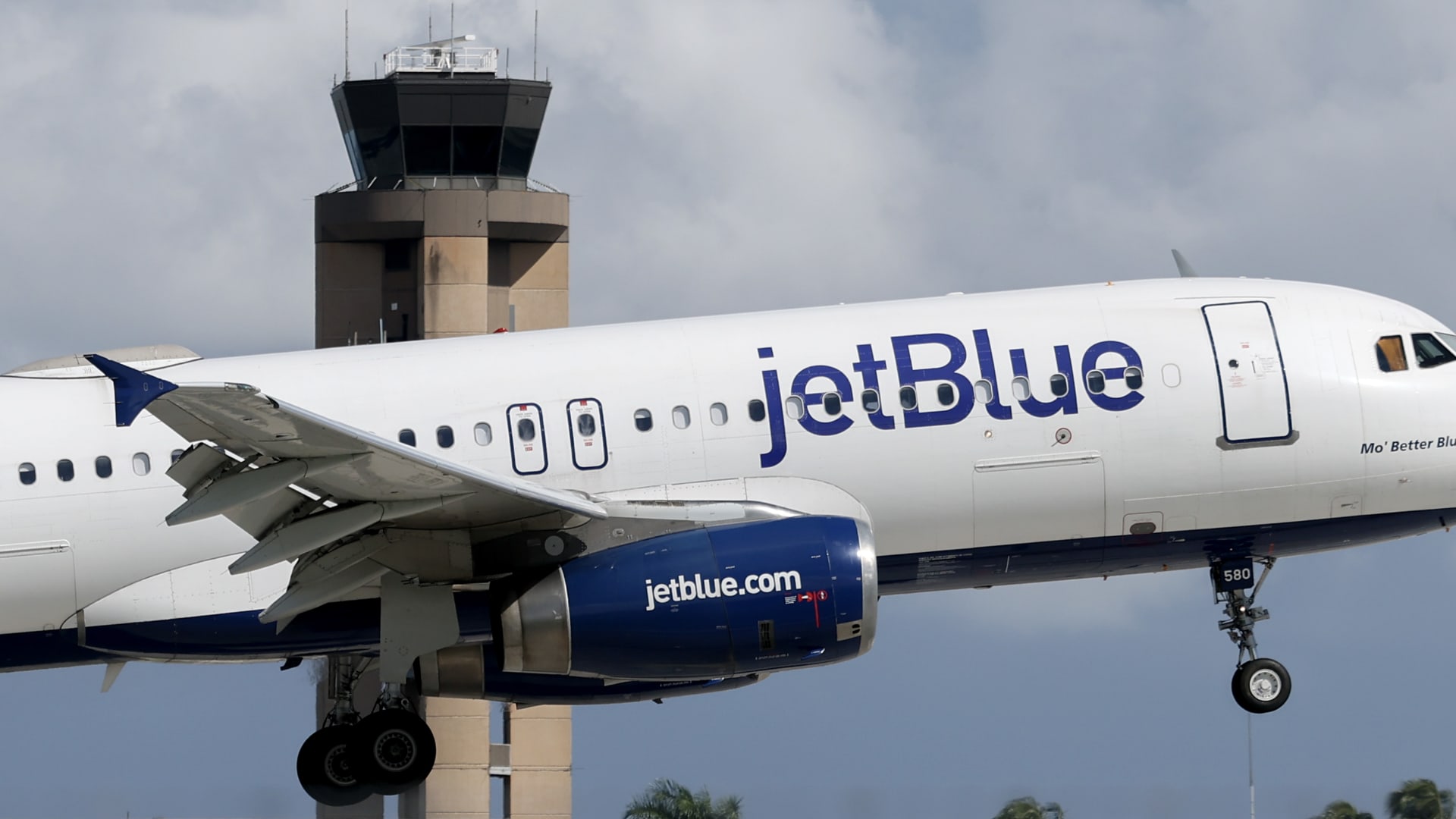
JetBlue Airways is making an aggressive push into Fort Lauderdale, leveraging a significant market opportunity following the collapse of Spirit Airlines. This calculated expansion in JetBlue Fort Lauderdale operations is a cornerstone of the airline’s broader strategy to return to profitability after its last profitable quarter two years ago, refocusing its network on high-growth, high-yield markets.
The move solidifies JetBlue’s position as the dominant carrier in South Florida’s Broward County, indicating a strategic shift towards strengthening key hubs and enhancing premium offerings.
🗝️ Corporate Strategy Insights
- Market Dominance Through Opportunity. JetBlue capitalized rapidly on Spirit Airlines’ collapse, significantly increasing capacity and market share at Fort Lauderdale-Hollywood International Airport.
- Premium Network Focus. The expansion includes plans for a new airport lounge and increased international flights, aligning with JetBlue’s strategy to introduce more high-end options, like domestic first-class, to attract higher-value customers.
- Hub Fortification. Fort Lauderdale is being elevated to a critical hub, projected to operate on par with JetBlue’s Boston Logan hub during peak seasons, reinforcing its network strength beyond its traditional New York base.
Why This Expansion Matters for JetBlue’s Future
JetBlue’s increased presence at Fort Lauderdale-Hollywood International Airport (FLL) is not merely about filling a void; it represents a critical pivot in its operational strategy. Before Spirit Airlines’ demise, JetBlue was already the largest carrier at FLL. The subsequent market upheaval allowed JetBlue to dramatically expand its capacity, jumping from approximately 24% to 36% market share by capacity in just one year, according to Cirium data. This rapid scaling, including adding 5% more capacity from May to June, directly counters competitors pulling back during the Florida offseason.
This bold move underlines a commitment to operational efficiency and securing market leadership in key leisure and VFR (Visiting Friends and Relatives) markets. The airline plans to boost daily flights from about 106 this year to approximately 150 during peak winter months, rivaling its Boston Logan International Airport hub in scale. This aggressive growth trajectory is aimed at bolstering revenue forecasts and accelerating the path to profitability, which has eluded the carrier for the past two years.
- JetBlue’s President Marty St. George highlighted Fort Lauderdale as a “star” performer, underscoring its strategic importance.
- The airline is also exploring a third airport lounge at FLL, signaling a stronger focus on the premium segment to cater to business and high-end leisure travelers.
- New international destinations, including recent service to Caracas from Fort Lauderdale, are set to enhance its gateway status for Latin America and the Caribbean, challenging larger players like American Airlines.
Strategic Ripple Effect: Shifting Competitive Dynamics
JetBlue’s Fort Lauderdale initiative creates significant ripple effects across the competitive landscape. The immediate impact is the consolidation of market share, moving JetBlue closer to a dominant position in a crucial Florida gateway. This enhanced presence directly pressures American Airlines, whose primary South Florida hub at Miami International Airport (MIA) is a formidable competitor for Latin American and Caribbean routes. While JetBlue acknowledges MIA’s distinct customer base, its expanded service and premium offerings at FLL aim to capture a larger segment of travelers seeking convenience and an elevated experience.
Capacity Injection → Market Share Consolidation → Revenue Diversification → Competitive Pressure. This cause-and-effect chain demonstrates how JetBlue’s tactical capacity additions translate into greater market control, allowing for new international routes that diversify revenue streams and intensify competition with established carriers.
“JetBlue’s aggressive push in Fort Lauderdale exemplifies a clear strategy to capitalize on market dislocations, aiming for both volume and value in a key growth region.”
JetBlue’s Operational Metrics and Outlook
The following indicators highlight the scale of JetBlue’s operational commitment in Fort Lauderdale:
- Market Share (FLL, by capacity): From ~24% (2025) to 36% (2026). This significant jump illustrates JetBlue’s rapid absorption of market share, particularly post-Spirit’s exit.
- Daily Flights (FLL, average): From ~68 (2025) to ~106 (2026), with plans for ~150 (peak winter). This surge in flight frequency indicates a strategic intent to maximize network utility and customer choice.
- Revenue Forecast: Raised on June 1, citing strong demand in response to growth. A positive signal for investor confidence and a direct outcome of increased operational footprint.
These metrics underscore JetBlue’s conviction in Fort Lauderdale as a core growth engine, essential for its financial turnaround.
JetBlue’s Competitive Advantages in South Florida
JetBlue’s strategy in South Florida hinges on a blend of market capture and service differentiation. Its most immediate advantage is the void left by Spirit Airlines, enabling a rapid increase in flight frequencies and route options without the typical protracted regulatory hurdles. This agility allows JetBlue to quickly become the preferred low-cost, high-value option for travelers in the region. Furthermore, JetBlue’s established reputation for customer service and its “Mint” premium experience position it favorably against ultra-low-cost carriers and, increasingly, traditional full-service airlines like American Airlines.
By establishing Fort Lauderdale as a de facto third major hub alongside New York and Boston, JetBlue leverages network effects, offering more seamless connections and a broader range of destinations. This allows the airline to cater to diverse traveler needs, from budget-conscious leisure to those seeking enhanced comfort and international connectivity, boosting its overall corporate growth strategy.
JetBlue Fort Lauderdale: Navigating Growth and Profitability
JetBlue’s aggressive expansion in Fort Lauderdale is a decisive move to restore financial health and solidify its position in a critical market. By bolstering capacity and enhancing premium offerings, the airline aims to leverage increased demand and market share gains to drive revenue growth. The push into international routes from FLL further diversifies its network and competitive reach. However, execution will be key, particularly in securing additional gate access and fending off competitive responses from rivals.
- The immediate post-Spirit market dynamics offer a unique window for JetBlue to cement its leadership.
- Investment in premium amenities like airport lounges indicates a commitment to higher-yield customers.
- The balance between rapid expansion and maintaining operational efficiency will be crucial for sustained profitability.
Can JetBlue successfully translate this Fort Lauderdale dominance into consistent, long-term profitability amidst an evolving industry landscape?
### 📊 StockXpo Analyst’s View
Market Impact: This strategic escalation by JetBlue is likely to enhance investor confidence, signaling a clear path towards improved operational efficiency and potential profitability. Increased market liquidity for JBLU shares may follow as investors weigh the benefits of consolidated market share in a high-demand region. The move could also trigger increased scrutiny on other carriers’ regional strategies.
Sector To Watch: The airline sector, particularly regional carriers and those heavily invested in Latin American and Caribbean routes, will be under pressure. Companies focused on airport infrastructure and premium travel services, like lounge operators, could see gains from JetBlue’s investment. This shift highlights the importance of adaptable stock markets strategies.
Financial Disclaimer:
StockXpo.com is a financial news aggregator and educational portal, not a registered investment advisor or broker-dealer. All information, news, and analysis provided herein are strictly for educational purposes and do not constitute investment, financial, legal, or tax advice. Investing in the stock market involves high risks, and past performance is not indicative of future results. StockXpo will not be liable for any financial losses or investment damages. Always consult a certified financial advisor before making market decisions.
MORE IN INSIDE BUSINESS
Saudi Arabia Flight Decision: Delta Weighs Safety Amid Regional Tensions
Published: Friday, October 9, 2026 · 7:21 AM

Skydance Vertical Win: Ellison’s Bold Strategy for Media Dominance
Published: Thursday, October 8, 2026 · 12:44 PM