Published: Monday, June 8, 2026 · 4:23 AM | Updated: Monday, June 8, 2026 · 4:23 AM
📊 240 views




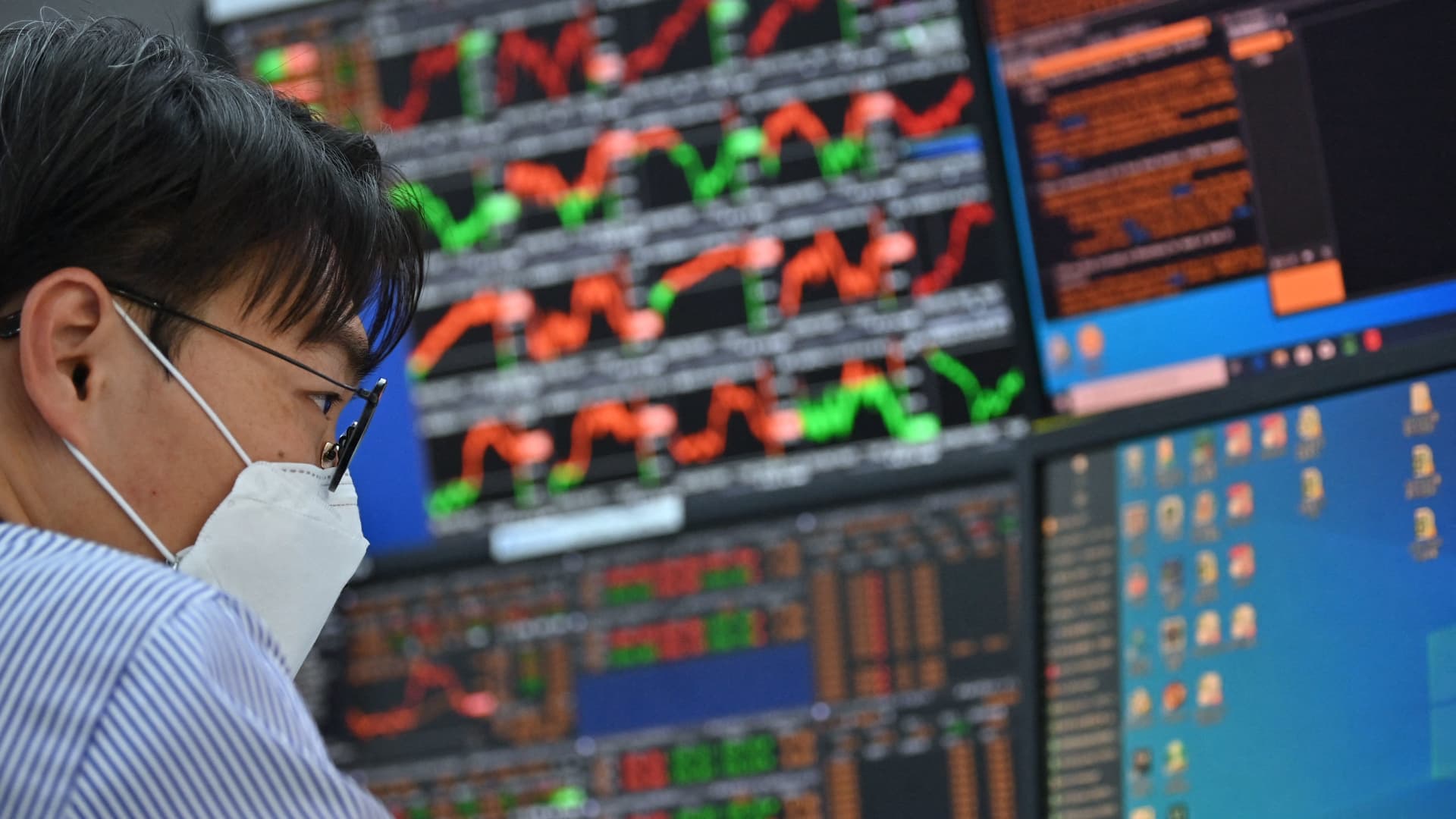
Despite the Kospi index surging to record year-to-date gains, foreign investors have paradoxically divested billions from Korean stocks. This counter-intuitive market dynamic signals a deeper structural shift rather than deteriorating fundamentals, challenging traditional investment logic in one of Asia’s most dynamic economies.
🚀 Tech Strategy & Market Disruptions
- Benchmark Weighting Shift. The Kospi’s rapid ascent has increased its weighting in global and emerging market indices, forcing active fund managers to trim positions to maintain portfolio and risk limits.
- Domestic Investor Surge. Robust retail inflows from South Korean investors have more than offset foreign selling, altering market liquidity dynamics and making the market less reliant on international capital.
- Concentration Risk. A significant portion of the Kospi’s rally has been driven by giants like Samsung Electronics and SK Hynix, raising concerns about sector concentration among diversified foreign portfolios.
Foreign investors have initiated a substantial sell-off in Korean stocks this year, a move that appears paradoxical given the Kospi’s remarkable performance as one of the world’s leading indices. Data from the Korea Exchange indicated that overseas investors offloaded approximately $801 million worth of Kospi-listed shares in a single day, with net foreign outflows from the Kospi market estimated at roughly $62 billion by late May, according to Goldman Sachs. This divestment, primarily observed in Kospi Tech and Auto sectors, isn’t necessarily a vote of no-confidence in Korea’s economic fundamentals.
Instead, analysts from Nomura and Man Group describe this phenomenon as “forced selling.” As South Korean equities have outperformed, their proportionate weight in global and emerging market benchmarks has naturally expanded. For many active fund managers, this creates a compliance challenge, pushing them beyond their mandated portfolio weightings and risk thresholds, thus necessitating a reduction in exposure. This dynamic mirrors recent trends seen in India, where surging domestic retail participation began to crowd out foreign investors.
* Structural Pressure: The rapid increase in Korea’s representation within major emerging-market indices compels international fund managers to rebalance their portfolios, irrespective of individual stock performance.
* Regulatory Limits: Certain investors are encountering regulatory ceilings on the ownership percentages of specific companies, particularly after the surge in value of Korea’s largest corporations.
Significantly, the vacuum left by foreign exits has been more than adequately filled by a surge in domestic buying. Nomura points to an estimated $70 billion in retail inflows this year, coupled with a sharp increase in new brokerage accounts. This shift in market ownership structure implies a resilience less dependent on external sentiment, yet it also highlights growing concerns over risk concentration, with a significant portion of the rally tied to bellwethers like Samsung Electronics and SK Hynix.
The disruption flow here is a fascinating study in modern market mechanics: A period of Record Rally directly leads to Increased Benchmark Weighting for a market like Korea. This then creates Active Fund Overweighting, compelling managers to execute Forced Selling to Rebalance, which in turn leads to a significant Shift in Market Ownership Dynamics towards domestic investors. This chain reaction, while seemingly counter-intuitive, showcases how algorithmic trading and portfolio optimization tools dictate capital allocation in an increasingly interconnected global financial system, creating unexpected volatility and opportunities in specific technology market trends.
“The mechanical nature of global fund rebalancing, driven by algorithmic allocation strategies and passive index tracking, can obscure fundamental value. For a CTO, understanding these systemic market behaviors is as critical as analyzing underlying tech innovation, as they dictate capital availability and investor sentiment for emerging technologies.”
Here are the key financial movements impacting Korean stocks:
- Net Foreign Outflows (as of late May): Approximately $62 billion from the Kospi.
- Single Day Outflow (June 5): 1.24 trillion won (about $801 million) worth of Kospi-listed shares.
- Domestic Retail Inflows (This Year): Estimated $70 billion, effectively offsetting foreign selling.
Navigating Korea’s Market Adoption Challenges
The current environment presents a unique set of market adoption challenges for foreign institutional investors in South Korea. While the fundamental allure of Korean technology and manufacturing prowess remains strong, the structural pressures outlined – particularly benchmark rebalancing and regulatory ownership limits – force a recalibration of entry and exit strategies. Instead of purely evaluating company financials or innovation pipelines, these investors must factor in the market’s increasing self-sufficiency and the mechanical nature of index-driven capital flows. This means identifying optimal entry points after potential pullbacks and perhaps exploring more nuanced, direct investment avenues rather than relying solely on broad-market index allocations. Understanding the underlying domestic investor behavior, which often has a longer-term horizon for their own national champions, becomes key to successful engagement with emerging technologies and traditional sectors.
Korean Tech Ecosystem Expansion Potential Amidst Shifts
Despite the foreign outflows, the underlying robustness of the Korean tech ecosystem continues to present significant expansion potential. Companies like Samsung and SK Hynix are at the forefront of global semiconductor innovation, AI, and next-generation connectivity, making them critical components of the global digital transformation narrative. The sustained domestic investment, highlighted by the $70 billion retail inflows, underscores a strong belief in these companies’ future growth and their capacity to drive innovation. This internal capital strength could foster greater autonomy for Korean tech firms, potentially enabling more aggressive R&D, strategic partnerships, and market penetration without immediate reliance on foreign capital. This shift could lead to new avenues for growth and a more resilient, domestically-backed tech ecosystem expansion.
Korean Stocks: Charting a New Investor Landscape
The recent foreign capital exodus from Korean stocks is not a reflection of fundamental weakness but a complex interplay of success-driven rebalancing and surging domestic confidence. This dynamic is reshaping the investor landscape, demanding a nuanced understanding of market mechanics and local sentiment over traditional metrics alone. As the Kospi continues its robust performance, its ownership structure will likely reflect this significant transformation.
- The phenomenon is largely mechanical, driven by portfolio rebalancing rather than a bearish outlook on Korean fundamentals.
- Domestic retail investors have emerged as a powerful counterforce, injecting substantial capital and shifting market control.
- The concentration of gains in tech giants like Samsung necessitates careful risk assessment by global funds.
Will this rebalanced, domestically-driven market create new pathways for growth, or will it present unforeseen challenges for international capital interested in Korea’s innovative sectors? For more on investment strategies, check out our educational tech insights.
📊 StockXpo Analyst’s View
Market Impact: The forced selling in Korean stocks creates temporary volatility but also potentially attractive entry points for long-term investors less constrained by index weightings. The strong domestic buying could insulate the market from larger external shocks, indicating a mature and liquid local capital base. Investors should track these shifts for signs of market efficiency and the evolution of financial market behavior, as reported by advanced financial reporting services like Bloomberg Technology.
Sector To Watch: Given the concentration of gains, the semiconductor and advanced manufacturing sectors remain pivotal. However, investors should also monitor emerging digital services and biotech in Korea, which could benefit from sustained domestic capital and offer diversification beyond the established giants. These sectors often represent the forefront of innovation-driven growth.
Financial Disclaimer:
StockXpo.com is a financial news aggregator and educational portal, not a registered investment advisor or broker-dealer. All information, news, and analysis provided herein are strictly for educational purposes and do not constitute investment, financial, legal, or tax advice. Investing in the stock market involves high risks, and past performance is not indicative of future results. StockXpo will not be liable for any financial losses or investment damages. Always consult a certified financial advisor before making market decisions.
MORE IN INSIDE TECHNOLOGY
SoftBank AI Investment: Malaysia’s $50 Billion Innovation Surge
Published: Monday, October 26, 2026 · 2:37 AM

SpaceX AI Chips: $40 Billion Deal Fuels Innovation-Driven Growth
Published: Sunday, October 25, 2026 · 9:35 PM