Published: Wednesday, May 20, 2026 · 8:11 PM | Updated: Wednesday, May 20, 2026 · 8:11 PM
📊 258 views




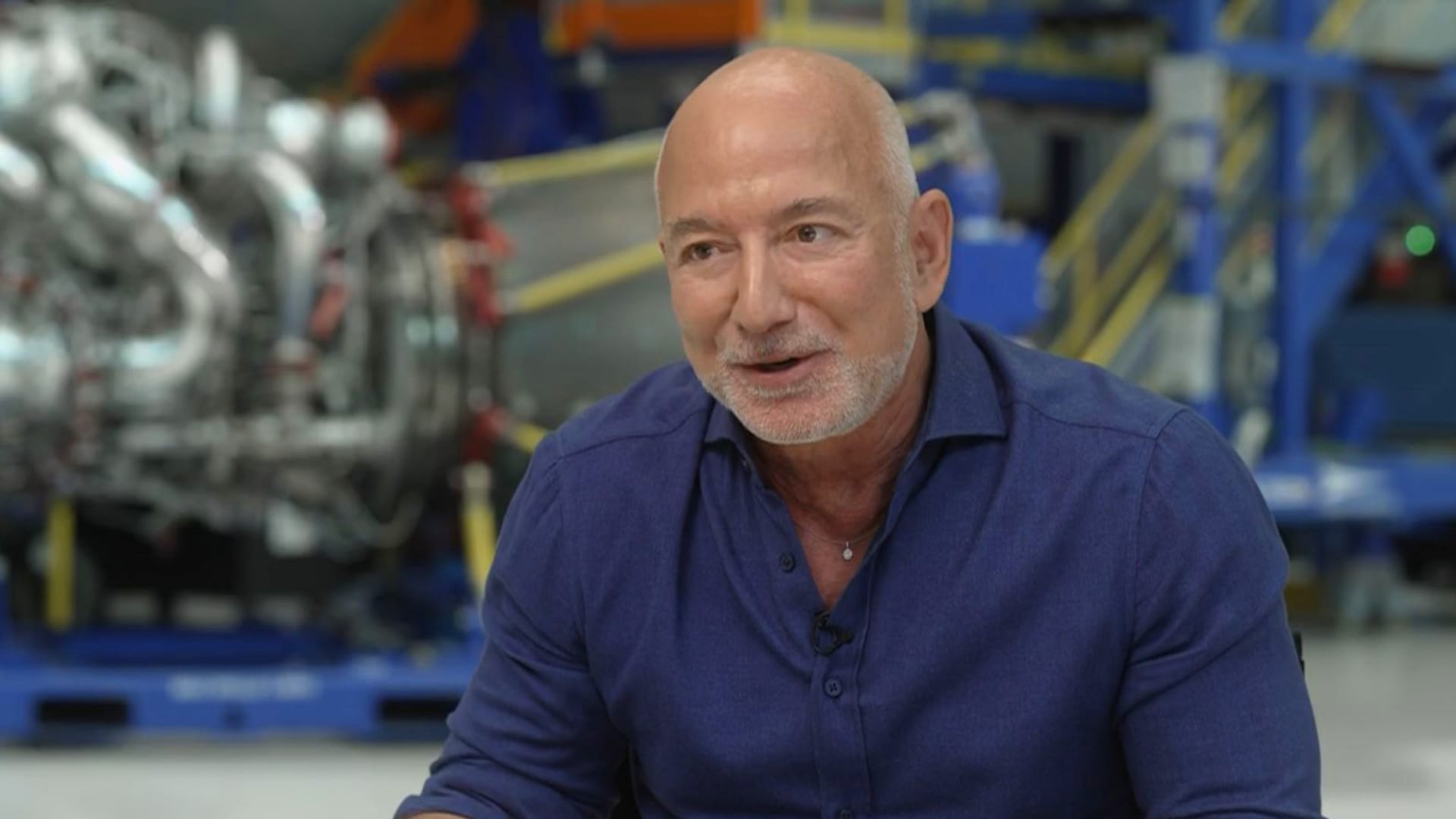
In a wide-ranging interview, Amazon founder Jeff Bezos offered a robust defense of billionaires and a compelling vision for the future, heavily emphasizing the transformative potential of artificial intelligence while also addressing complex tax policy debates and the economic landscape. His remarks provide critical insights into the mindset of a titan shaping global markets.
🚀 Tech Strategy & Market Disruptions
- AI as an Augmentation Engine. Bezos envisions AI not as a job displacer, but as a tool to elevate human potential and boost productivity across industries.
- Rethinking Tax Fairness. While advocating for tax relief for lower earners, Bezos questioned the efficacy of simply increasing taxes on the wealthy to address broader economic struggles.
- Market Intervention Critiques. Bezos pointed to government meddling as a root cause of economic woes, specifically citing high rent prices.
Bezos articulated a nuanced view on the economy, acknowledging a “tale of two economies” where some individuals thrive while others struggle. He notably backed a tax-policy idea that would eliminate income taxes for the bottom half of U.S. earners, a stance that at times echoed progressive viewpoints. However, he quickly pivoted to defending his peers, criticizing the ‘vilification’ of the wealthy by politicians and arguing that their success stems from creating valued services that millions of consumers embrace.
His defense extended to personal tax practices, where he asserted that he pays billions in taxes annually and that simply doubling his tax burden would not solve the economic challenges faced by everyday citizens. He attributed economic difficulties, such as high rent prices, not to wealth accumulation but to government intervention in markets. Bezos also challenged the narrative of billionaires exploiting tax loopholes like ‘buy, borrow, die,’ stating he routinely sells Amazon stock, indicating active engagement rather than passive asset leveraging.
Bezos’ perspective on Artificial Intelligence marks a significant point of discussion for technology leaders. He dismisses fears of widespread job displacement, instead predicting that AI will fundamentally augment workers, leading to significant productivity gains and potential deflationary pressures across goods and services. This optimistic outlook contrasts with growing public apprehension regarding AI’s societal impact, as highlighted by recent Pew Research Center findings and concerns over AI data center footprints.
AI’s Transformative Leap: Beyond Displacement Fears
The debate around AI’s impact on the workforce is intensifying, with companies like Anthropic and Cursor developing advanced coding tools. While some fear these tools will displace software engineers, Bezos views them as powerful augmentations, akin to using a bulldozer instead of a shovel. This perspective suggests a future where AI handles the intricate, time-consuming tasks, allowing human professionals to operate at a higher strategic level. This aligns with broader emerging technologies that promise to redefine productivity paradigms.
His optimistic stance on AI, coupled with his defense of market-driven success, paints a picture of a leader deeply invested in technological progress and free-market principles. This forward-looking view is crucial for understanding the trajectory of innovation-driven growth in the coming years, as businesses across sectors integrate advanced AI capabilities. The potential for AI to reshape operational efficiencies and create new market opportunities is immense, provided its development is not stifled by premature regulation.
The ‘buy, borrow, die’ narrative overlooks the active participation and wealth creation that comes from building and scaling businesses. True innovation, driven by market demand and efficient capital deployment, is the engine of wealth, not passive financial maneuvering.
Bezos also offered his assessment of political figures, stating that President Donald Trump has become a “more mature, more disciplined version of himself.” He credited Trump with having “good ideas” and being “right about a lot of things,” while also noting his own engagement with both Republican and Democratic administrations, framing his business focus as being “on the side of America.” This suggests a pragmatic approach to leadership engagement, irrespective of political affiliation.
Bezos’ Vision for AI-Driven Economic Uplift
The implications of Bezos’ viewpoints on AI and economic policy are significant for the broader technology market trends. His emphasis on AI as an enhancer of human capability rather than a replacement speaks to a future where human-AI collaboration drives unprecedented innovation. This could lead to shifts in labor market demands, emphasizing higher-level skills and strategic thinking. Companies that successfully integrate AI to augment their workforce are likely to see enhanced operational efficiency and competitive advantages, potentially leading to market disruption for those slower to adapt. The discussion also touches upon the fundamental principles of wealth creation and its societal implications, echoing themes found in Bloomberg’s technology coverage.
His perspective on tax policy, while defending the wealthy, also acknowledges the need for a functional economy for all. The idea of eliminating income taxes for lower earners, if implemented, could have profound effects on consumer spending and economic demand, though its feasibility and broader economic impact would require careful modeling and consideration. This complex interplay between wealth, taxation, and economic prosperity remains a central theme in contemporary financial discourse.
Market Opportunities in the Age of AI
The rapid advancement of AI presents a dual opportunity: for companies to leverage these technologies for growth and for investors to identify sectors poised for significant expansion. Bezos’ optimistic outlook suggests a belief that AI will create more opportunities than it eliminates, driving demand for new services and products. This paradigm shift necessitates a reevaluation of investment strategies, focusing on companies that are at the forefront of AI development and integration. Understanding these dynamics is crucial for navigating the evolving investment landscape, as detailed in Reuters’ technology reports.
Amazon’s Platform Architecture and AI Integration
Amazon’s internal architecture is inherently built for scalability and rapid iteration, core tenets for integrating advanced AI technologies. The company’s vast cloud infrastructure (AWS) provides a robust foundation for developing and deploying AI models at scale. Bezos’ comments suggest a strategy focused on using AI to enhance existing services and create new customer experiences, rather than as a standalone product. This platform-centric approach allows for continuous improvement and adaptation as AI capabilities evolve, positioning Amazon to maintain its market leadership.
Amazon’s Market Adoption Challenges
Despite Bezos’ optimism, the path to widespread AI adoption is not without its hurdles. Public perception, regulatory uncertainty, and the potential for unintended consequences in AI development present significant challenges. For instance, the energy demands of large-scale AI data centers and the ethical considerations surrounding AI decision-making require careful management. Successfully navigating these challenges will be critical for realizing the full potential of AI-driven growth and ensuring equitable distribution of its benefits, a topic frequently explored in educational tech insights.
Jeff Bezos’ Next Growth Phase: Navigating AI and Policy
Jeff Bezos’ recent statements underscore a pivotal moment for both technology and economic policy. His optimistic outlook on AI as a driver of productivity and his nuanced stance on tax debates highlight key areas of focus for innovation-driven growth. The discourse reflects a broader trend of technology leaders engaging with societal and economic challenges, seeking to shape a future where advanced technologies benefit a wider population.
- Bezos’ strong endorsement of AI suggests a significant push towards leveraging these technologies for accelerated business expansion and enhanced consumer experiences.
- The ongoing dialogue around taxation and wealth distribution underscores the need for adaptive economic policies that support both innovation and broad-based prosperity.
- His comments on political figures indicate a pragmatic approach to navigating the complex regulatory and policy landscapes that influence market dynamics.
What innovative business models will emerge as AI capabilities mature and become more accessible across various industries?
### 📊 StockXpo Analyst’s View
Market Impact: Bezos’ perspective on AI signals a potential acceleration in tech investment, particularly in AI infrastructure and development. His defense of wealth creators might temper some regulatory pressures in the short term, but the tax debate will continue to influence investor sentiment towards market stability and corporate responsibility.
Sector To Watch: Companies focused on AI-powered analytics, cloud infrastructure, and personalized services are likely to see increased investor interest. Conversely, sectors that are slow to adopt AI or face significant regulatory headwinds may experience a slowdown.
Financial Disclaimer:
StockXpo.com is a financial news aggregator and educational portal, not a registered investment advisor or broker-dealer. All information, news, and analysis provided herein are strictly for educational purposes and do not constitute investment, financial, legal, or tax advice. Investing in the stock market involves high risks, and past performance is not indicative of future results. StockXpo will not be liable for any financial losses or investment damages. Always consult a certified financial advisor before making market decisions.
MORE IN INSIDE TECHNOLOGY

AI Legal Tech: Revolutionizing Billing and Training in Law with Innovation
Published: Saturday, October 10, 2026 · 2:58 AM

Starlink India: Regulatory Hurdles and Innovation-Driven Growth Risks
Published: Friday, October 9, 2026 · 12:48 AM