Published: Tuesday, July 7, 2026 · 1:33 PM | Updated: Tuesday, July 7, 2026 · 1:33 PM
📊 216 views




Amidst a bustling Tuesday morning, the financial landscape saw a fascinating blend of political influence, significant market milestones, and major corporate restructuring. The introduction of **Trump Accounts** marked a unique confluence of government and market engagement, even as tech giants like Microsoft undertook substantial workforce reductions, signaling a clear shift in industry priorities.
🚀 Tech Strategy & Market Disruptions
- Market Infusion via Trump Accounts. This novel initiative aims to inject nearly $20 billion into the U.S. stock market in 2026, broadening retail investor participation.
- AI-Driven Restructuring at Microsoft. Over 4,800 layoffs, primarily within Xbox, underscore the tech giant’s strategic pivot towards AI efficiency and cost optimization.
- Geopolitical Tech Tensions Escalating. The U.S. blacklist on Hesai Technology, a key lidar sensor manufacturer, highlights critical national security concerns and supply chain vulnerabilities, despite its partnership with Nvidia.
Yesterday’s trading session saw the Dow Jones Industrial Average breach 53,000 for the first time, buoyed by a strong showing across the board, particularly in the tech sector. The Nasdaq Composite climbed over 1%, with semiconductor stocks leading a notable rebound. This positive sentiment was partly fueled by the launch of **Trump Accounts**, a first-of-its-kind collaboration bringing Wall Street directly to the White House.
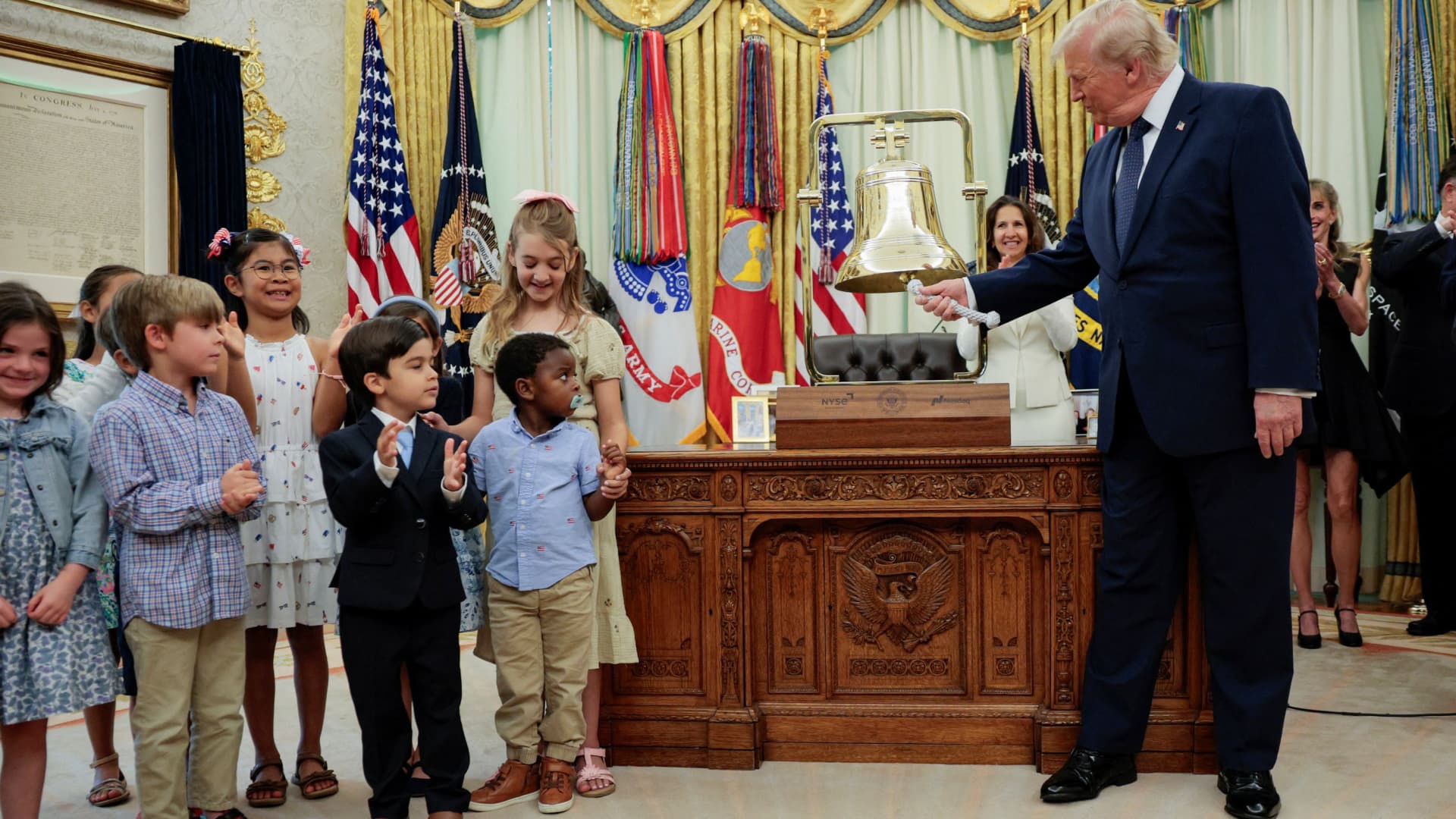
President Donald Trump rang the opening bell for the stock markets in the Oval Office, celebrating the formal rollout of **Trump Accounts**. Treasury Department figures indicated that over six million children were already signed up for these accounts ahead of the holiday weekend launch, with Wells Fargo analysts projecting a substantial influx of nearly $20 billion into the U.S. stock market this year alone. The event, attended by CEOs and leaders from the NYSE and Nasdaq, also saw President Trump endorsing Dell computers, leading to a 4% surge in the technology stock. Further signaling broader industry buy-in, SpaceX President Gwynne Shotwell announced a stock donation to the program.
Simultaneously, the tech industry faced its own set of challenges and strategic realignments. Microsoft announced a reduction of 4,800 jobs, representing just over 2% of its global workforce, as part of a broader initiative to optimize costs in the AI era. The Xbox unit alone is set to shed 3,200 employees, nearly one-fifth of its headcount, alongside plans to spin out four gaming studios and cut jobs in its commercial business segment. This move reflects a clear strategic emphasis on streamlining operations and reallocating resources towards core AI and cloud computing initiatives, impacting the gaming ecosystem significantly.
- **Trump Accounts Launch:** President Donald Trump hosted an event from the Oval Office to celebrate the official launch, garnering immediate attention and market response.
- **Market Capital Inflow:** Wells Fargo estimates indicate that Trump Accounts are poised to funnel approximately $20 billion into the U.S. stock market by year-end 2026.
- **Microsoft Workforce Reductions:** A total of 4,800 employees were impacted, with 3,200 from the Xbox division as part of a strategic reorganization.
- **Hesai Technology’s U.S. Expansion:** Despite being designated a national security threat, the company continues its U.S. operations, including a notable partnership with Nvidia.
On the geopolitical front, Hesai Technology, a Shanghai-based lidar sensor manufacturer crucial for self-driving cars and robotics, found itself at the center of a national security debate. Despite being blacklisted by the U.S. Defense Department as a Chinese military entity, Hesai continues its U.S. expansion and maintains a partnership with AI titan Nvidia. This ongoing collaboration raises significant questions about the supply chain integrity and potential cybersecurity ramifications, particularly if the lidar technology were compromised via malware. Hesai CEO David Li has publicly denied any ties to China’s military, asserting the safety of their products.
This complex interplay of events illustrates a clear **Disruption Flow**: Political endorsement of new investment vehicles like **Trump Accounts** → increased retail investor engagement and market liquidity → potential for broader market growth and reallocation of capital. Concurrently, the imperative for AI-driven efficiency at companies like Microsoft → workforce restructuring and strategic divestments → a sharper focus on high-value innovation in core tech sectors, potentially disrupting established business units. Finally, escalating geopolitical tensions surrounding critical technologies like Hesai’s lidar sensors → intensified scrutiny of tech supply chains and partnerships → a growing emphasis on national security and technological sovereignty in a globalized tech market.
As CTOs, we must constantly balance the promise of open innovation with the critical need for supply chain resilience and national security. The Hesai situation underscores a burgeoning challenge where global tech leadership intersects with geopolitical realities, demanding a robust risk framework for all emerging technologies.
Recent Market Metrics:
- **Trump Accounts Market Impact:** Expected capital infusion of nearly $20 billion into the U.S. stock market in 2026.
- **Microsoft Layoff Scale:** Approximately 4,800 jobs cut, representing 2.1% of the total workforce.
- **Xbox Unit Workforce Reduction:** 3,200 employees, roughly one-fifth of the unit’s headcount, affected.
- **Dow Jones Industrial Average Milestone:** Closed above 53,000 for the first time.
- **Dell Stock Performance:** Shares rose 4% following a presidential endorsement.
Hesai Technology Security & Infrastructure Strength
Hesai Technology’s position as a leading lidar sensor manufacturer is predicated on its robust engineering and advanced production capabilities, which enable it to produce critical components for autonomous systems. The company’s collaboration with Nvidia, a powerhouse in AI computing, highlights a technical synergy that could accelerate advancements in self-driving and robotic vision. However, the U.S. Defense Department’s designation as a Chinese military entity introduces a significant overlay of security concerns. From an infrastructure perspective, this necessitates stringent audits of software supply chains, data handling protocols, and hardware integrity to mitigate potential vulnerabilities. For any U.S. company integrating Hesai’s lidar, the due diligence required extends beyond technical specifications to include comprehensive geopolitical risk assessments, potentially leading to increased demand for alternative, domestically sourced, or allied-nation-produced components to insulate against future blacklisting or compromise. Ensuring the security of such foundational sensor technology is paramount for the integrity and reliability of next-generation autonomous platforms, driving innovation in secure hardware and software integration.
Microsoft Ecosystem Expansion Potential
Microsoft’s decision to cut jobs and spin out gaming studios, while seemingly a contraction, can be reinterpreted as a strategic recalibration to unlock new ecosystem expansion opportunities. By streamlining its Xbox division and focusing on core strengths, Microsoft can potentially reallocate resources more aggressively towards its burgeoning AI initiatives and cloud services (Azure). This allows for a concentrated effort on developing foundational AI models, tools, and platforms that can then be integrated across its broader product suite, from enterprise software to consumer devices. The spin-out of gaming studios might also enable these entities to operate with greater agility, potentially fostering more diverse content creation or attracting new partnerships outside the traditional Microsoft umbrella. This move is less about shrinking and more about redefining where Microsoft sees its highest leverage points for future growth and market disruption, particularly in how AI will integrate into and enhance every aspect of its vast digital ecosystem. The goal is likely to create a more cohesive and AI-centric value proposition that drives long-term shareholder value through deep technological integration and platform superiority, a key trend in the broader emerging technologies landscape.
Navigating Innovation: The Geopolitical and Economic Crossroads of Trump Accounts
The current market landscape is a complex interplay of political influence, technological restructuring, and international tensions. The introduction of **Trump Accounts** signifies a novel approach to market participation, while tech giants like Microsoft are aggressively realigning for the AI era, and geopolitical pressures continue to shape global tech supply chains.
- The direct injection of capital from initiatives like Trump Accounts could significantly shift market dynamics, potentially favoring accessible investment platforms and democratizing market access for a broader demographic.
- Microsoft’s strategic layoffs underscore an industry-wide drive for efficiency and AI integration, signaling a rapid re-prioritization of core technological advancements over ancillary business units.
- Geopolitical tensions surrounding critical technology providers like Hesai highlight the growing imperative for robust supply chain security and national tech sovereignty in an increasingly interconnected global economy.
How will this blend of top-down market intervention and bottom-up tech innovation redefine the future of investment and digital transformation?
📊 StockXpo Analyst’s View
Market Impact: The strong market performance, amplified by the novel **Trump Accounts** initiative, injects significant liquidity and potentially broadens the retail investor base, signaling robust near-term confidence. However, Microsoft’s substantial layoffs, while strategic for AI, introduce a cautionary note regarding automation’s impact on employment, potentially tempering long-term growth expectations. The ongoing geopolitical friction concerning firms like Hesai further complicates market stability, necessitating investor vigilance on supply chain resilience and national security implications, as reported by leading financial news sources. This creates a fascinating dynamic where political moves directly influence market participation, alongside critical corporate strategy shifts that will ripple through the broader technology market trends.
Sector To Watch: Given these developments, the FinTech sector, particularly platforms enabling easy market access for new investors, is poised for growth due to the **Trump Accounts** initiative. The semiconductor and AI infrastructure segments will also remain critical, benefiting from Microsoft’s renewed focus and the broader industry’s push towards AI, despite potential disruptions from geopolitical trade restrictions, a trend closely watched by global technology insights. Cybersecurity firms stand to gain from increased scrutiny over tech supply chains and data integrity.
Financial Disclaimer:
StockXpo.com is a financial news aggregator and educational portal, not a registered investment advisor or broker-dealer. All information, news, and analysis provided herein are strictly for educational purposes and do not constitute investment, financial, legal, or tax advice. Investing in the stock market involves high risks, and past performance is not indicative of future results. StockXpo will not be liable for any financial losses or investment damages. Always consult a certified financial advisor before making market decisions.
MORE IN INSIDE TECHNOLOGY
Bond Yields Under Pressure: IMF Warns of ‘Disorderly’ Spike Driven by AI Debt and Inflation
Published: Tuesday, October 13, 2026 · 1:21 AM
AI Breakthroughs: TikTok CEO Predicts Major Scientific Leap Within Three Years
Published: Monday, October 12, 2026 · 2:40 AM