Published: Wednesday, June 3, 2026 · 11:43 AM | Updated: Wednesday, June 3, 2026 · 11:43 AM
📊 266 views




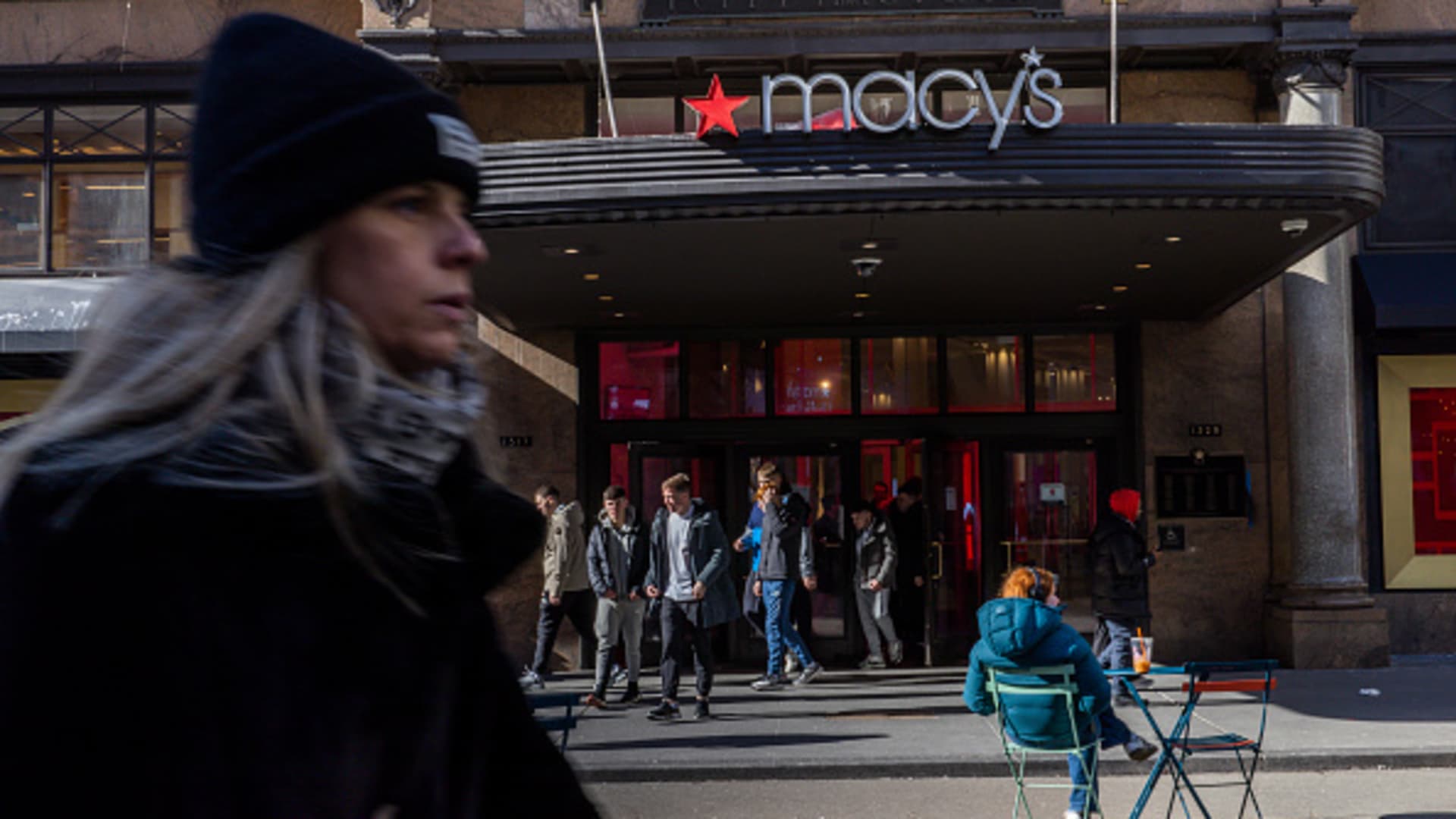
Macy’s Inc. (M) has delivered its strongest first-quarter comparable sales performance in four years, a clear indicator that its ongoing turnaround strategy is gaining significant traction. This unexpected surge, defying broader consumer anxieties, positions the legacy retailer as a surprising outlier in the dynamic retail sector, suggesting strategic operational improvements are paying off, leading to significant Macy’s growth.
🗝️ Corporate Strategy Insights
- Reimagined Store Focus. Strategic investments in upgrading key stores are directly driving comparable sales growth, validating a core tenet of the turnaround.
- Operational Excellence. CEO Tony Spring emphasizes a back-to-basics approach: robust staffing, curated product assortments, and enhanced customer experience are fundamental drivers.
- Luxury Banner Outperformance. Bloomingdale’s exceptional 10.2% comparable sales growth highlights the resilience and strategic value of Macy’s luxury portfolio, partly aided by competitor challenges.
Macy’s, a cornerstone of American retail, reported a robust first fiscal quarter, showcasing a 3% overall comparable sales increase and a 1.6% rise at its namesake banner. This impressive performance, the strongest in four years, has prompted the company to elevate its full fiscal year guidance for both net sales and earnings per share, signaling confidence despite prevailing macroeconomic and geopolitical uncertainties. CEO Tony Spring attributed the success largely to the strategic upgrades implemented across 200 “reimagined” stores, which have been a pivotal part of the company’s three-year revitalization plan. While acknowledging the tailwind from higher tax refunds, Spring underscored that underlying business trends have continued into the second quarter, demonstrating sustained consumer engagement. The company’s focus on foundational retail principles, such as adequate staffing, an enjoyable in-store experience, and relevant product offerings, appears to be resonating with shoppers, proving that effective operational execution can drive significant corporate growth even in challenging environments.
The luxury segment, notably Bloomingdale’s, was a standout performer, posting an impressive 10.2% comparable sales increase. This surge was attributed by CEO Spring to a blend of “buzzy brands,” a unique “fun factor” within the luxury market, and crucially, the recent bankruptcy of rival Saks Fifth Avenue. While market disruption undoubtedly provides an advantage, Spring emphasized it was not the sole or primary driver of their growth, pointing instead to internal strategic strengths. The company’s proactive stance in closing underperforming stores in struggling malls and reinvesting in viable locations reflects a disciplined approach to capital allocation, enhancing the overall health of its retail footprint. This strategic pruning and reinvestment demonstrate a commitment to operational efficiency that directly contributes to Macy’s growth narrative.
Macy’s first-quarter financial results exceeded analyst expectations. Revenue reached $4.68 billion, surpassing the $4.61 billion anticipated by LSEG. Net income for the period ending May 2 stood at $63 million, or 23 cents per share, a notable increase from $38 million, or 13 cents per share, a year prior. Adjusted earnings per share came in at 13 cents. The revised full-year outlook now projects net sales between $21.5 billion and $21.75 billion, up from a prior range, and adjusted EPS between $2 and $2.20, an improvement over the previous $1.90 to $2.10. Comparable sales are now expected to climb between 0.5% and 1.2% for the year, reversing an earlier forecast of a slight decline. These financial indicators paint a picture of a company executing its strategy effectively, a topic frequently analyzed in financial markets on platforms like global market insights.
The turnaround, now roughly two years into its three-year timeline, is characterized by a deliberate shift away from “fancy stuff” towards fundamental retail excellence. Spring’s candid assessment that they are focused on “product” and “taking care of the customer” highlights a back-to-basics philosophy that often underpins sustainable success in the retail sector. This disciplined execution is showing tangible results, contributing to positive sentiment surrounding the company’s prospects and its place within the broader stock markets.
- Macy’s “reimagined stores” strategy is a proven catalyst for comparable sales growth.
- The strength of Bloomingdale’s underscores the value of a diversified brand portfolio in luxury retail.
- Raised full-year guidance signals robust internal trends, extending beyond temporary market boosts.
Strategic Ripple Effect: Pushing Industry Benchmarks
Macy’s strong Q1 performance and raised guidance create a significant ripple effect across the department store sector. Firstly, the success of “reimagined stores” sets a new benchmark for traditional retailers, prompting competitors to accelerate their own physical store modernization efforts to enhance customer experience and operational efficiency. This investment in the brick-and-mortar footprint, particularly in flagship brands like Bloomingdale’s, underscores the continued relevance of physical retail when executed strategically. Secondly, Bloomingdale’s exceptional growth, partly fueled by Saks Fifth Avenue’s bankruptcy, could lead to a consolidation of market share in the luxury segment. This puts pressure on remaining high-end department stores to innovate and differentiate more aggressively to retain their customer base. Lastly, Macy’s ability to defy consumer worries and maintain positive trends signals a potential shift in investor perception, moving away from broad skepticism towards legacy retailers and towards a recognition of well-executed turnaround strategies. This could encourage capital allocation towards companies demonstrating similar operational rigor and adaptability in a challenging retail landscape.
“Macy’s renewed focus on retail fundamentals—staffing, store experience, and product assortment—is proving to be a powerful competitive moat, demonstrating that disciplined operational execution can outperform even in a challenging consumer environment.”
Macy’s first-quarter indicators reveal a strengthening operational position:
- Comparable Sales Growth (Overall): +3% (Strongest in four years, indicates successful store modernization).
- Bloomingdale’s Comparable Sales Growth: +10.2% (Highlights strength in luxury segment and market share gains).
- Q1 Revenue: $4.68 billion vs. $4.61 billion expected (Exceeding analyst estimates, signaling robust sales performance).
- Full-Year Net Sales Guidance: Raised to $21.5B – $21.75B (Increased confidence in sustained positive trends).
These metrics collectively demonstrate that Macy’s strategic pivots are translating directly into improved financial performance and positive future outlook.
Macy’s Strategic Analysis: Driving Sustained Growth
Macy’s strategic overhaul, spearheaded by CEO Tony Spring, is a multi-pronged effort focusing on core strengths while shedding underperforming assets. The emphasis on “reimagined stores” is not merely cosmetic; it involves significant investment in customer experience, localized inventory, and efficient operational models. This targeted approach to physical retail, coupled with a growing emphasis on its luxury banner Bloomingdale’s, indicates a clear understanding of market segmentation. The decision to close unprofitable stores and redirect resources is a crucial capital allocation strategy, ensuring that investments yield higher returns. This measured, fundamental-driven turnaround contrasts with some competitors’ broader, less focused digital-first strategies, positioning Macy’s to capitalize on a segment of consumers who still value the in-store experience. The company’s ability to forecast sustained positive trends, despite wider economic concerns, speaks to the robustness of its internal assessments and execution capabilities, a point of interest for those tracking business insights and trends.
Macy’s Competitive Advantages: What Sets It Apart
In a fiercely competitive retail landscape, Macy’s is carving out distinct competitive advantages. Firstly, its established brand recognition and widespread physical footprint, while once a liability, are now being strategically leveraged through modernization. The “reimagined” stores are not just renovations but represent a re-engagement with local communities, offering a tailored shopping experience. Secondly, the differentiated strength of its luxury segment, Bloomingdale’s, provides a high-margin buffer and market leadership in a resilient consumer category. The recent disruption in the luxury department store space, exemplified by Saks’s bankruptcy, has created an opportune moment for Bloomingdale’s to further consolidate its position. Lastly, the current management’s back-to-basics operational philosophy, focusing on in-store execution and customer care, is becoming a unique selling proposition. In an era of increasing complexity, simplicity and consistency in retail fundamentals can be a powerful differentiator, attracting and retaining loyal shoppers and providing stability in volatile markets, as discussed by experts on leading business news outlets.
Macy’s Resilience: Charting a Course Through Retail Headwinds
Macy’s Q1 performance is more than just a quarterly win; it’s a testament to the efficacy of its strategic turnaround under CEO Tony Spring. By prioritizing operational fundamentals and disciplined capital allocation, the company has managed to generate significant Macy’s growth and confidence, even as broader consumer sentiment remains cautious. This success highlights the potential for legacy retailers to adapt and thrive by focusing on core strengths and customer experience.
Can Macy’s maintain this momentum and fully reclaim its market leadership as consumer spending patterns evolve?
📊 StockXpo Analyst’s View
Market Impact: Macy’s robust performance provides a crucial counter-narrative to the prevailing pessimism surrounding traditional retail. This strong quarter, coupled with an upward revision in guidance, is likely to instill greater investor confidence in the viability of well-executed turnaround strategies within the sector. It could trigger a re-evaluation of valuation multiples for other legacy retailers showing signs of operational improvement, potentially shifting capital from pure e-commerce plays back towards omnichannel contenders demonstrating similar resilience. The market will be watching closely for sustained profitability and continued operational efficiency.
Sector To Watch: The luxury retail segment, particularly high-end department stores and specialized boutiques, is clearly demonstrating resilience. Bloomingdale’s strong results, amplified by competitive exits, suggest that consumers at the higher end are less impacted by economic uncertainties. This makes luxury retail an intriguing sector to monitor for potential investment opportunities, especially companies with strong brand equity and adaptive strategies to capture consolidating market share. Additionally, the operational improvements at Macy’s could pressure other mid-tier department stores to accelerate their own modernization plans or risk further market share erosion.
Financial Disclaimer:
StockXpo.com is a financial news aggregator and educational portal, not a registered investment advisor or broker-dealer. All information, news, and analysis provided herein are strictly for educational purposes and do not constitute investment, financial, legal, or tax advice. Investing in the stock market involves high risks, and past performance is not indicative of future results. StockXpo will not be liable for any financial losses or investment damages. Always consult a certified financial advisor before making market decisions.
MORE IN INSIDE BUSINESS

Delta Delays: Safety Concerns Push Saudi Arabia Service Launch to March
Published: Monday, October 12, 2026 · 10:44 AM
Assortment Trimming: Retailers Redefine Growth Through Operational Efficiency
Published: Saturday, October 10, 2026 · 8:31 AM