Published: Saturday, May 30, 2026 · 5:06 PM | Updated: Saturday, May 30, 2026 · 5:06 PM
📊 331 views





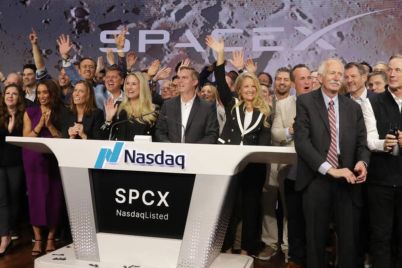
Retail investors are rapidly embracing the burgeoning space economy, with anticipation surrounding the SpaceX IPO driving significant capital inflows into specialized exchange-traded funds. One notable beneficiary, Tema ETFs’ Space Innovators ETF (NASA), has amassed an impressive $2.6 billion in assets in just two months, signaling a powerful new trend in thematic investing. This surge highlights the innovative ways investors are seeking early exposure to high-growth private companies.
💰 Financial Strategy & Market Insights
- Rapid Asset Accumulation. Tema ETFs’ NASA fund saw its assets under management surge to $2.6 billion within two months, demonstrating strong retail demand for SpaceX IPO access.
- Direct Private Market Exposure. Unlike many traditional funds, the NASA ETF offers direct holdings in privately traded SpaceX shares, providing a unique entry point for individual investors ahead of the company’s public debut.
- Emergence of Thematic ETFs. The launch of six new space-themed ETFs in recent months signals increasing industry confidence that space investing, much like AI and quantum computing, is poised to become a major investment theme.
The retail investment community is channeling substantial capital into the nascent space sector, largely spurred by the impending SpaceX IPO. Tema ETFs’ Space Innovators ETF, trading under the ticker NASA, exemplifies this trend, having grown from its March 30 launch to over $2.6 billion in assets in a mere 37 trading days. This extraordinary growth is directly attributable to individual investors seeking innovative pathways for SpaceX IPO access, especially given the atypical direct access provisions offered by SpaceX through major brokerage firms. The NASA fund distinguishes itself by holding privately traded SpaceX shares directly, comprising approximately 7.5% of its portfolio, an uncommon feature for retail investment vehicles.
Maurits Pot, Tema ETFs’ founder and CEO, stated on CNBC’s ‘ETF Edge’ that offering SpaceX exposure is crucial for any legitimate space investment vehicle. He clarified that the IPO event will primarily serve as a re-marking of their existing position to market price, with no immediate plans for share divestment. Beyond NASA, other investment vehicles provide indirect access to Elon Musk’s enterprise. Billionaire Ron Baron’s First Principles fund (RONB) holds close to 2% of its assets in SpaceX, alongside a significant stake in Tesla. Similarly, the ERShares Private-Public Crossover ETF (XOVR) also owns SpaceX shares, valuing its holdings at nearly $300 million based on an anticipated $1.5 trillion IPO valuation for the company. The complex task of setting a precise valuation for the SpaceX deal remains a central point of market discussion ahead of its pricing.
Mike Akins, founding partner at ETF Action, underscored the transformative role of the ETF structure in democratizing investment opportunities. He noted on ‘ETF Edge’ that ETFs simplify what was once a complex research task, allowing investors to gain diversified exposure to niche themes through a single ticker. This sentiment is echoed by the recent proliferation of new space ETFs, including the Van Eck Space ETF (WARP), the Global X Space Tech ETF (ORBX), and Roundhill Investments’ Space & Technology ETF (MARS). Todd Sohn, chief ETF strategist at Strategas, views this flurry of new launches as a strong indicator that the industry anticipates space to be the next significant thematic investment, akin to the boom seen in AI. For more market analysis, StockXpo offers continuous updates.
- Diverse ETF Approaches: While newly launched funds like NASA focus on direct private equity exposure, older space-themed ETFs such as the Procure Space ETF (UFO) and the SPDR S&P Kensho Final Frontiers ETF (ROKT) have diversified portfolios spanning pure-play space exploration, satellite operations, and broader aerospace and defense companies like Rocket Lab, Firefly Aerospace, and Intuitive Machines. Even the ARK Space and Defense Innovation ETF (ARKX) includes seemingly disparate holdings like Amazon and Deere, illustrating varied interpretations of the ‘space’ theme. This broad spectrum necessitates careful due diligence from investors navigating the evolving understanding the financial sector.
Assessing Risk and Reward in Space Investments
Investors considering the burgeoning space sector, particularly through ETFs providing SpaceX IPO access, face a unique blend of potential gains and significant risks:
- Upside:
- Early-Stage Growth Potential: Access to a potentially transformative industry and high-growth companies like SpaceX before their full market potential is realized.
- Diversification: ETFs offer diversified exposure to a basket of space-related companies, mitigating single-stock risk within a volatile sector.
- Innovation Leverage: Investment in technologies at the forefront of innovation, including rocket propulsion, satellite communication, and space-based data services.
- Simplified Access: ETFs democratize access to private market opportunities that were traditionally reserved for institutional investors.
- Downside Risks:
- High Volatility: Early-stage industries are inherently volatile, with potential for significant price swings due to technological hurdles, regulatory changes, and competitive pressures.
- Valuation Uncertainty: Pinpointing a precise valuation for pre-IPO entities like SpaceX can be challenging, leading to potential overvaluation by eager retail investors.
- Execution Risk: The space industry involves complex engineering and operational challenges, as highlighted by incidents like Blue Origin’s recent rocket test failure, which can impact company performance and investor sentiment.
- Concentration Risk: Some space ETFs may be highly concentrated in a few high-risk stocks, increasing exposure to individual company performance.
- Expense Ratios: Actively managed funds like NASA carry higher expense ratios (0.87% for NASA vs. 0.50% for ORBX, 0.45% for ROKT), eroding returns over time.
What is Market Liquidity? In finance, market liquidity refers to the ease with which an asset or security can be converted into cash without affecting its market price. High liquidity means an asset can be bought or sold quickly without a significant price impact, while low liquidity can lead to larger price fluctuations and difficulties in executing trades, a key consideration for private market investments like pre-IPO SpaceX shares. Managers of funds holding such assets must carefully balance investor redemption demands with the often-limited tradability of their underlying private holdings.
Key ETF Holdings and Exposures
Given the qualitative nature and limited raw numerical metrics directly comparable across all funds, a bulleted list provides clearer context for individual ETF exposures in the space sector, a point often highlighted by financial reporting from Reuters:
- Tema ETFs Space Innovators ETF (NASA): Launched March 30, $2.6 billion assets, ~7.5% directly in private SpaceX shares. Actively managed (0.87% expense ratio).
- Baron First Principles Fund (RONB): Holds ~2% of assets in SpaceX, with Tesla as its largest holding (>14%).
- ERShares Private-Public Crossover ETF (XOVR): Holds SpaceX shares, valuing its stake at ~$300 million based on an expected $1.5 trillion IPO valuation.
- Procure Space ETF (UFO): Launched 2019, over $1.2 billion assets, includes Rocket Lab, Firefly Aerospace, Planet Labs.
- SPDR S&P Kensho Final Frontiers ETF (ROKT): Launched 2018, holdings include Intuitive Machines, Redwire.
- Newer Space ETFs (launched in past 3 months): Van Eck Space ETF (WARP), Global X Space Tech ETF (ORBX – 0.50% expense ratio), Roundhill Investments’ Space & Technology ETF (MARS).
SpaceX Market Sentiment Tracker
Current market sentiment surrounding SpaceX is overwhelmingly bullish, driven by its ambitious projects, perceived technological leadership, and the cult-like following of its founder, Elon Musk. The rapid inflow of capital into ETFs offering SpaceX IPO access underscores a retail frenzy, viewing the company as a generational investment opportunity akin to early internet or AI giants. Analysts, however, highlight the significant valuation debates, with expectations for the IPO ranging widely. While some foresee SpaceX potentially becoming the world’s largest company, skepticism around its immediate profitability and the inherent risks of space exploration temper the most enthusiastic projections. This dual narrative suggests a market driven by both speculative excitement and fundamental long-term potential, often discussed among industry experts on Bloomberg.
SpaceX Historical Benchmarking
Benchmarking SpaceX’s potential IPO against historical market debuts of revolutionary technology companies presents a complex picture. While its private market valuations have soared, its eventual public listing will face scrutiny comparable to other high-profile, high-growth, yet sometimes unprofitable, ventures. Unlike many tech giants that relied heavily on software or e-commerce models, SpaceX operates in a capital-intensive, hardware-dependent industry with significant launch and operational risks. Historical comparisons often draw parallels to early internet or semiconductor booms, but the sheer scale of investment required and the unpredictable nature of space missions introduce unique risk factors. The sustained growth of investor interest, even amid broader market fluctuations, signals a strong belief in its long-term disruptive potential, pushing traditional valuation metrics to their limits. For more educational financial insights, visit our blog.
The Ripple Effect of SpaceX IPO Access on Thematic Investing
The anticipation around SpaceX IPO access is more than just a single company event; it represents a significant inflection point for thematic investing and the broader space economy. The unprecedented retail interest, channeled largely through specialized ETFs, demonstrates a growing appetite for disruptive technologies and private market exposure. This trend is likely to influence how future high-profile private companies approach their public listings and how fund managers structure their offerings.
- Expect continued innovation in ETF structures designed to provide access to traditionally illiquid assets.
- Increased scrutiny on the expense ratios and portfolio concentrations of thematic funds will become crucial for investors.
- The success of space ETFs may pave the way for other ‘frontier’ technology themes to attract significant retail capital.
Will this current wave of enthusiasm mature into sustained, long-term growth, or are investors navigating uncharted waters of speculative fervor?
📊 StockXpo Analyst’s View
Market Impact: The surge in capital directed towards space ETFs, particularly those offering SpaceX IPO access, signifies a robust shift in retail investment sentiment towards frontier technologies. This trend can inject significant liquidity into nascent sectors, but also raises concerns about potential overvaluation and the sustainability of these inflows. We anticipate a heightened focus on active management capabilities and transparent private asset valuation methodologies in the ETF space.
Sector To Watch: Beyond pure-play space exploration, the ripple effect will extend to related sectors such as advanced materials, satellite communication infrastructure, defense technology, and even AI, given its crucial role in autonomous space operations. Investors should also monitor established aerospace firms for potential collaborations or acquisitions within this rapidly evolving ecosystem.
Financial Disclaimer:
StockXpo.com is a financial news aggregator and educational portal, not a registered investment advisor or broker-dealer. All information, news, and analysis provided herein are strictly for educational purposes and do not constitute investment, financial, legal, or tax advice. Investing in the stock market involves high risks, and past performance is not indicative of future results. StockXpo will not be liable for any financial losses or investment damages. Always consult a certified financial advisor before making market decisions.
MORE IN INSIDE FINANCE

AI Stock Boom Fuels $67 Billion Equities Growth for Wall Street Giants
Published: Wednesday, October 21, 2026 · 11:03 AM

New Risks Emerge: Global Finance Chiefs Highlight Debt, AI, and Geopolitical Volatility
Published: Tuesday, October 20, 2026 · 2:12 AM