Published: Thursday, May 28, 2026 · 12:16 AM | Updated: Thursday, May 28, 2026 · 12:16 AM
📊 245 views




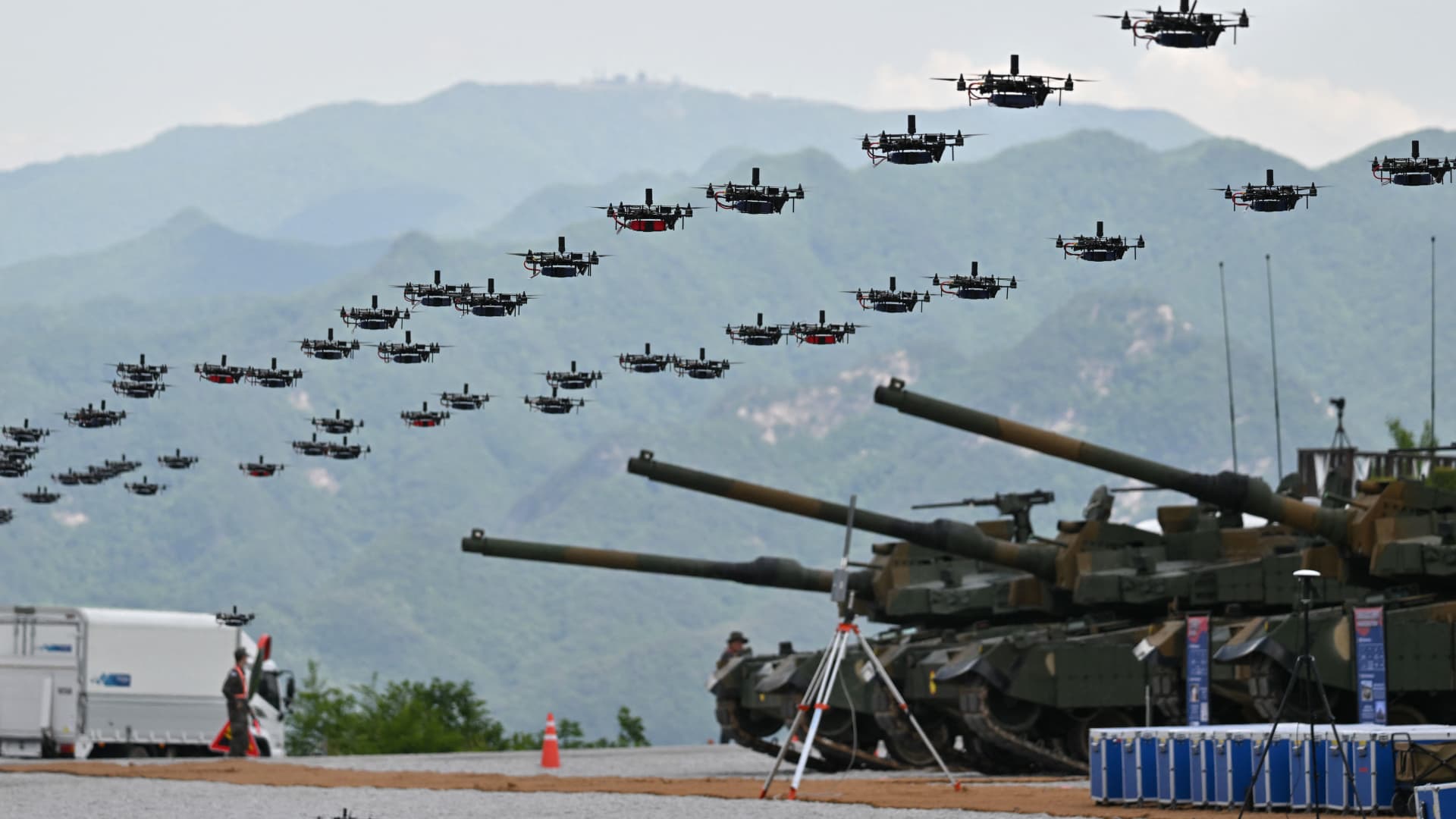
Former CIA Director David Petraeus has identified unmanned systems, particularly autonomous drone swarms, as the paramount danger and significant growth frontier for the coming decade. Citing conflicts in Iran and Ukraine, Petraeus emphasized the urgent need for enhanced defensive capabilities against these rapidly evolving threats.
🚀 Tech Strategy & Market Disruptions
- Autonomous Drone Swarms: The emergence of self-coordinating drone swarms presents a significant defense challenge, overwhelming traditional interception methods through sheer numbers and adaptability.
- Defense Spending Escalation: Geopolitical conflicts are accelerating investment in both offensive and defensive unmanned system technologies, creating substantial market opportunities in counter-drone solutions and advanced warfare platforms.
- Shift to Autonomy: The future of warfare is leaning towards autonomous systems that can operate independently, driven by the need for resilient command-and-control in contested environments and the potential for rapid tactical adaptation.
Petraeus articulated that the increasing deployment of drones in active combat zones is a clear indicator of both the growing threat posed by unmanned weapons and the critical necessity for robust countermeasures. He noted that current defensive systems have proven inadequate, stressing the potential for significant improvement even if perfection remains elusive. The ongoing conflicts are compelling nations, particularly in the Middle East, to allocate substantial resources towards developing advanced offensive and defensive unmanned capabilities. This surge in investment is a direct consequence of observed vulnerabilities, such as Iran’s use of cost-effective Shahed drones, which, despite their low individual price point, have demonstrated the capacity to disrupt critical infrastructure, as seen in the halt of Qatar’s liquefied natural gas production.
The trajectory of warfare is undeniably shifting towards unmanned platforms. Petraeus forecasts that within a year, the landscape will evolve further to include autonomous systems engaging each other. This evolution is driven by the inherent limitations of human-piloted systems and the desire for faster decision-making cycles on the battlefield. These autonomous swarms, capable of communicating and coordinating, pose a unique threat that current defenses are ill-equipped to handle.
- The proliferation of low-cost drones like Iran’s Shahed, estimated between $20,000-$50,000, contrasts sharply with multi-million dollar interceptor missiles, signaling a cost-efficiency challenge for defense spending.
- Ukraine’s innovative response, utilizing interceptor drones, electronic warfare to disrupt control, and even repurposed pickup trucks with targeting computers, offers a glimpse into adaptive battlefield tactics against drone threats.
- The concept of ‘autonomous systems of autonomous systems’ signifies a future where sensors, command, and weapons operate in a tightly integrated, human-minimal loop, representing a significant paradigm shift.
The strategic implications of this technological progression are immense, extending beyond military applications into sectors requiring advanced automation and resilient connectivity. Space-based communication systems, such as Starlink, are crucial for maintaining these advanced unmanned platforms, although Petraeus pointed out that simpler drone systems may not rely on such sophisticated infrastructure. The investment implications are, as Petraeus stated, absolutely enormous, signaling a transformative period for defense technology and related industries.
The critical challenge lies not just in developing advanced autonomous systems but in establishing resilient, secure command-and-control architectures that can operate effectively even in highly contested or degraded electronic warfare environments. This necessitates innovation in edge computing, decentralized AI, and advanced communication protocols.
The Emerging Landscape of Autonomous Defense
The ascent of unmanned systems is poised to redefine defense strategies and create significant investment opportunities across the defense value chain. Petraeus specifically highlighted ‘unmanned systems of all types’ as the segment ripe for the most substantial structural growth. The anticipated advent of ‘autonomous systems of autonomous systems’ — where autonomous sensors feed data into autonomous command-and-control, which then directs autonomous weapons with minimal human oversight — represents an even more transformative phase. This advancement is partly driven by the operational difficulties of maintaining stable communication links in contemporary conflict zones. When systems cannot depend on continuous human input, their capacity for independent navigation, target identification, and coordination becomes paramount. Autonomy, therefore, is set to be a breathtaking development in future warfare.
Ukraine’s Ingenuity in Drone Warfare
Observations from Ukraine showcase remarkable adaptation and innovation in drone warfare. Kyiv’s forces have demonstrated exceptional skill in both developing indigenous drone capabilities and countering Russian aerial threats. Their methods include deploying interceptor drones, leveraging electronic warfare to disrupt enemy control networks, and ingeniously equipping pickup trucks with machine guns and targeting computers to neutralize incoming drones. This real-world application underscores the dynamic nature of the current conflicts and the rapid evolution of asymmetric warfare tactics. The experience in Ukraine provides invaluable lessons for defending airspace against sophisticated drone threats, highlighting the need for multi-layered defense strategies beyond individual drone interception.
Navigating the Future of Unmanned Warfare
The increasing sophistication of autonomous drone swarms presents a profound challenge to existing defense paradigms. The lack of robust defenses against such coordinated attacks is a significant concern, raising the stakes for technological advancement and strategic adaptation. The integration of autonomous capabilities is not merely an upgrade but a fundamental shift, promising to accelerate military operations and redefine battlefield dynamics. The potential for these systems to operate with unprecedented speed and coordination, unhindered by human reaction times or pilot availability, marks a significant leap in military technology. This development demands a proactive approach to innovation and investment in order to stay ahead of evolving threats and capitalize on emergent opportunities.
Financial Disclaimer:
StockXpo.com is a financial news aggregator and educational portal, not a registered investment advisor or broker-dealer. All information, news, and analysis provided herein are strictly for educational purposes and do not constitute investment, financial, legal, or tax advice. Investing in the stock market involves high risks, and past performance is not indicative of future results. StockXpo will not be liable for any financial losses or investment damages. Always consult a certified financial advisor before making market decisions.
MORE IN INSIDE TECHNOLOGY

Bond Yields Under Pressure: IMF Warns of ‘Disorderly’ Spike Driven by AI Debt and Inflation
Published: Tuesday, October 13, 2026 · 1:21 AM

AI Breakthroughs: TikTok CEO Predicts Major Scientific Leap Within Three Years
Published: Monday, October 12, 2026 · 2:40 AM