Published: Wednesday, May 27, 2026 · 4:03 PM | Updated: Wednesday, May 27, 2026 · 4:03 PM
📊 280 views




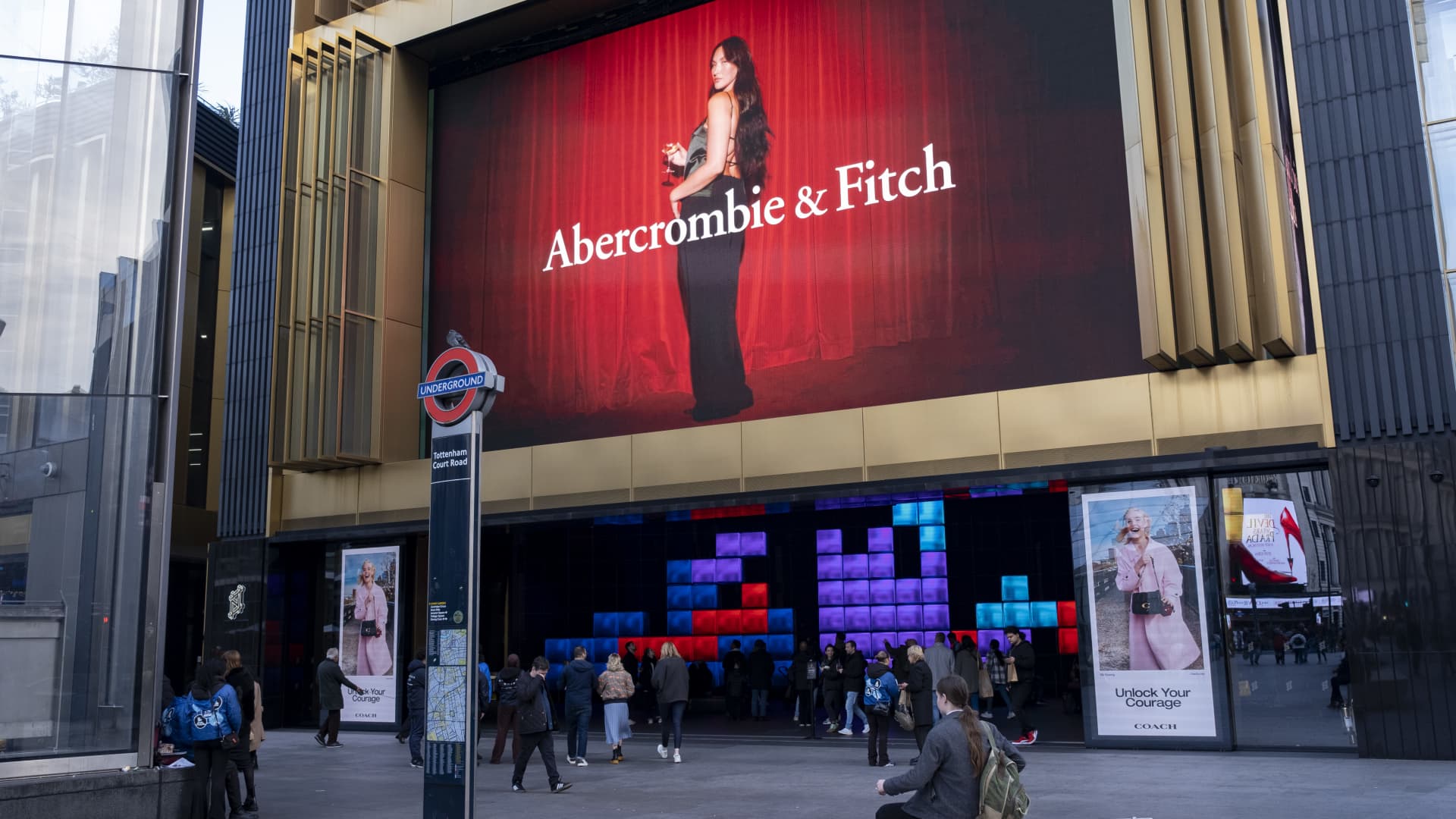
Abercrombie & Fitch (ANF) recently saw its Abercrombie shares leap by 13% following a mixed first-quarter earnings report, defying weaker-than-expected guidance impacted by geopolitical tensions. This unexpected market reaction highlights investor focus on underlying profitability and forward-looking operational resilience rather than immediate top-line pressures. As a Senior CIO, understanding these nuances is critical for identifying alpha-generating opportunities and safeguarding long-term capital within a diversified portfolio. Stay informed with expert insights from our blog.
💎 Strategic Investment & Portfolio Insights
- Profitability Resilience. Despite geopolitical sales headwinds, Abercrombie’s earnings beat signals effective cost management and operational agility, crucial for investor confidence.
- Valuation Reassessment. The robust market reaction suggests investors are repricing ANF based on its reaffirmed full-year outlook and potential tariff benefits, overlooking short-term revenue misses.
- Geopolitical Risk Management. The EMEA slowdown underscores the importance of geographic diversification and agile supply chain strategies in fashion retail portfolios.
Abercrombie & Fitch delivered a first-quarter performance that presented a tale of two narratives: a robust earnings beat overshadowed by a slight revenue miss and cautious near-term guidance. Despite net sales climbing a modest 2% to $1.11 billion—just shy of Wall Street’s $1.12 billion estimate, as reported by LSEG—the company comfortably surpassed earnings per share (EPS) expectations, posting $1.47 against a consensus of $1.28. This divergence primarily stemmed from operational efficiency and a more favorable outlook on tariff impacts. For broader retail market trends, see Reuters’ business coverage.
The fashion retailer’s EMEA region experienced a 10% sales decline, attributed directly to the conflict in the Middle East, primarily impacting its Hollister brand. This segment accounts for roughly 15% of total company sales, leading to a half-percentage point reduction in overall sales growth. CEO Fran Horowitz emphasized the company’s focus on controllable factors, such as inventory management and marketing investments, to navigate these external pressures. While the second-quarter EPS guidance of $1.80 to $2 fell below analyst estimates of $2.54, the company notably reaffirmed its full-year 2026 guidance, projecting net sales growth of 3% to 5% and EPS between $10.20 and $11. This consistent long-term outlook provides a solid anchor for investors amidst short-term volatility.
- Key drivers for sustained profitability include modest average unit retail (AUR) growth, which is funding ongoing investments, and the anticipated benefits from recent tariff reductions. The U.S. Supreme Court’s ruling against ‘reciprocal tariffs’ imposed by the previous administration is expected to reduce the profitability impact to just 0.2 percentage points in fiscal 2026, significantly down from the prior estimate of 0.7 percentage points. Furthermore, Abercrombie has applied for a substantial $100 million tariff refund, though this potential capital influx is not yet incorporated into its guidance.
The market’s positive response to ANF’s Q1 report, particularly the 13% jump in Abercrombie shares, illustrates a clear cause-and-effect chain for portfolio strategists. Geopolitical headwinds impacting specific regions (Cause) led to short-term revenue deceleration and cautious Q2 guidance. However, the stronger-than-expected earnings and reaffirmation of full-year guidance, coupled with favorable tariff adjustments (Effect), triggered a swift asset revaluation. For diversified portfolios, this signals that companies demonstrating robust operational control and the ability to mitigate external shocks can warrant a rebalancing towards growth-at-reasonable-price allocations, even in challenging environments. The ability to pivot strategy in response to global events is a key differentiator that portfolio managers seek when looking for long-term capital preservation. For real-time market data, consult Bloomberg’s market updates.
“In an increasingly volatile global landscape, Abercrombie & Fitch’s performance underscores the premium investors place on operational resilience and disciplined cost management. This quarter’s earnings beat, despite revenue challenges, serves as a powerful reminder that profitability, supported by a strong balance sheet and strategic tariff advantages, can outweigh top-line anxieties for long-term alpha generation.”
Abercrombie & Fitch Q1 2024 Performance Snapshot
| Metric | Reported (Q1 2024) | Analyst Expectations | Significance |
|---|---|---|---|
| Earnings Per Share | $1.47 | $1.28 | Outperformed expectations, signaling strong operational control. |
| Revenue | $1.11 Billion | $1.12 Billion | Slight miss primarily due to EMEA slowdown. |
| Net Income | $67.13 Million | N/A | Reflects overall profitability in a challenging quarter. |
| Q2 EPS Guidance | $1.80 – $2.00 | $2.54 | Below estimates, reflecting continued near-term caution. |
| FY26 Sales Growth Guidance | 3% – 5% | N/A | Reaffirmed, signaling confidence in long-term trajectory. |
Abercrombie’s Risk-Reward Matrix: Navigating Geopolitical Headwinds
The recent earnings report from Abercrombie & Fitch paints a nuanced risk-reward picture. On the risk side, the immediate impact of geopolitical conflicts, particularly in the EMEA region, highlights vulnerability to external shocks beyond management’s direct control. While EMEA accounts for a smaller portion of total sales (15%), a 10% decline in that segment can still dampen overall growth. The cautious Q2 guidance also suggests ongoing pressures. Execution risk in managing inventory levels and marketing investments to offset these challenges remains paramount. For long-term capital preservation, investors must weigh these external factors against the company’s internal strengths. For more insights into market analysis, visit StockXpo’s comprehensive market analysis.
Conversely, the reward potential is significant. The substantial earnings beat despite revenue headwinds showcases strong operational leverage and cost discipline. The anticipated benefit from tariff reductions, which could potentially add $100 million in refunds, provides an unexpected upside not yet factored into current guidance. Furthermore, the reaffirmation of full-year sales and EPS targets, signaling a fourth consecutive year of net sales growth, speaks to a resilient business model. Investors seeking alpha generation might view short-term dips related to geopolitical events as buying opportunities, banking on the company’s ability to navigate and adapt, as evidenced by its robust gross margins and effective brand management.
Abercrombie’s Competitive Benchmarking: Outperforming in a Dynamic Retail Landscape
In a highly fragmented and competitive apparel retail sector, Abercrombie & Fitch demonstrates notable agility. Unlike many peers struggling with demand elasticity and discounting pressures, ANF has managed modest growth in average unit retail (AUR). This suggests effective brand positioning for its core Abercrombie and Hollister banners, allowing it to maintain pricing power and fund strategic investments while sustaining healthy operating margins between 12% and 12.5%. This performance stands in contrast to some mass-market retailers facing intense competition from fast fashion and e-commerce giants, often leading to margin compression. The company’s proactive stance on inventory and marketing, as highlighted by CEO Fran Horowitz, suggests a more dynamic response capability compared to some rivals who may be slower to adapt to demand shifts.
The ability to reaffirm full-year guidance, despite current quarter headwinds, further distinguishes Abercrombie. This level of confidence, especially in light of tariff benefits not fully incorporated, positions it favorably against competitors who might face more unpredictable cost structures or struggle with consistent profitability. When evaluating for portfolio strategy, ANF’s demonstrated resilience and strategic advantages, such as tariff-related tailwinds, offer a compelling argument for its inclusion alongside other quality growth names in the retail segment, providing a potential hedge against broader industry volatility. Discover more on advanced investment strategies.
Abercrombie & Fitch: Navigating Macro Headwinds Towards Sustainable Growth
Abercrombie & Fitch’s latest earnings call portrays a company adept at managing internal levers despite external challenges. The strong earnings beat, coupled with strategic advantages from tariff adjustments, underscores a robust underlying business even as geopolitical issues weigh on specific regions. Investors are clearly rewarding operational efficiency and a positive long-term outlook.
- The market’s 13% surge in Abercrombie shares indicates a re-rating based on stronger-than-expected profitability and strategic cost management.
- Reaffirmed full-year guidance and tariff tailwinds provide a strong foundation for sustained capital appreciation.
- The ability to maintain healthy operating margins amidst revenue pressures highlights management’s effective execution and brand strength.
Can Abercrombie & Fitch sustain this momentum and convert its tariff refund opportunity into accelerated growth for the remainder of 2026?
📊 StockXpo Analyst’s View
Market Impact: The strong upward movement in Abercrombie shares despite mixed results suggests a shift in investor sentiment, prioritizing profitability and operational resilience over immediate top-line growth. This could lead to a broader market trend where quality businesses with strong management and clear long-term strategies are favored, even if short-term revenue forecasts are conservative. Investor confidence in management’s ability to navigate global complexities will be a key differentiator.
Sector To Watch: The apparel retail sector, particularly companies with diversified geographic footprints and strong brand equity, will be closely watched. Companies that can demonstrate similar operational agility and effectively manage supply chain risks and tariff impacts, much like Abercrombie, are likely to garner increased attention. Conversely, those heavily exposed to volatile regions without robust mitigation strategies may see continued pressure.
Financial Disclaimer:
StockXpo.com is a financial news aggregator and educational portal, not a registered investment advisor or broker-dealer. All information, news, and analysis provided herein are strictly for educational purposes and do not constitute investment, financial, legal, or tax advice. Investing in the stock market involves high risks, and past performance is not indicative of future results. StockXpo will not be liable for any financial losses or investment damages. Always consult a certified financial advisor before making market decisions.
MORE IN INSIDE INVESTMENT NEWS

Volvo Cars Plunge: Alpha Warning as China Sales Slump Hits Earnings
Published: Friday, October 23, 2026 · 6:18 AM
Procter & Gamble Earnings: Alpha Generation from Consumer Staples Resilience
Published: Thursday, October 22, 2026 · 7:39 AM