Published: Wednesday, May 20, 2026 · 6:08 PM | Updated: Wednesday, May 20, 2026 · 6:08 PM
📊 282 views




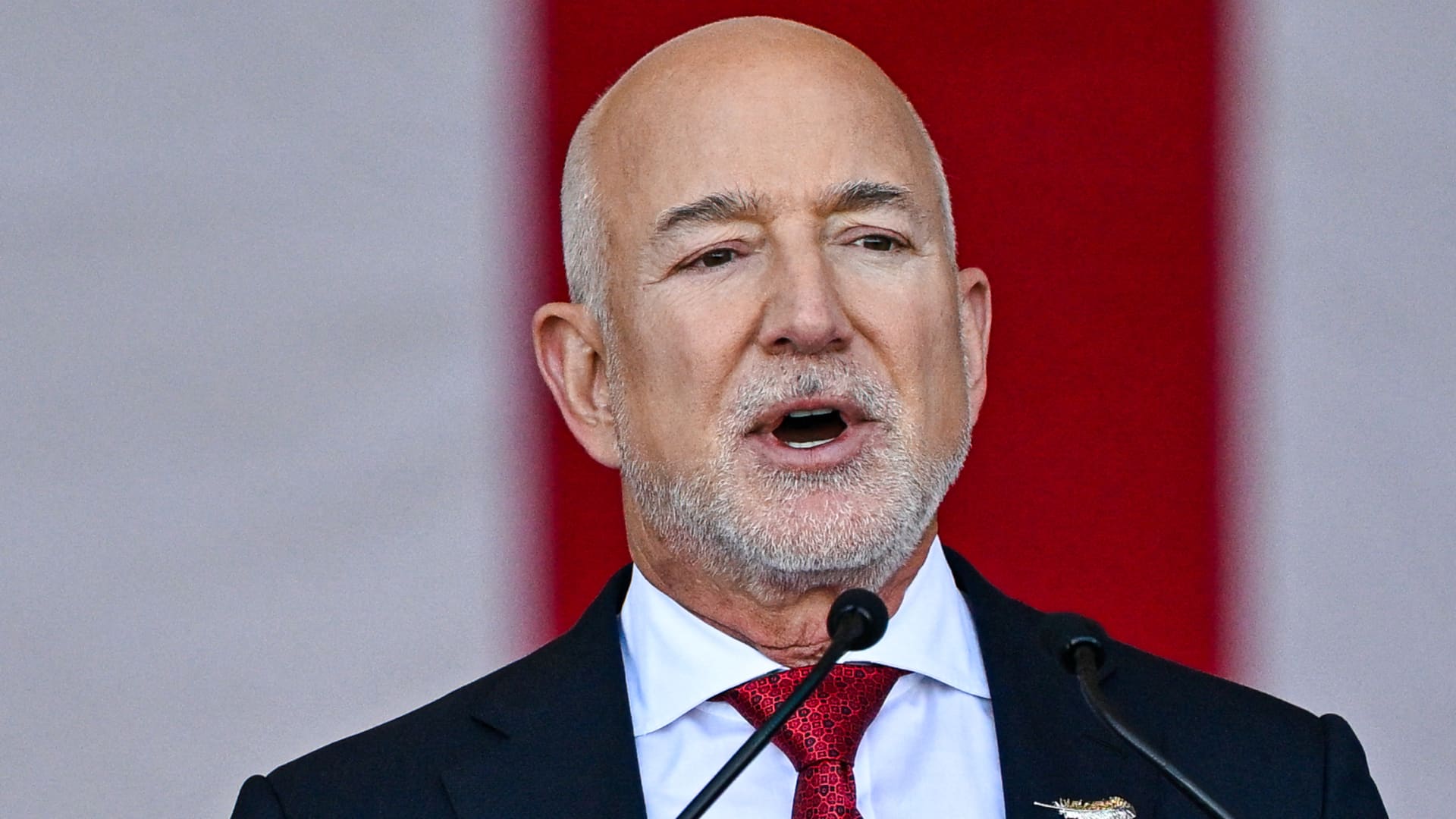
Amazon executive chairman Jeff Bezos has publicly challenged the notion of the ‘buy, borrow, die’ tax strategy, labeling it a largely mythical practice among the ultra-wealthy. This declaration comes at a time when tax policies affecting high-net-worth individuals are under increasing scrutiny, potentially influencing broader discussions on wealth taxation and capital allocation for major corporations.
🗝️ Corporate Strategy Insights
- Tax Strategy Dismissal. Jeff Bezos stated the ‘buy, borrow, die’ tax strategy is not a reality he recognizes.
- Foundation of the Strategy. The practice involves borrowing against assets to avoid income tax and utilize step-up in basis upon death.
- Personal Tax Compliance. Bezos affirmed he pays taxes on Amazon stock sales used to fund ventures like Blue Origin.
Bezos, speaking with CNBC’s Andrew Ross Sorkin, directly addressed the ‘buy, borrow, die’ concept, stating, ‘There’s no truth to this ‘buy, borrow, die’ thing.’ He expressed skepticism about its origins and widespread application. This strategy, often attributed to figures like Oracle co-founder Larry Ellison and Tesla’s Elon Musk, purportedly allows wealthy individuals to borrow against their appreciated assets, treating loan proceeds as untaxed income. The added benefit comes from the step-up in basis provision, which can eliminate capital gains taxes on asset appreciation at death.
The controversial strategy has drawn criticism from progressive lawmakers like Senators Elizabeth Warren and Ron Wyden, who advocate for wealth taxes as a means to address perceived tax avoidance by the wealthiest segment of the population. Bezos, whose net worth is estimated by Forbes to be around $269 billion, indicated his willingness to support tax reforms aimed at closing such loopholes, if they indeed exist and are fixable. However, he also cautioned that addressing specific loopholes would not resolve broader economic issues such as government spending or income inequality.
- Bezos pays taxes on Amazon stock sales that fund his ventures, including Blue Origin.
- He expressed openness to tax reforms targeting the ‘buy, borrow, die’ practice but questioned its prevalence.
- The discussion highlights the ongoing debate about wealth taxation versus income taxation.
While Bezos’s assertion challenges the popular narrative surrounding this tax strategy, it underscores the complex financial engineering employed by some of the world’s most affluent individuals. His comments suggest that for many, the disclosed tax liabilities are a direct consequence of asset sales rather than circumvention through loans. The implications for capital allocation and long-term financial planning remain significant, especially as regulatory bodies continue to examine tax avoidance tactics.
The ‘Buy Borrow Die’ Strategy Explained
The core of the ‘buy, borrow, die’ strategy rests on two main pillars: leveraging appreciated assets for liquidity without immediate tax consequences and the step-up in basis provision. Wealthy individuals can pledge their stocks or other assets as collateral for loans, which are not considered taxable income. This provides access to capital for personal use or further investment. Upon the individual’s death, their heirs inherit the assets at their then-current market value, effectively erasing any accrued capital gains for tax purposes. This approach has been a subject of intense debate, with critics arguing it allows the ultra-rich to sidestep taxes that ordinary citizens must pay. Bezos’s dismissal of the strategy as a myth raises questions about its actual prevalence versus its perception in public discourse. For investors navigating these complex tax environments, understanding the nuances of asset-based financing and estate planning is crucial. You can find more insights on global market trends and investment analysis on our platform.
The ‘buy, borrow, die’ tax strategy, as described by its proponents, is a sophisticated financial maneuver that leverages asset appreciation and estate tax laws. Jeff Bezos’s assertion that it is largely a myth suggests a potential divergence between public perception and the actual implementation or effectiveness of such strategies among the wealthiest individuals.
The effective tax rate for the ultra-wealthy has been a focal point of policy discussions. While concrete data on the widespread use of the ‘buy, borrow, die’ strategy is scarce, its conceptual existence fuels debates about tax fairness. The practice highlights how different tax provisions can be utilized to manage wealth and liabilities over a lifetime.
Amazon’s Capital Allocation Insights
Jeff Bezos’s comments on his personal tax practices provide a window into how ultra-high-net-worth individuals manage their finances and fund new ventures. Bezos explicitly stated he pays taxes on Amazon stock he sells to finance his space exploration company, Blue Origin, and other projects. This directly contrasts with the ‘buy, borrow, die’ narrative, suggesting a more transparent approach to tax liabilities. For a company like Amazon, understanding how its leadership manages personal wealth and capital can indirectly inform perceptions of its corporate financial discipline and long-term vision. Such clarity is vital for investors seeking to understand the strategic priorities and capital deployment decisions of major public companies. This also provides context for broader discussions about corporate growth and investment analysis within the stock markets.
Debunking Tax Loopholes
Bezos’s skepticism about the ‘buy, borrow, die’ strategy’s prevalence, while potentially downplaying its commonality, also signals a willingness to address genuine tax avoidance mechanisms. He emphasized that even if such a loophole were to exist and be closed, it would not solve fundamental economic challenges like inequality or the tax burden on working-class individuals. This perspective shifts the focus from narrowly defined tax loopholes to the broader architecture of economic support and government fiscal policy. Understanding these dynamics is key to grasping the challenges of effective capital allocation and the impact of regulatory shifts on corporate strategy. Further insights into company strategy and corporate growth can be found at stockxpo.com/business/.
Bezos on Tax Reforms and Economic Support
Jeff Bezos’s recent remarks serve as a crucial counterpoint to the prevailing narrative surrounding wealth tax strategies. By terming the ‘buy, borrow, die’ approach a ‘myth,’ Bezos challenges its perceived ubiquity and effectiveness. His emphasis on paying taxes from stock sales to fund his ventures underscores a commitment to tax compliance, albeit within the existing legal framework. The broader implication for the market is a reinforcement of the idea that while tax planning is complex, direct asset sales remain a primary method of liquidity realization for many high-net-worth individuals. This nuanced perspective is vital for understanding capital flows and strategic decision-making in an environment where tax policies are continually evolving. For those seeking educational insights on financial matters, exploring resources like stockxpo.com/blog/ is recommended.
The Myth of ‘Buy Borrow Die’ on Markets
Jeff Bezos’s public refutation of the ‘buy, borrow, die’ tax strategy suggests that the narrative may be more speculative than factual, influencing how investors perceive tax avoidance and its potential impact on market liquidity. While the strategy is often cited in discussions about wealth inequality and tax reform, Bezos’s direct statement could lead to a recalibration of expectations regarding its actual implementation and scale. This development is significant for policymakers and financial analysts alike, potentially shifting the focus of tax reform debates towards more demonstrable loopholes or broader fiscal policies. The market may see a reduced emphasis on this specific strategy as a driver of capital allocation or tax planning for the ultra-wealthy, encouraging a closer look at Bezos’s own tax practices, which involve regular stock sales to fund his diverse business interests.
📊 StockXpo Analyst’s View
Market Impact: Bezos’s comments could temper some of the public and political focus on the ‘buy, borrow, die’ strategy, potentially easing pressure for immediate, specific legislative action on this particular loophole. Investor sentiment may lean towards more tangible tax discussions, such as capital gains rates or corporate tax policies. This could also impact discussions around liquidity in certain asset classes if borrowing against assets is perceived as less of a primary tax-avoidance tool than previously thought.
Sector To Watch: Industries heavily reliant on personal capital and philanthropy, such as space exploration (like Blue Origin), venture capital, and luxury goods, will continue to be indirectly influenced by how ultra-high-net-worth individuals manage their wealth and fund their ventures. Furthermore, the ongoing debate about wealth taxation itself keeps tax advisory services and financial planning sectors in focus.
Financial Disclaimer:
StockXpo.com is a financial news aggregator and educational portal, not a registered investment advisor or broker-dealer. All information, news, and analysis provided herein are strictly for educational purposes and do not constitute investment, financial, legal, or tax advice. Investing in the stock market involves high risks, and past performance is not indicative of future results. StockXpo will not be liable for any financial losses or investment damages. Always consult a certified financial advisor before making market decisions.
MORE IN INSIDE BUSINESS

Measles Resurgence: A Critical Warning for U.S. Public Health Strategy
Published: Tuesday, October 27, 2026 · 7:02 AM

Dollar General Overcharges Lawsuit: A Warning on Consumer Trust
Published: Monday, October 26, 2026 · 3:55 PM