Published: Saturday, May 16, 2026 · 10:18 AM | Updated: Saturday, May 16, 2026 · 10:18 AM
📊 307 views




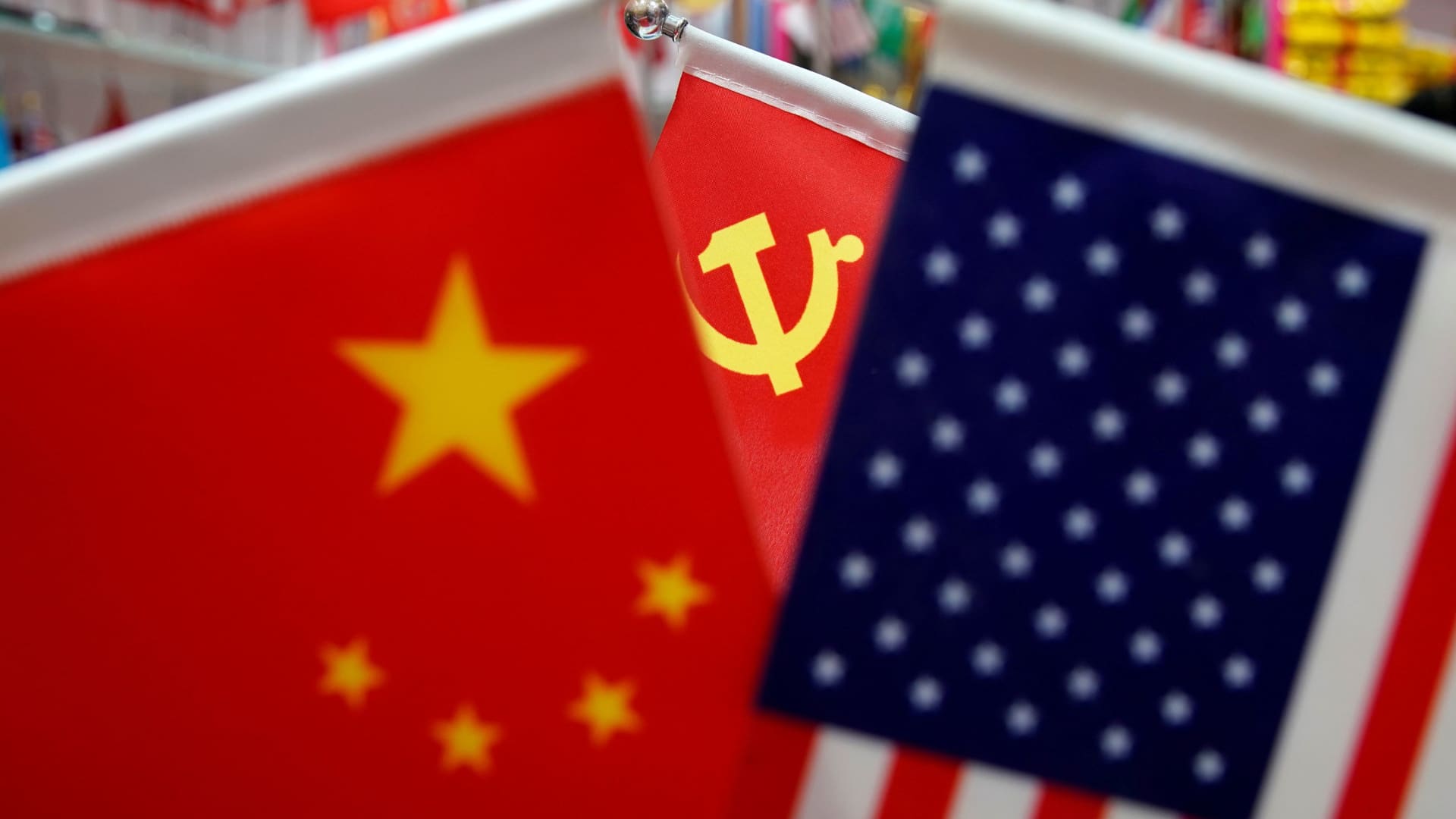
Investor portfolios are closely watching the delicate balance between global superpowers, particularly as high-stakes geopolitical developments can trigger swift shifts in market liquidity and asset valuations. The recent Trump-Xi summit has cast a spotlight on Taiwan, an island whose strategic importance in semiconductor manufacturing and geopolitical positioning makes it a defining issue with far-reaching implications for capital flow and risk management.
💰 Financial Strategy & Market Insights
- Geopolitical Flashpoint Amplified. The inclusion of Taiwan in U.S.-China discussions, even with a noted silence from President Trump, underscores its pivotal role in global economics and diplomacy.
- Semiconductor Supply Chain Risk. Taiwan’s dominance in advanced semiconductor manufacturing positions any instability as a direct threat to global technology sectors and their valuations.
- Strategic Ambiguity’s Enduring Impact. The U.S. ‘one China’ policy and ‘strategic ambiguity’ create an environment of uncertainty that influences investor sentiment and long-term capital allocation decisions.
The recent U.S.-China summit, while concluding with a muted public statement on Taiwan, has ignited considerable market speculation regarding potential shifts in U.S. foreign policy and their economic repercussions. Despite the U.S. announcing significant arms sales to Taiwan prior to the talks, President Trump’s post-meeting silence, coupled with China’s stark warning from Xi Jinping about jeopardizing the relationship over Taiwan, highlights the issue’s deep-seated complexity.
For investors, this delicate dance between economic cooperation and geopolitical tension translates directly into market volatility. The reliance on Taiwan for a substantial portion of the world’s most advanced semiconductors means that any disruption could create ripple effects across global supply chains, impacting everything from consumer electronics to advanced AI infrastructure. This potential liquidity shock demands careful portfolio recalibration.
Secretary of State Marco Rubio’s comment that Taiwan “did not feature primarily” in the initial discussions, contrasted with Treasury Secretary Scott Bessent’s expectation of further remarks, illustrates the layered communication and strategic signaling occurring. The White House’s initial readout omitting Taiwan further fueled this enigmatic approach, a move Beijing countered with a strong statement linking mishandling of the issue to significant jeopardy for the bilateral relationship.
Wendy Cutler, a former acting deputy U.S. trade representative, observed that Xi Jinping tied economic stability directly to developments concerning Taiwan. This linkage is a critical insight for market participants, suggesting that U.S. economic policies and stability are now intrinsically intertwined with the geopolitical status of the island. This signals a major shift in institutional capital flow.
- Key Takeaways from the Summit’s Taiwan Discourse:
- A deliberate reduction in explicit discussion of Taiwan in official readouts, while Beijing issues stern warnings.
- President Trump’s call for both sides to “cool it” suggests a desire to de-escalate but leaves the core issue unresolved.
- The continuation of the U.S. ‘one China’ policy, maintaining ‘strategic ambiguity’ regarding defense commitments.
President Trump’s subsequent interview with Fox News, where he urged both China and Taiwan to “cool it,” and expressed reservations about the U.S. leaping to Taiwan’s defense if attacked, introduces an element of calculated pragmatism. His statement that he is “not looking to have somebody go independent, and you know, we’re supposed to travel 9,500 miles to fight a war” indicates a potential re-evaluation of U.S. commitments, particularly if Taiwan pursues full independence. This could reshape market liquidity.
His stance on potential future arms sales, stating “I may do it, I may not do it,” adds another layer of uncertainty. For investors focused on defense sector valuations, this suggests a degree of unpredictability, contrasting with the long-standing Taiwan Relations Act which mandates the provision of defense articles. This dynamic influences capital rotation across defense and technology sectors.
Taiwan’s presidential spokesperson, Karen Kuo, stated that comments from Trump and Rubio signal no change in U.S. policy, emphasizing Taiwan’s commitment to maintaining the status quo and regional peace. However, she also highlighted China’s escalating military threat as the sole destabilizing factor. This provides a counterpoint to the U.S. diplomatic signaling and emphasizes the inherent risk premium associated with the region.
Taiwan’s Semiconductor Dominance: A Liquidity Anchor?
Taiwan’s crucial role in the global semiconductor industry, particularly through manufacturers like TSMC, makes its stability a linchpin for technological advancement and economic growth worldwide. Disruptions in this sector, stemming from geopolitical tensions, could lead to a significant decrease in available high-end chips, impacting manufacturing across numerous industries and thus reducing market liquidity for related assets.
From a market perspective, the concentration of critical semiconductor production in Taiwan creates a unique risk profile. Any escalation of cross-strait tensions directly threatens these supply chains, potentially triggering a valuation reset for technology companies globally that rely on these advanced components. This analysis underscores the importance of monitoring geopolitical developments for potential macro catalysts.
Global Trade Dependencies: Analyzing Capital Shifts
The economic interdependence between the U.S. and China, despite ongoing trade friction, makes Taiwan a highly sensitive point of contention. Beijing’s assertion that mishandling Taiwan could put the U.S.-China relationship in “great jeopardy” suggests a willingness to leverage economic ties as a means of political pressure. This dynamic is closely watched by global trade strategists.
For long-term portfolio managers, the ongoing strategic ambiguity surrounding Taiwan necessitates a robust risk management framework. Understanding how shifts in U.S. policy or Chinese assertiveness might impact global trade flows and investment sentiment is paramount. This could involve re-evaluating exposure to markets heavily reliant on Sino-U.S. relations and the stability of key manufacturing hubs like Taiwan.
- Upside Potential:
- Continued de-escalation and commitment to the status quo;
- Successful U.S.-China dialogue leading to reduced geopolitical risk premium;
- Taiwan’s continued technological innovation and market resilience.
- Downside Risks:
- Increased military posturing or direct conflict in the Taiwan Strait;
- Economic sanctions or trade wars triggered by Taiwan-related disputes;
- Disruptions to semiconductor supply chains leading to global inflation and economic slowdown.
The concept of ‘strategic ambiguity’ in U.S. foreign policy towards Taiwan refers to the deliberate lack of a clear commitment to intervene militarily if China attacks the island. This policy aims to deter both Chinese aggression and a Taiwanese declaration of independence, maintaining a fragile peace. For investors, this ambiguity introduces a persistent risk premium, influencing asset valuations in the region and related global supply chains.
Taiwan’s Historical Benchmarking: A Geopolitical Constant
Historically, Taiwan has been a consistent factor in U.S.-China relations, often surfacing during periods of heightened diplomatic or economic tension. The current U.S. administration’s approach, while appearing to de-emphasize Taiwan in direct summit discussions, maintains the underlying framework of support and arms sales, reflecting a long-standing commitment that shapes market expectations.
Comparing current market sentiment around Taiwan with historical benchmarks reveals a growing awareness among investors of the tangible economic consequences of geopolitical instability in the region. The island’s indispensable role in the semiconductor sector has elevated its importance from a purely geopolitical issue to a critical component of global economic stability.
Taiwan’s Market Sentiment Tracker: Shifting Perceptions
Market sentiment towards Taiwan remains closely tied to the perceived level of risk emanating from cross-strait relations. Positive developments in diplomatic dialogue or assurances of stability can lead to increased investor confidence and potentially higher valuations for Taiwan-centric assets. Conversely, any sign of escalation can trigger sharp sell-offs and increased demand for safe-haven assets.
The intricate interplay between diplomatic pronouncements, military signaling, and economic interdependence creates a complex sentiment landscape for Taiwan. Investors must continuously monitor these factors to navigate the associated market risks effectively, seeking insights from reputable sources such as global financial news for real-time updates.
The Ripple Effect of Taiwan’s Status on 2026 Markets
The recent Trump-Xi summit has subtly, yet significantly, underscored Taiwan’s enduring influence on global market stability and capital flows. While explicit declarations may have been subdued, the underlying tensions and strategic positioning remain potent forces shaping investment decisions and risk management strategies worldwide. Investors must remain vigilant.
- The careful calibration of U.S. rhetoric and actions regarding Taiwan directly impacts global supply chains.
- Geopolitical uncertainty surrounding Taiwan continues to be a primary driver of macro-level asset valuation.
- The long-term stability of semiconductor markets hinges on the de-escalation of cross-strait tensions.
How will this nuanced geopolitical dance directly translate into sustained capital rotation in the coming quarters?
📊 StockXpo Analyst’s View
Market Impact: The recent discussions, despite their muted public outcome on Taiwan, have amplified concerns about supply chain resilience and geopolitical risk premiums. This elevates the importance of Taiwan as a key factor influencing global economic outlooks and investment strategies, potentially driving a flight to quality in less exposed markets.
Sector To Watch: The semiconductor industry, given its direct reliance on Taiwan, faces ongoing scrutiny. Companies with robust diversification strategies or those involved in next-generation manufacturing technologies outside the immediate geopolitical hotspots may present more stable investment profiles.
Financial Disclaimer:
StockXpo.com is a financial news aggregator and educational portal, not a registered investment advisor or broker-dealer. All information, news, and analysis provided herein are strictly for educational purposes and do not constitute investment, financial, legal, or tax advice. Investing in the stock market involves high risks, and past performance is not indicative of future results. StockXpo will not be liable for any financial losses or investment damages. Always consult a certified financial advisor before making market decisions.
MORE IN INSIDE FINANCE

Crypto Derivatives Trading: Blockchain.com’s Bold Move into U.S. Markets
Published: Friday, October 9, 2026 · 8:23 AM
China’s Real Estate Market: A Potential Turnaround Amid Policy Shifts
Published: Thursday, October 8, 2026 · 6:10 AM